

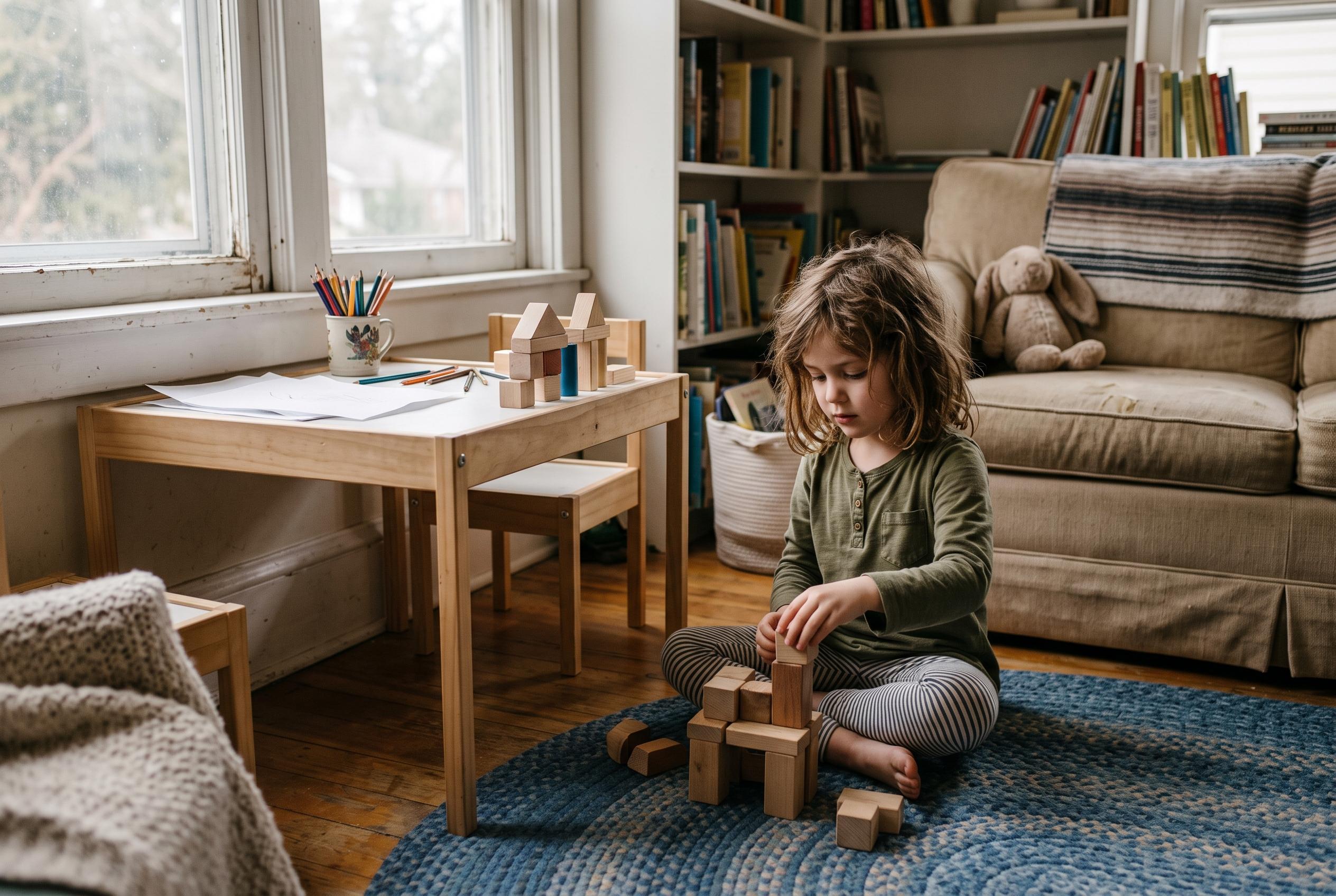

A study of six-year-olds links loosely organised time with stronger self-directed thinking, while wider research suggests children need both independence and meaningful friendships.
Many parents worry they must choose between filling a child’s calendar and leaving them to their own devices. Research from the University of Colorado Boulder suggests the question may be less absolute than it seems: children who spent more of their week in loosely organised activities tended to do better on a task that measured whether they could set a goal and work towards it without adult prompting. According to the university and the study published in Frontiers in Psychology, the finding points towards a possible link between unstructured time and self-directed thinking, though it does not prove one causes the other.
The study, which involved 70 six-year-olds, asked parents to keep a record of how their children spent a week. Activities outside school were divided into structured time, such as lessons, organised sport, homework and chores, and less-structured time, which included free play, visits with family and friends, outings, reading and screen time. Children with more time in the second category tended to perform better on a fluency task that required them to organise their answers on their own, a narrow but revealing measure of executive function, the mental skills used for planning, switching attention and persisting with a task.
The more surprising detail is that the “free” time in the study was not limited to solitary play. Time with other children, visits to friends and family gatherings all counted as less structured, which means the study does not pit independence against companionship. In that framing, a child building a den with a neighbour and a child reading alone both fall into the category of time that is not tightly directed by adults. The researchers described the results as promising, but only a first step.
Other research helps explain why children’s own interests matter so much. A 2007 study in Developmental Psychology, based on surveys and interviews with 177 parents, found that nearly a third of young children had an unusually intense fascination with a particular subject, such as trains, vehicles or tea sets. Those fixations were more common among boys. More recently, a 2025 study in the Journal of Child Language reported that toddlers’ interest in categories such as animals or vehicles at 18 months predicted how many words they later knew in those same areas at age two, although the authors stressed that the relationship could run in either direction.
That does not mean friendships are optional. Studies in Developmental Psychology and Child Development suggest that a close friend can make a real difference to how children cope with loneliness and exclusion. In the 1993 work by Jeffrey Parker and Steven Asher, the quality of a friendship mattered independently of how popular a child was overall. And in a 2011 Dutch study, saliva samples from nearly 100 fourth graders showed that children who were left out by classmates had higher stress levels at school, especially if they had few friends or weaker friendships.
The evidence also distinguishes between children who are simply shy and those who are content in their own company. Researchers often describe the second group as unsociable rather than withdrawn in a troubling way, and that distinction matters. A 2023 study in the Journal of Youth and Adolescence followed 1,071 children and teenagers aged 10 to 16 and found that time alone was associated with poorer adjustment mainly when it was paired with a dislike of social contact. Young people who enjoyed solitude but still liked being with others did not show the same pattern.
Taken together, the studies do not argue for choosing either packed schedules or total freedom. They suggest that children benefit from having some time that belongs to them, whether they spend it chasing a fascination, playing with other children or simply working out what to do next without being told. They also show that friendship still matters, and that a child can value both independence and connection. For parents, the practical lesson may be less about enforcing a particular formula and more about making room for both.
Disclaimer: This content is for informational purposes only and is not intended to be a substitute for professional medical judgment, advice, diagnosis, or treatment.



