

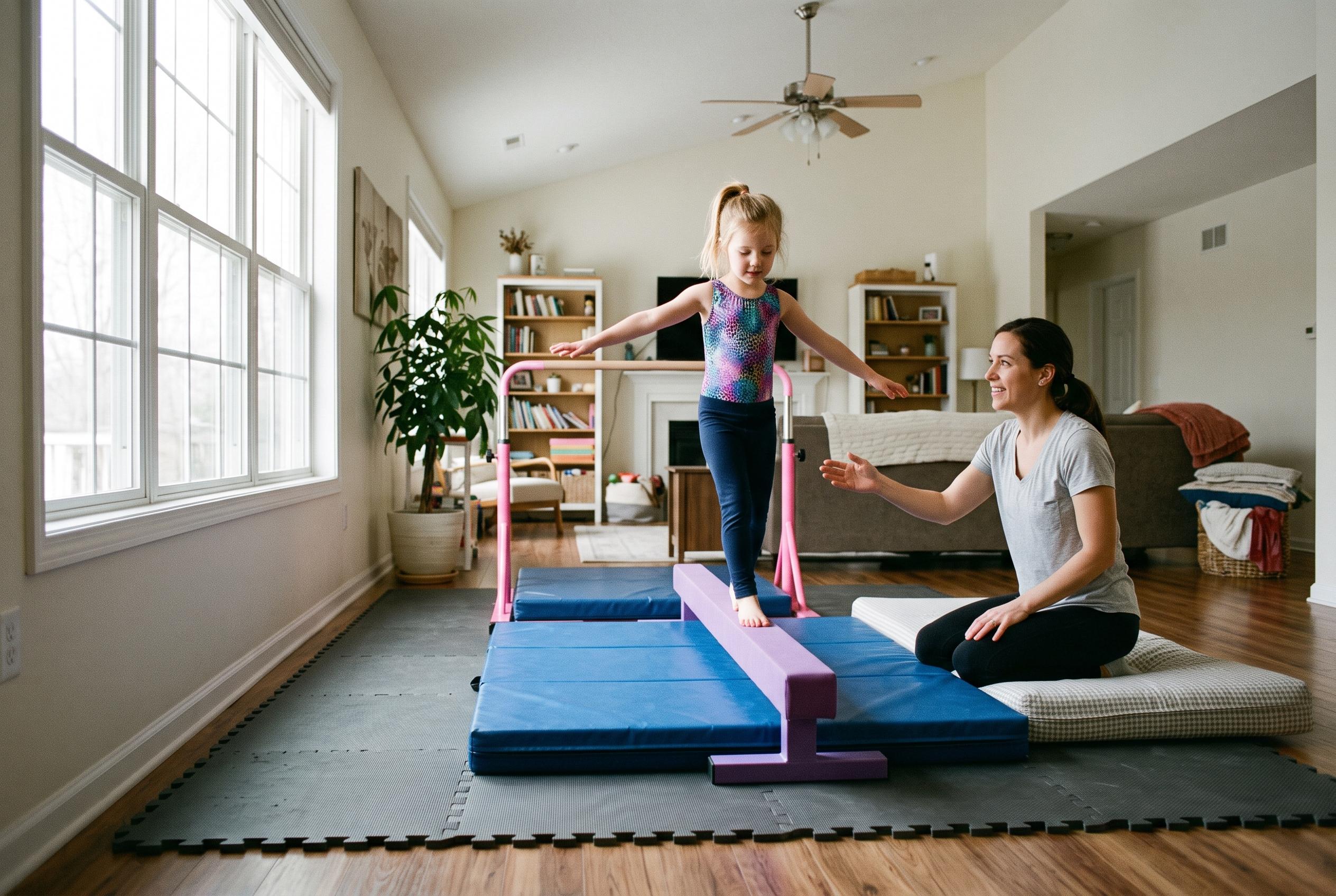

From ceiling clearance and proper flooring to age-appropriate equipment and adult supervision, creating a safe home gymnastics space requires careful planning.
A well-planned gymnastics area at home can help children keep building skills between club sessions, giving them a place to repeat drills, improve confidence and stay active outside formal training. But, as the guide published by OCNJ Daily notes, a safe and useful setup takes more than moving a mat into a spare corner of the house.
The first decision is location. Garages, rumpus rooms, basements, spare rooms and covered outdoor areas are all possible options, but each one needs careful checking for ceiling height, flooring, light and airflow. The article says clearance above a bar matters more than simple floor space, and warns that hard surfaces such as concrete, tiles, timber and polished floors should be covered with proper matting before any training begins. Other home-gymnastics guides make the same point, adding that a flat, stable floor, good ventilation and enough room for safe landings are all central to avoiding avoidable accidents.
Matting is the foundation of the space. According to the OCNJ Daily guide, it should do two jobs at once: soften falls and clearly define the training area. That means it needs to be thick enough for the activity, large enough to cover the full working zone and positioned so it does not leave gaps around bars or landing points. Industry advice from specialist mat suppliers goes further, recommending high-density foam and non-slip coverings, while beginner-focused guides suggest a tumbling mat at least four feet wide and around two to four inches thick for basic home use.
Choosing equipment that matches a child’s current ability is just as important as choosing the right floor protection. The OCNJ Daily article warns against buying advanced apparatus too early, arguing that a child working on basic grips and swings does not need a high bar. For younger or less experienced gymnasts, a low floor bar and mat combination is a practical starting point, while adjustable bars can offer better long-term value as skills improve. Other home-setup guides also recommend beginning with multi-use equipment and adding more only as training needs change.
Parents are also urged to set clear rules about supervision and what kinds of practice belong at home. The article says home equipment should always be used with an adult present, especially for children under ten, and that families should agree with coaches on which skills are safe to repeat outside the gym. Many coaches support home practice, but only for movements already learned under supervision, since trying new skills without guidance can lead to poor technique or unnecessary risk.
Keeping the space tidy and regularly checked helps it stay useful over time. The OCNJ Daily guide recommends reviewing the setup about every six months, making sure mats remain in good condition, bolts and fittings are secure and the area has not become a dumping ground for household items. Other specialist guides add that storage bins, wall hooks and simple organisation can make the space easier to use, while a clear, well-maintained training area can also help keep children motivated and practising consistently.
Disclaimer: This content is for informational purposes only and is not intended to be a substitute for professional medical judgment, advice, diagnosis, or treatment.



