

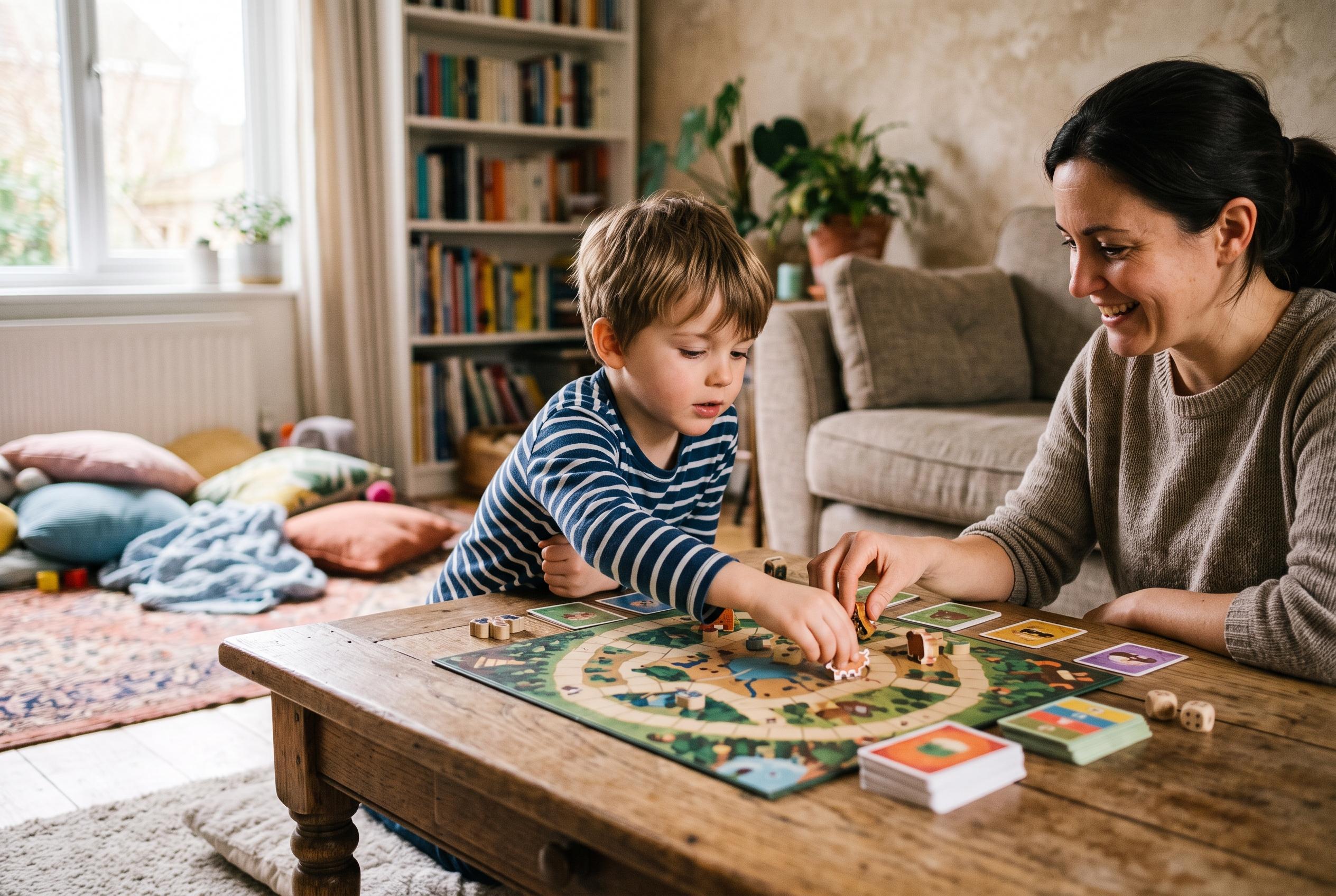

Choosing the right board game for a six-year-old involves more than age labels, focusing on engaging, educational, and suitable options that foster patience, confidence, and shared fun for the whole family.
Choosing a board game for a six-year-old is less about chasing the latest award-winner and more about finding a title that fits the child in front of you. At this age, many children are ready for proper rules, light strategy and short turns, but their patience, confidence and experience can still vary widely. The best family games are the ones that keep everyone engaged, finish before attention drifts, and leave the child wanting another round rather than feeling shut out.
That is why age labels should be treated as guidance rather than a hard line. A child who has already spent time around board games may be ready for something marked 6+ a little earlier, while another child of the same age may need simpler rules or more support. The better test is not the number on the box but whether the game matches the child’s ability to follow instructions, handle losing, and take part without being carried through every move.
Board games also do more than fill an afternoon. They can support concentration, turn-taking, emotional resilience and early logical thinking in a setting that feels safe and enjoyable. Several of the guides reviewed for this piece, including GamesRadar+, Board Games Guide, Meeple & Mat and Ravensburger, point to the same pattern: the right game can be both entertaining and genuinely useful, helping families combine play with learning without making the experience feel like a lesson.
For six-year-olds, the sweet spot is usually a game that is simple to teach but still gives the child real decisions to make. Games with too much waiting tend to lose them quickly, while games that are all luck and no choice can become dull for adults. Titles that allow children to plan a move, spot patterns or work towards a shared goal are often the ones that get pulled off the shelf again and again.
Co-operative games are especially valuable at this age because they remove the pressure of a single winner and a roomful of losers. That can make family playtime calmer and more inclusive, particularly for children who still find competition difficult. Games in this category can also encourage conversation and shared problem-solving, which is useful for children who are still building confidence in speaking up and listening to others.
Strategy games can work well too, provided they are kept approachable. The best examples for this age offer clear rules and enough depth to reward attention, but not so much complexity that the game becomes a chore to learn. Ravensburger and other family-game round-ups highlight titles that let children practise planning, spatial reasoning and sequencing without overwhelming them with long manuals or endless exceptions.
Fast games have their own place in the family rotation. Card games, pattern-matching games and quick reaction titles can be ideal after school or on busy weeknights because they are easy to set up and do not require a long time commitment. They also work well when families need something portable for holidays, visits or waiting periods, since many of the most popular options can be played almost anywhere.
The best choice also depends on how the family plays. Some games are stronger with two players, while others come alive with a bigger group at weekends or when grandparents and cousins join in. Parents shopping for a six-year-old should think about who is usually at the table, how much time they have, and whether they want something competitive, cooperative or purely light-hearted.
Material quality matters as much as mechanics. Children this age are still learning how to handle cards, counters and boards carefully, so sturdy pieces and clear instructions make a real difference. A well-made game with simple components, a sensible play length and a ruleset that can be explained in a few minutes is far more likely to become a family staple than a flashy box that is too complicated to revisit.
Disclaimer: This content is for informational purposes only and is not intended to be a substitute for professional medical judgment, advice, diagnosis, or treatment.



