

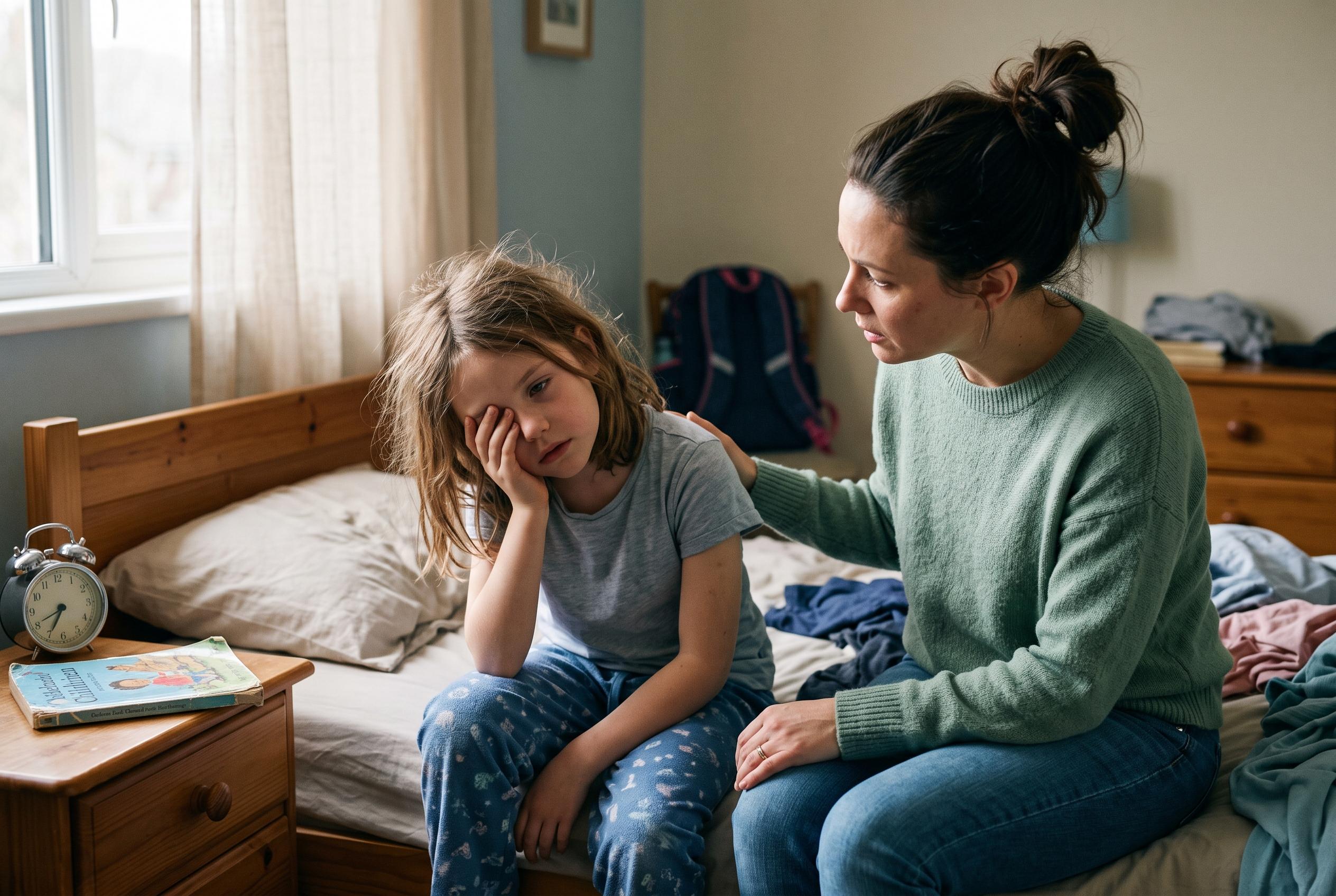

A 16-day study of Singapore schoolchildren found that those who slept less during the week and tried to catch up at weekends felt sleepier and less positive, despite showing no clear decline in brief cognitive tests.
A study of Singapore schoolchildren suggests that a pattern of short sleep on weekdays followed by longer sleep at weekends may leave children feeling sleepier and less upbeat overall, even if it does not clearly erode short-term performance on tests of attention, memory or processing speed. The research, published in the Journal of Sleep Research, tracked 79 children aged 6 to 12 over 16 consecutive days, using actigraphy, sleep diaries and repeated daily neurobehavioural testing to capture changes that can be missed in one-off assessments.
The children were split into two groups. One group averaged at least nine hours in bed on both weekdays and weekends, while the other routinely fell short during the school week but extended sleep at the weekend. That pattern was real and measurable: the short-sleep group typically had about 1.2 hours less time in bed on weekdays, then added sleep time on Saturdays and Sundays. Yet the weekend extension was modest, and the researchers found little evidence that it fully compensated for the weekday deficit.
Across the full monitoring period, the short-sleep group reported higher subjective sleepiness and lower positive affect than the well-rested group. The difference in positive mood held even after the analysis accounted for age, sex and whether the children were assessed during term time or school holidays. Negative affect, by contrast, stayed low in both groups. The researchers say the mood findings fit with earlier work showing that insufficient sleep can leave children more tired and less emotionally positive, even when harder-edged cognitive effects are harder to detect.
The study did not find clear evidence that repeated weekday sleep loss, followed by weekend catch-up sleep, caused worsening impairment from the first week to the second. Nor did the children who slept less on school nights show obvious weekday-versus-weekend swings in cognitive test performance. The authors suggest several possible reasons: the sleep restriction may have been too mild to trigger larger deficits; the brief tasks used in the study may have been less sensitive than standard longer tests; and some of the brain systems linked to sleep loss in older children, teenagers and adults may not yet be fully developed in younger schoolchildren.
That interpretation sits alongside earlier research suggesting that longer sleep is generally associated with better cognitive performance in children, especially on measures linked to reasoning and executive function. A systematic review and meta-analysis also found a positive relationship between objectively measured sleep duration and cognition, while other studies have linked short sleep in children and adolescents to sleepiness, behavioural problems and poorer school-related outcomes. Taken together, the new findings do not argue that sleep is unimportant; rather, they suggest that in younger children, the clearest early signs of insufficient sleep may be in how they feel, not always in what they can do on brief daytime tests.
Disclaimer: This content is for informational purposes only and is not intended to be a substitute for professional medical judgment, advice, diagnosis, or treatment.



