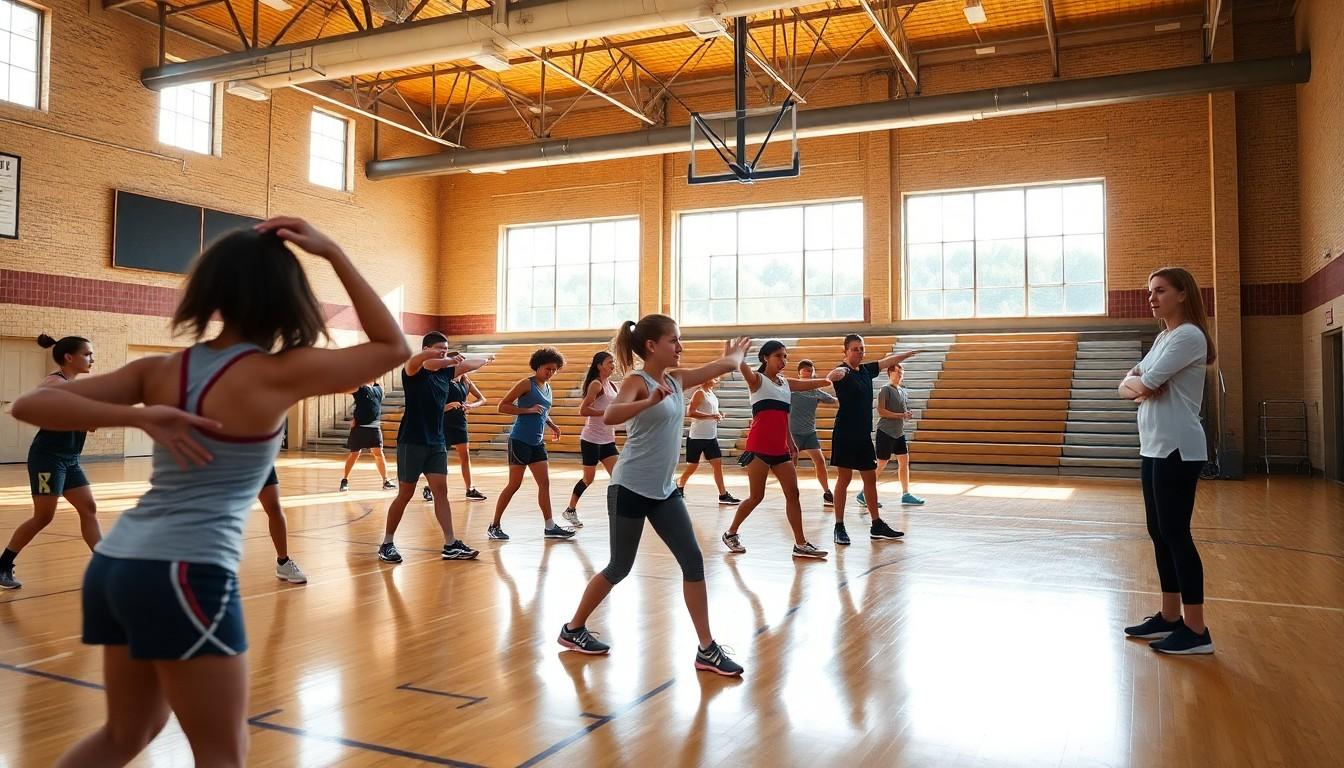

Courtney Bourne, head athletic trainer at Waltham High School, has pioneered a dynamic, inclusive fitness initiative that enhances athlete development and confidence, with plans to expand to male students.
Courtney Bourne has become one of the most recognisable figures in Waltham High School athletics, shaping not only how student-athletes train but also how they think about strength, recovery and preparation. As the school’s head athletic trainer and physical fitness instructor, she works at the intersection of sport, health and development, supporting teams across the school while also helping pupils build habits that can last well beyond high school. Waltham High School says its athletics programme is designed to combine competition with academic standards, eligibility rules and updated medical requirements, underscoring the wider role Bourne plays in keeping students ready to participate. According to the school’s athletics information, athletes must meet registration and physical-examination requirements before competing, reflecting the administrative side of the system Bourne helps manage.
Bourne’s connection to the school runs deep. She was once a three-sport athlete at WHS herself, competing in football, basketball and lacrosse, and it was in the school weight room that her interest in fitness and performance began to take shape. After a soccer injury introduced her to athletic training, she found a field that brought together anatomy and sport, eventually studying at the University of New Hampshire and later completing a master’s degree at Southern New Hampshire University. Returning to Waltham, she has translated that background into daily guidance for student-athletes, often appearing on the sidelines to provide immediate support while also reinforcing the basics of safe, effective training.
Her best-known initiative, the Hawks Summer Showdown, grew out of what she saw as a gap in structured fitness opportunities for girls’ teams. Over the past two summers, the programme has used team and individual competitions to reward workouts, practices and other approved activity, turning conditioning into something more engaging while still setting limits designed to prevent overtraining. Bourne has said the workouts are meant to be enjoyable as well as challenging, and she repeatedly stresses movement quality, telling students, “If you don’t move well, you don’t play well.” The school’s spring, winter and fall sports pages show how many teams and seasonal commitments students juggle, which helps explain why a flexible but disciplined fitness programme can matter so much.
The response from athletes has been strong. More than 160 female students took part in the first two years of the showdown, and rising sophomore Chloe Mancini said the programme helped her build accountability and confidence before her first high school soccer season. Bourne is now looking to extend the idea to male athletes as well. Coaches at WHS say her influence reaches beyond training plans: Taylor Scafidi, the school’s field hockey coach, said Bourne created a setting in which female athletes felt comfortable in the weight room, calling that an essential part of sporting success. In a school system that places emphasis on both performance and student welfare, Bourne has emerged as both a trainer and an advocate.
Disclaimer: This content is for informational purposes only and is not intended to be a substitute for professional medical judgment, advice, diagnosis, or treatment.