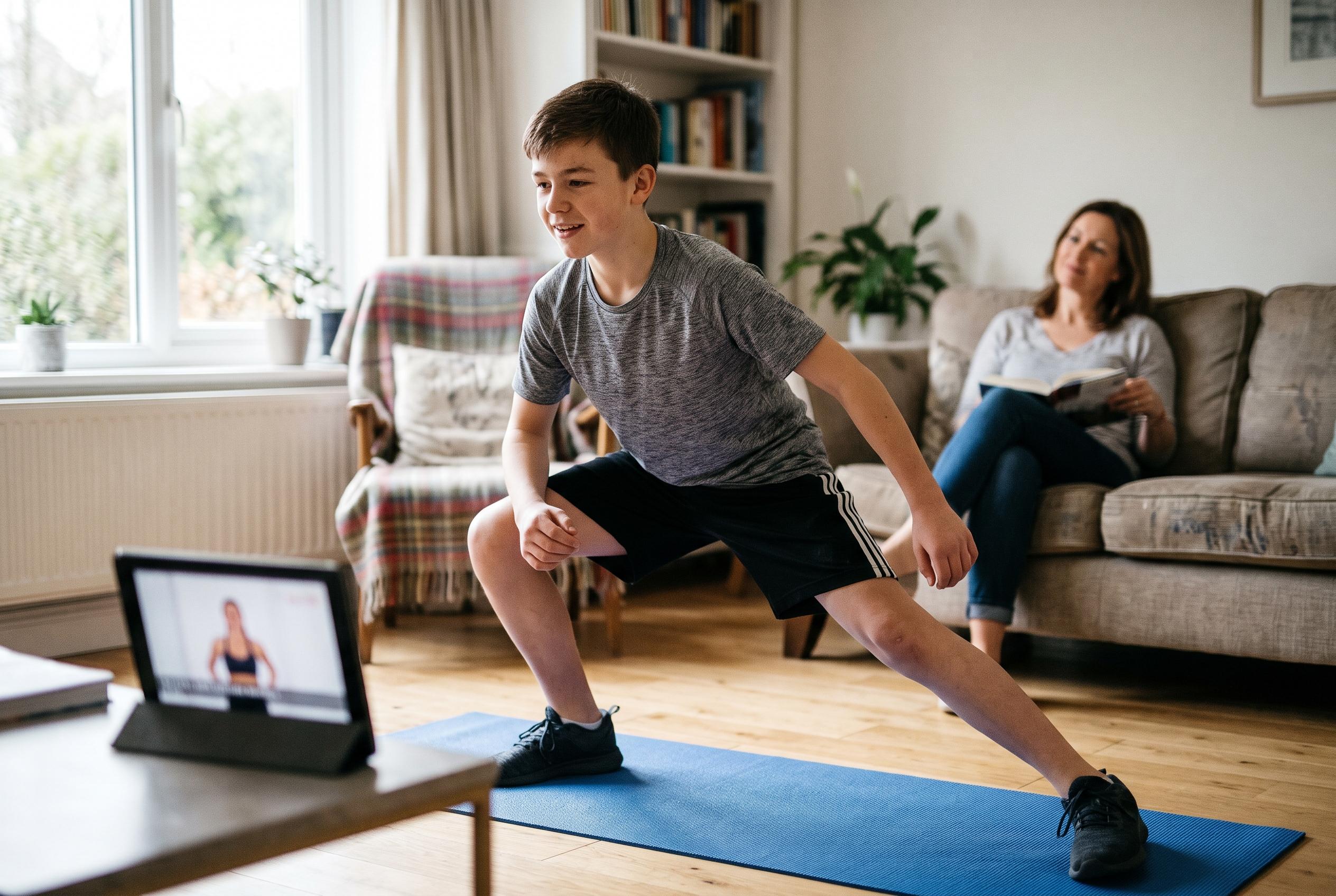

A randomised trial found that supervised, at-home aerobic exercise improved symptoms and quality of life faster than stretching, particularly when started within three months of injury.
A new randomised trial in JAMA Pediatrics suggests that teenagers with lingering concussion symptoms may recover faster when they follow a supervised, at-home aerobic exercise plan rather than a stretching routine, although the advantage appears to fade by six months. The clearest benefit was seen in young people who began the programme within three months of their injury, offering families a practical clue about when rehabilitation may be most useful. According to the study, the approach can be delivered entirely by video call, which could make it easier for families who live far from specialist concussion clinics or struggle to attend regular in-person therapy sessions.
The trial followed 210 patients aged 11 to 18, recruited from outpatient sites in Washington, Utah, Wisconsin and Oregon between 2021 and 2025. Participants had been concussed an average of 73 days before joining the study, and just over half were girls. Those assigned to the exercise arm received activity trackers and began aerobic work at 60% of their maximum heart rate, with intensity and duration increased over six weeks during weekly video visits. The comparison group completed stretching exercises with the same level of contact, a design that helped isolate the effect of the aerobic training itself. The study was led by Sara Chrisman of Seattle Children’s Research Institute and registered as NCT04688255.
At three months, the aerobic group showed greater improvement in concussion symptoms and health-related quality of life than the stretching group, and statistical modelling suggested they recovered more quickly overall. By six months, however, both groups had improved and the difference was no longer significant, indicating that the exercise plan seemed to speed recovery rather than change the final outcome. Sleep, anxiety and depression improved across the whole study population, with no meaningful difference between the two groups. The authors said the benefit was concentrated among patients who were less than three months from injury, while those further along in recovery did not show the same response.
The findings build on earlier concussion research that also pointed to the value of subthreshold aerobic exercise, meaning activity kept just below the level that triggers symptoms. Earlier trials in adolescents with sports-related concussion found that supervised aerobic exercise could shorten recovery time compared with stretching, but those studies were smaller and focused on the first days after injury. The new work extends that evidence to a broader group of young patients with longer-lasting symptoms and suggests that telehealth-based treatment may be a workable option. For parents, the practical message is that completely resting for long periods is not the only route to recovery; instead, a clinician-guided, gradual return to activity may be worth discussing, especially when symptoms linger beyond the first few weeks.
Disclaimer: This content is for informational purposes only and is not intended to be a substitute for professional medical judgment, advice, diagnosis, or treatment.