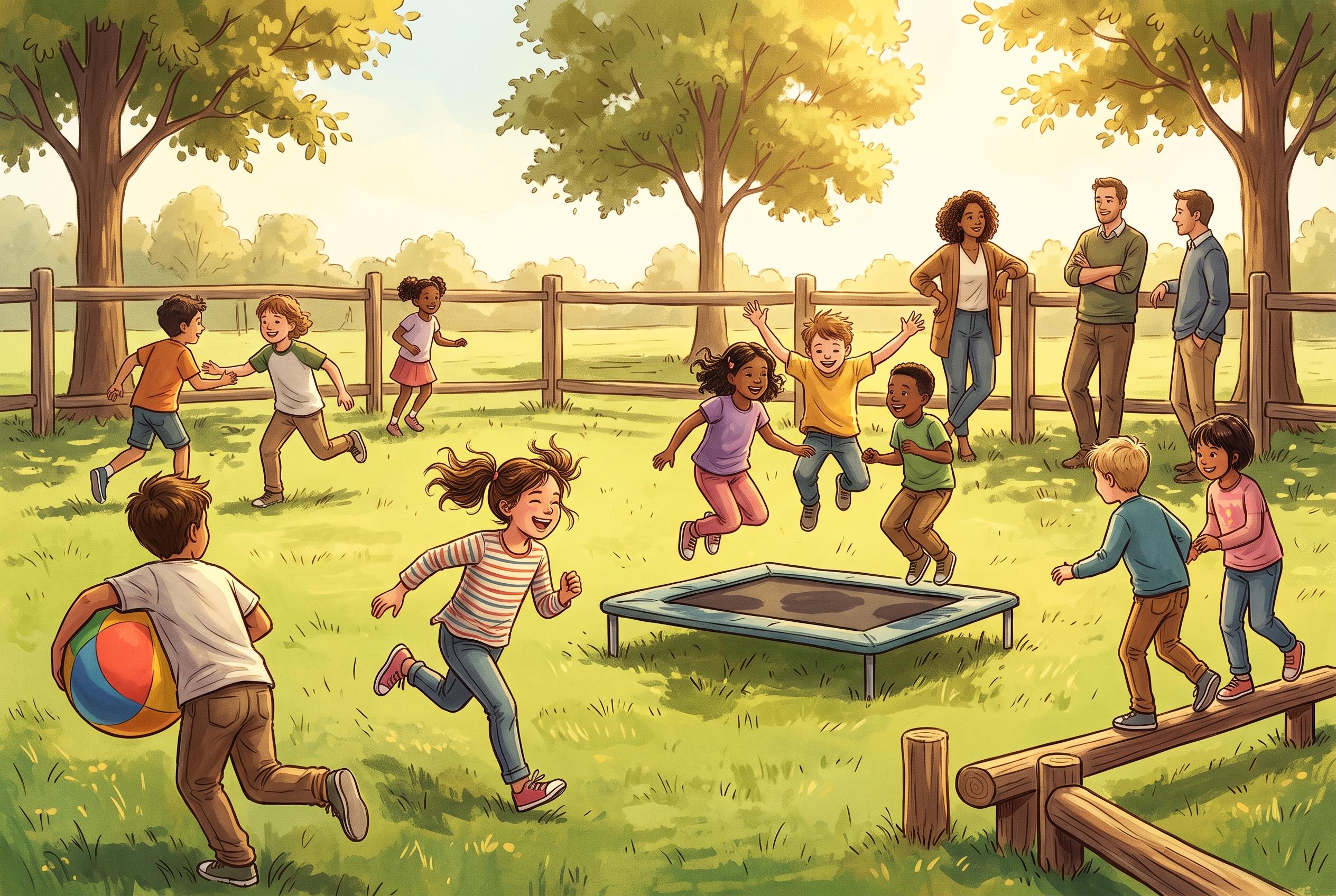

A growing movement across the United States advocates for restoring regular recess in schools, citing research on its positive impact on children’s behaviour, mental health, and academic engagement amid legislative changes and mounting concern among educators and parents.
Across the United States, a growing number of parents, advocates and lawmakers are pushing schools to give children more time to play. The campaign has been fuelled by concerns that recess has been squeezed out of the school day, even as research and public health guidance point to benefits for attention, behaviour, mental health and classroom engagement. The movement has also gained energy from new state laws, including recent measures in South Carolina and Washington, and from advocacy groups pressing for clearer national standards.
The issue has drawn personal testimony as well as policy attention. Former student Spencer Taylor has described a childhood marked by detention and suspension, saying he and other pupils needed time to move, run and reset during the day. His documentary, “The Death of Recess”, argues that too many children are expected to sit still for long stretches. That view is echoed by the Centres for Disease Control and Prevention, which says recess supports physical activity, memory, concentration and social development, while reducing disruptive behaviour.
In recent years, lawmakers have begun to respond. According to reporting from Axios, Washington requires at least 30 minutes of daily recess for elementary pupils, and a 2025 round of state action added or strengthened recess-related rules in places including Illinois, Kentucky, Texas, Tennessee, Vermont and Virginia. South Carolina’s law, signed in June and taking effect this school year, mandates 20 minutes of unstructured outdoor recess for pre-kindergarten through eighth grade, alongside weekly physical education. Other proposals have stalled, including in Kansas, Oregon and Utah, while measures in New York and Ohio remain under consideration.
Advocates say the debate is shifting from whether recess matters to how schools can protect it without lengthening the day. Say Yes to Recess, founded by three mothers in early 2025, says it has already helped drive change in Tennessee and is now campaigning nationally for more unstructured play time. The organisation argues that recess should be distinct from physical education because it is child-led and unstructured. Johns Hopkins University has also published model legislation calling for at least 20 minutes of daily recess in grades K-8 and banning the use of recess as punishment.
Research appears to support the push. A systematic review published on PubMed found benefits across academic, behavioural, physical and social outcomes, and reported no evidence of harm from recess. The CDC likewise says schools can use recess to help children stay on task and improve emotional wellbeing. For many parents, that leaves a simple question at the centre of the policy fight: if children learn better after they have had a chance to play, why are so many schools still cutting that time short?
Disclaimer: This content is for informational purposes only and is not intended to be a substitute for professional medical judgment, advice, diagnosis, or treatment.