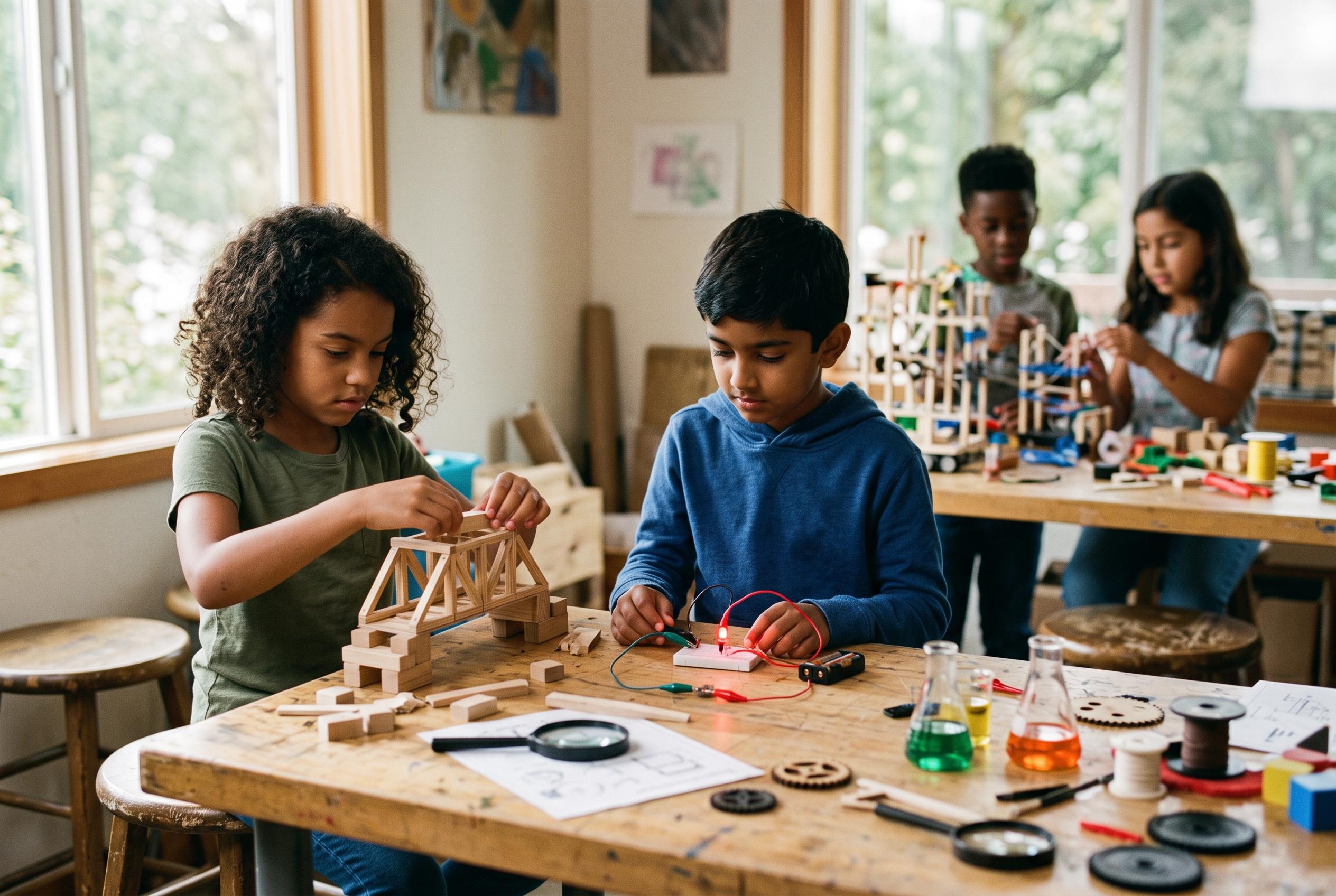

A new survey reveals that 92% of parents now report STEM learning in afterschool programmes, signalling a significant rise, yet access remains uneven across communities, raising concerns about future funding and equitable opportunities for children.
Afterschool programmes are increasingly becoming a place where children meet science, technology, engineering and maths in practical, hands-on ways. A new survey from the Afterschool Alliance found that 92% of parents of children in afterschool now say those programmes offer STEM learning, up from 69% in 2014 and 73% in 2020. The organisation said that amounts to 6.4 million students, yet it also warned that access is still uneven, with sharp gaps linked to income, geography and whether families can secure a place at all.
The survey, part of the America After 3PM series and based on responses from 30,515 parents and guardians across the US, suggests that STEM has become a mainstream feature of afterschool provision. Parents reported the strongest coverage in maths and science, while computer science and engineering were less common. Still, 82% of parents whose children attend an afterschool programme with STEM said it helps build skills and interest, and 61% said they were satisfied with what was on offer.
The report also points to a clear rural-urban divide. In rural communities, 88% of parents said STEM activities were available in afterschool, compared with 96% in cities, and rural families were much less likely to report regular participation. Parents with lower incomes were also less likely to say their children had repeated STEM exposure each week. Afterschool Alliance executive director Jodi Grant said the sector had made major gains but added that millions of children still lacked access to programmes their families wanted.
That concern has taken on added urgency as the sector faces funding pressure. The Afterschool Alliance has separately warned that cuts and proposed eliminations of education initiatives could threaten the progress programmes have made in giving children real-world STEM experience. The group has also been building advocacy ahead of the new presidential administration, arguing that afterschool should be treated as a key part of efforts to strengthen scientific literacy and the future workforce. Looking ahead, the organisation plans to keep using national events such as Lights On Afterschool to showcase how these programmes are helping children explore emerging fields, including artificial intelligence, while also pressing for more support to recruit and retain qualified STEM educators.
Disclaimer: This content is for informational purposes only and is not intended to be a substitute for professional medical judgment, advice, diagnosis, or treatment.