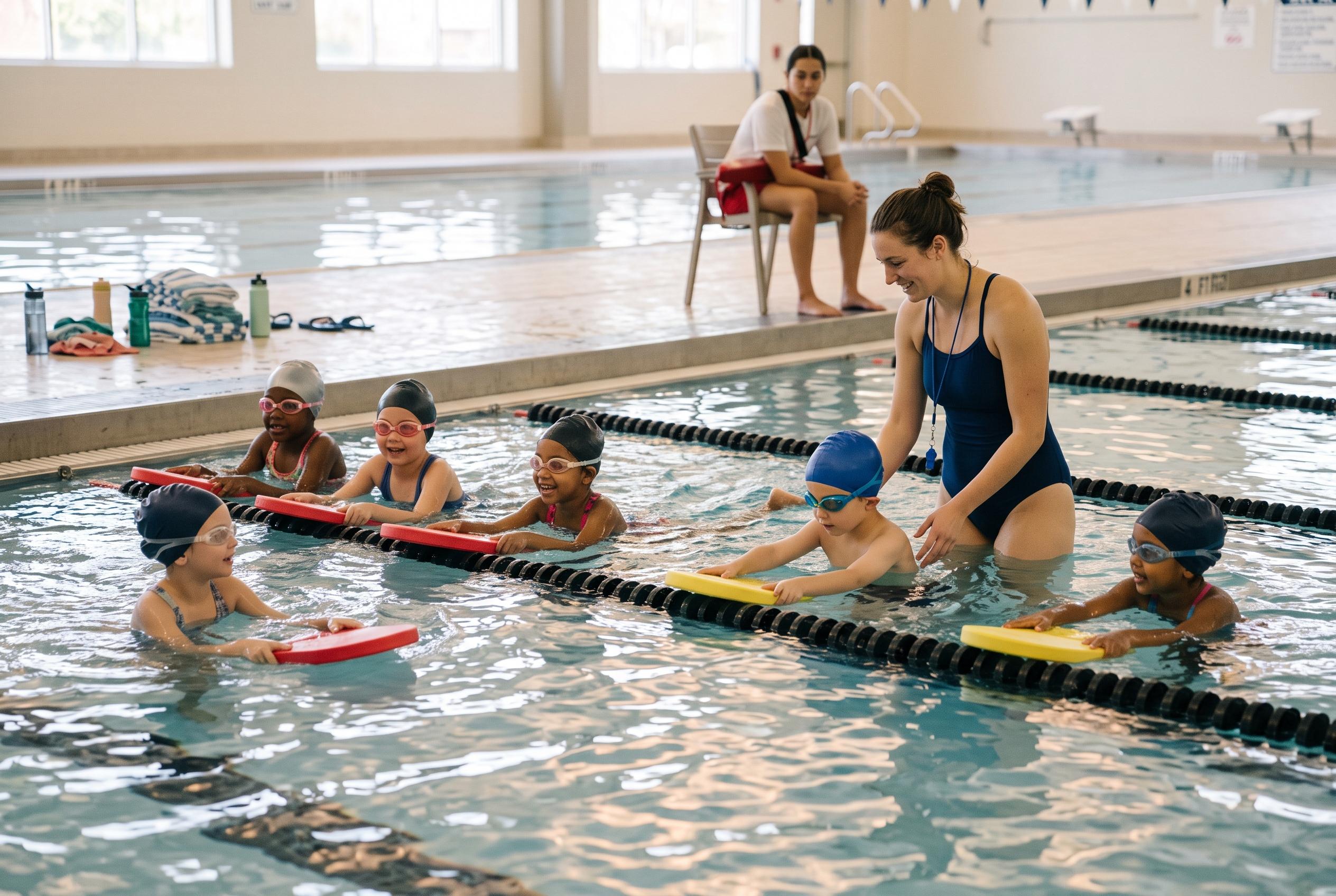

Incorporating games, stories, and choices into swim lessons can make water safety and skills more engaging for children, fostering confidence and reducing anxiety while maintaining safety principles.
Making swim lessons feel like play can help children relax, stay focused and learn more readily. Parents and instructors often find that young swimmers respond best when practice is broken into small, lively moments rather than treated as a long drill. A lesson that feels welcoming and playful can still build the core skills children need in the water, while also helping them develop confidence and a positive attitude towards swimming.
Games are one of the simplest ways to turn repetition into something children want to do again. Treasure hunts, relay races and chase-style activities can encourage kicking, reaching, floating and moving towards a target without making the session feel rigid. Coaches also often use familiar toys and props, such as balls, rings, kickboards and noodles, to keep children engaged while they practise balance, coordination and breath control.
Music, rhythm and storylines can add another layer of enjoyment. A song can help children count kicks or coordinate arm movements, while a playful sound effect or countdown can make a task feel like part of the game. Some instructors build entire lessons around a theme, such as pirates, explorers or rescue missions, so that each exercise becomes part of a larger adventure. That approach can be especially useful for younger children, who often learn best when imagination is part of the lesson.
Giving children small choices can also make a real difference. Letting them choose which activity comes first, or which toy they use, can help them feel involved without weakening the structure of the session. That sense of control can reduce anxiety, especially for children who are new to the pool or unsure about trying a skill. Positive reinforcement matters as well: a praise, a sticker, a high five or a favourite song can mark progress without turning the lesson into a competition.
Safety should remain central even when the lesson is playful. Instructors can weave in simple rules through games, picture cards or pretend scenarios so that waiting for an adult, entering the water carefully and following instructions become familiar habits. Short, active lessons with clear routines also help children stay engaged, while regular pauses give them a chance to recover if they are tired, cold or overwhelmed. For families, the most effective swim lessons are often the ones that feel steady, encouraging and just playful enough to keep children coming back.
Disclaimer: This content is for informational purposes only and is not intended to be a substitute for professional medical judgment, advice, diagnosis, or treatment.