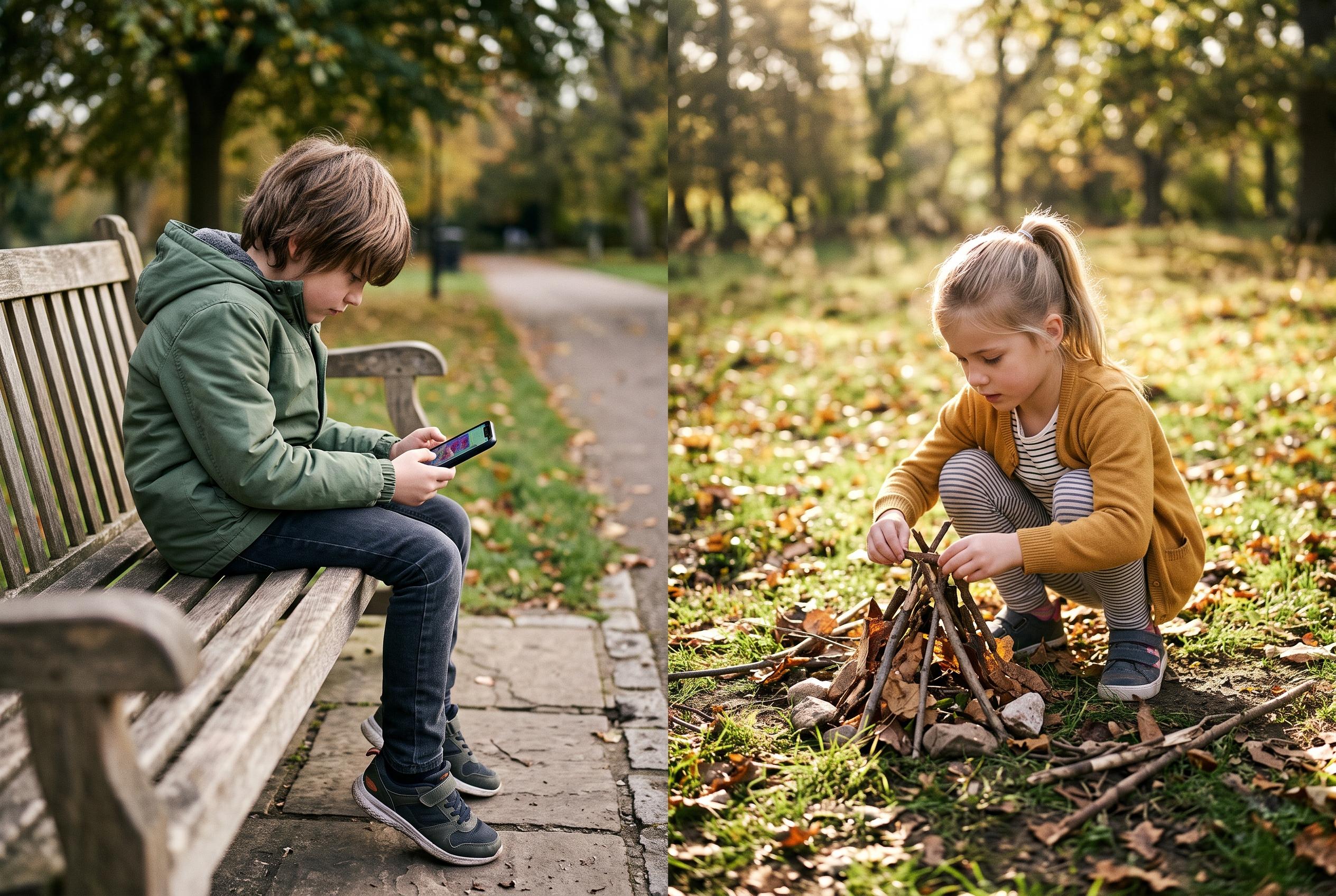

A heated debate unfolds over whether smartphones or increased adult control are chiefly responsible for the decline in children’s happiness, exposing broader social and structural shifts that shape modern childhood experiences.
The debate over why children seem less happy than they once did has become one of the most persistent arguments in modern family life. Jonathan Haidt, in The Anxious Generation, has made the case that smartphones and social media have warped childhood and helped drive rising anxiety among young people. Peter Gray, in Restoring Childhood, pushes back sharply. He argues that the deeper problem is not the device in a child’s hand but the steady expansion of adult control over children’s time, play and movement.
Gray’s case is rooted in the idea that children flourish when they have room to act on their own. He has long defended unstructured play, and he sees video games and even social media as tools that can sometimes support autonomy rather than destroy it. In his telling, today’s young people are surrounded by parents, coaches, teachers and institutions that manage more of childhood than ever before. That view has helped fuel a serious split between Gray and Haidt, who once worked together through the Let Grow organisation before falling out over the causes of youth distress.
Yet the argument is not as simple as phones versus free play. Joshua Rothman in The New Yorker and reporting in The Atlantic both show how the dispute has become less about one device than about competing theories of modern childhood. Haidt places the blame on the digital world; Gray points to the disappearance of unsupervised play and the rise of academic and parental pressure. But the broader social shift also matters: as more middle-class women entered the workforce, the old model of a parent at home all afternoon faded, while schools, aftercare and neighbourhood life changed around it.
That missing domestic infrastructure helps explain why so many parents now depend on tightly organised activities. The Washington Post, Time and The Guardian have all noted how Haidt’s warnings resonated with parents already alarmed by teenage anxiety, but those concerns sit alongside a practical reality: many families cannot rely on nearby relatives, flexible jobs or affordable child care. The result is a parenting culture shaped as much by logistics as by ideology, with risk avoidance often looking less like a moral choice than a response to an unforgiving schedule.
Gray’s preferred remedy is more trust, more freedom and more chances for children to manage small risks on their own. That is an appealing prescription, but it can sound utopian when set against the realities of work, school hours and urban life. The deeper lesson from the current debate may be that childhood has been squeezed by several forces at once: technology, over-organisation and a social system that no longer provides the slack families need. If children are to gain more independence, parents will also need the reassurance that someone, somewhere, is still close enough to help when things go wrong.
Disclaimer: This content is for informational purposes only and is not intended to be a substitute for professional medical judgment, advice, diagnosis, or treatment.