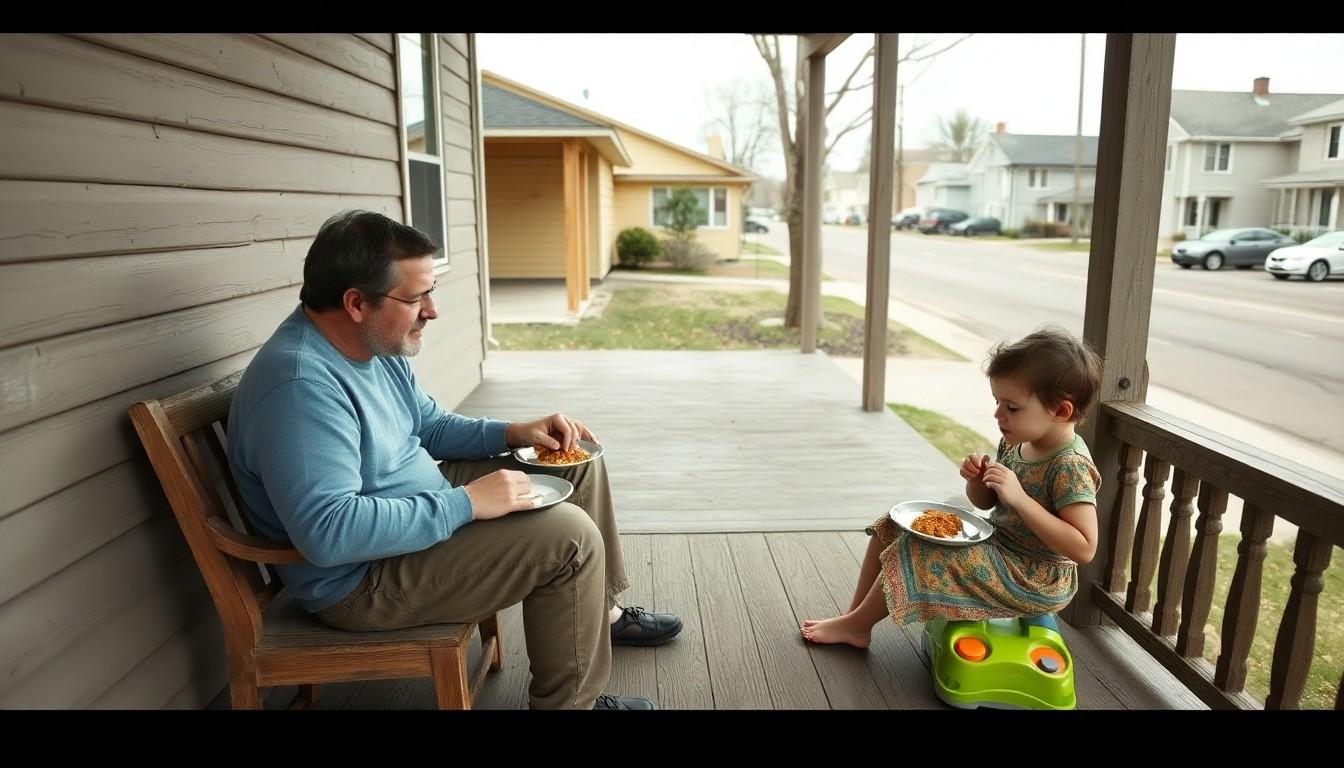

Research suggests that regular, unstructured time spent together, such as shared meals and routine activities, may be more impactful on children’s wellbeing than high-profile parenting efforts or scheduled activities. Experts emphasise the importance of presence and consistency over spectacle in nurturing healthy development.
Children are unlikely to remember a parent who turned family life into a perfectly managed project. They are more likely to remember the evening soup, the unnecessary detour home, and the sense that, for once, no one was racing the clock.
That idea cuts against a great deal of modern parenting culture, which often treats childhood as something to be improved through planning, scheduling and constant enrichment. Yet the research gathered here points in a quieter direction: children seem to register not just what parents do, but the atmosphere in which ordinary life unfolds.
A review published in 2002 by Barbara Fiese and colleagues at Syracuse University, drawing on 32 studies over half a century, found that recurring household habits such as shared meals, bedtime routines and the daily journey home were linked with parenting competence, child adjustment and marital satisfaction. The authors were careful not to overstate the case. They noted that the underlying studies used mixed methods, relied heavily on convenience samples and could not always separate the effect of a routine itself from the wider conditions of family life.
Even so, the pattern was consistent enough to suggest that predictability and presence may matter more than spectacle. A child does not need the drive home to be memorable in a theatrical sense; what may matter is that it happens regularly, and that the adult is actually there, unhurried and attentive. That is a quality difficult to package, and perhaps one reason it is often undervalued beside more visible forms of parenting effort.
A later study by Melissa Milkie, Kei Nomaguchi and Kathleen Denny, published in 2015 in the Journal of Marriage and Family, added a further wrinkle. Using data from the Panel Study of Income Dynamics’ Child Development Supplement, it found that the sheer amount of time mothers spent with younger children had little connection to later behaviour. For adolescents, however, time spent actively doing things together was associated with fewer conduct problems and less substance use, according to the National Institute of Child Health and Human Development. The same study also found that a mother’s reported anxiety or low mood tracked more closely with child wellbeing than the total number of hours she spent at home.
That does not amount to a simple prescription. The findings cover one dataset in one country, and they do not settle what every child needs from every family. They also depend on a kind of engaged time that is easier to promise than to arrange, especially for parents whose working lives leave little flexibility. A result about what helps is not the same thing as a result about what is equally available.
What the research does challenge is the assumption that presence must be productive to matter. Soccer practice, music lessons and structured activities are not the target here. The larger point is that ordinary, repeated, unflashy time together appears to carry more weight than parenting culture often allows. A weeknight spent making soup may not look like achievement. To a child, it may be the thing that stays.
Disclaimer: This content is for informational purposes only and is not intended to be a substitute for professional medical judgment, advice, diagnosis, or treatment.