

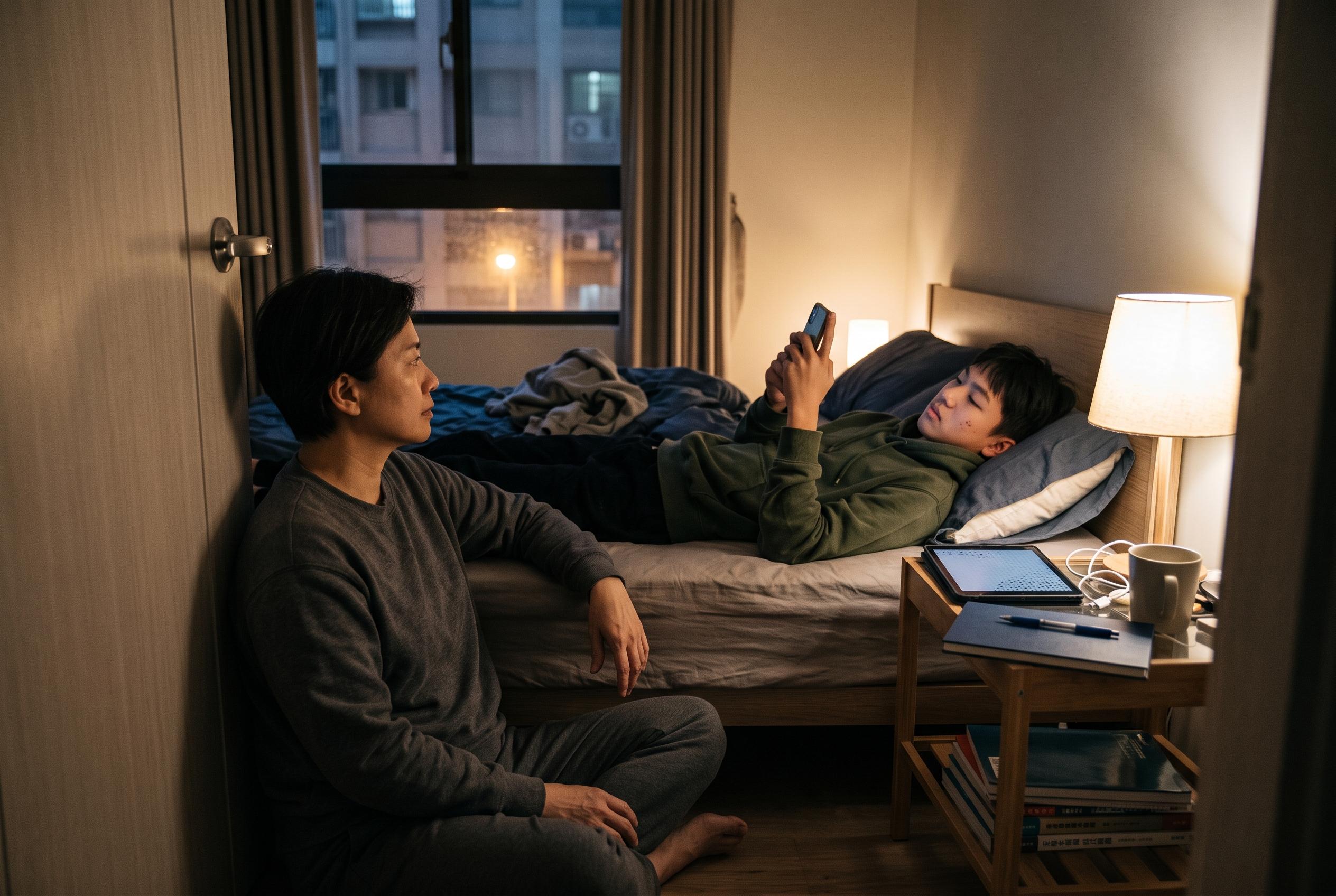

Doctors in Taiwan warn that late-night online activity among teenagers often reflects underlying emotional issues rather than addiction, urging parents and clinicians to understand the root causes rather than rushing to label behaviour as problematic.
Taiwanese doctors are warning parents not to rush to label a teenager who stays online late at night as addicted, saying the pattern may instead reflect poor sleep, low mood or other emotional strain. Doctors at Taichung Veterans General Hospital said their review of more than 4,000 junior high school students found that those who regularly used digital devices late at night were more likely a year later to report worse sleep quality, more depressive symptoms and a lower sense of wellbeing.
The findings fit with earlier research in Taiwan linking heavy internet use in adolescents to poorer mental health. A 2018 study published in the Journal of Developmental and Behavioural Pediatrics found that greater internet use was associated with weaker social integration at school and more depressive symptoms, while a 2020 PLOS One paper reported that increased internet use was linked with lower happiness and higher rates of deliberate self-harm. A later study using data from the Taiwan Birth Cohort also found that teenagers spending more than five hours online on school days were more likely to report bullying, depressed mood and reduced happiness.
At Taichung Veterans General Hospital, child and adolescent psychiatrist Liu Jia-qian said clinicians had recently seen a secondary school pupil who stayed up gaming every night, struggled to get out of bed the next morning and fell behind in class. The family initially believed the child had become hooked on the internet, but hospital staff concluded the problem was more complex: strict bans at home had pushed the teenager to sacrifice sleep in order to keep playing.
The hospital team said the situation improved after the family agreed a clearer routine, allowing one hour of gaming after homework and household chores were finished, while also adjusting weekday and weekend screen time. The child was referred for occupational therapy focused on digital-device use, and the parents received guidance on handling conflict around screens. The hospital’s clinicians said the goal should be to understand why a young person is online late rather than assuming addiction from behaviour alone.
Liu said true internet addiction involves an inability to stop using the web despite clear harm to daily functioning, such as refusing school, skipping homework or missing classes. By contrast, late-night gaming or social media use may stem from low mood, a need for emotional release or attempts to sneak screen time after daytime restrictions. She advised parents to ask calm, specific questions about what the child is doing online, whether games are going well and whether anything has recently been upsetting, rather than responding with immediate blame. The hospital also said persistent irritability, withdrawal or defiance should prompt consideration of further medical help.
Disclaimer: This content is for informational purposes only and is not intended to be a substitute for professional medical judgment, advice, diagnosis, or treatment.



