

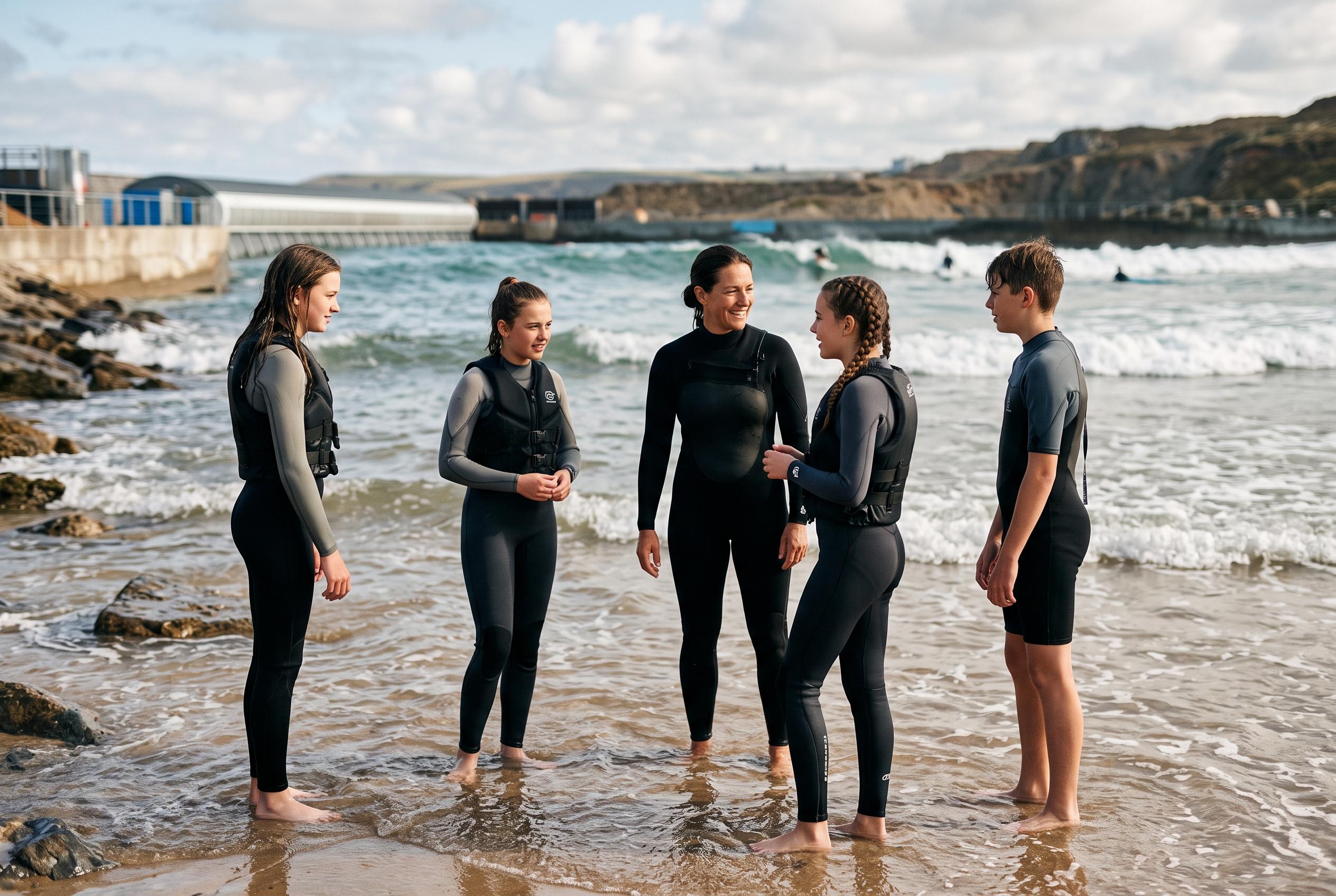

A new evaluation reveals that young people participating in surf therapy experience similar mental health improvements whether riding natural waves at the coast or using inland wave pools, potentially broadening access to this therapeutic practice.
A new evaluation of surf therapy suggests that young people can gain similar mental health benefits whether they are riding natural waves at the coast or using inland wave pools. The study, led by Tim Trythall, the impact and research manager at The Wave Project, followed 360 participants through six-week programmes and found improvements across every measured outcome in both settings. Coastal participants posted the strongest rise in overall wellbeing, but the inland group also finished with broadly comparable scores.
The evaluation compared 302 young people at beaches with 58 who took part at wave pools near Bristol and Edinburgh. According to the findings, both groups improved on all five core measures recorded before and after the programme, including wellbeing, self-belief, perseverance, pride in achievement and connection with others. The biggest change came on the WHO-5 Well-Being Index, a widely used measure that scores emotional wellbeing from 0 to 100. Beach participants rose from 56.4 to 76.5, while the wave-pool group moved from 62.5 to 73.1.
That difference was statistically significant, but the result does not amount to proof that the sea itself is more therapeutic. The inland group began the programme with better wellbeing scores, and by the end the gap between the two settings had narrowed. The researchers also did not randomly assign participants to locations, which means the groups may have differed before the sessions even began. With far fewer inland participants than coastal ones, the wave-pool results also carry more uncertainty.
Elsewhere, the numbers were much closer. Gains in self-belief, perseverance and pride in achievement were significant in both settings, but the differences between beach and wave pool were not. Participants’ sense of social connection also rose almost identically. In that measure, the beach group improved from 3.6 to 4.4 on a seven-point scale, while the wave-pool group increased from 4.1 to 5.0. The researchers found no meaningful statistical difference between those outcomes.
The clearest second difference concerned friendship. According to the study, 81.5 per cent of beach participants said they made new friends during the programme, compared with 69.0 per cent in wave pools. The evaluation did not establish why. One practitioner suggested that coastal sessions may allow more informal conversation between waves, whereas wave-pool sessions tend to follow a more fixed schedule. Even so, the broader picture was one of strong results in both environments: nearly all participants reported having fun, learning something new and feeling able to be themselves.
The findings fit with The Wave Project’s wider body of work. The UK-based charity has spent years tracking the effects of surf therapy and says its annual evaluations consistently show large improvements in wellbeing among young people. Founded in Cornwall as an NHS pilot in 2010, it now operates across the UK and has worked to expand access to surf therapy for children and teenagers facing mental health challenges. This latest analysis strengthens the case that inland wave pools could widen that access, especially for families who live far from the coast, even if more data will be needed before firm conclusions can be drawn about whether one setting is better than the other.
Disclaimer: This content is for informational purposes only and is not intended to be a substitute for professional medical judgment, advice, diagnosis, or treatment.



