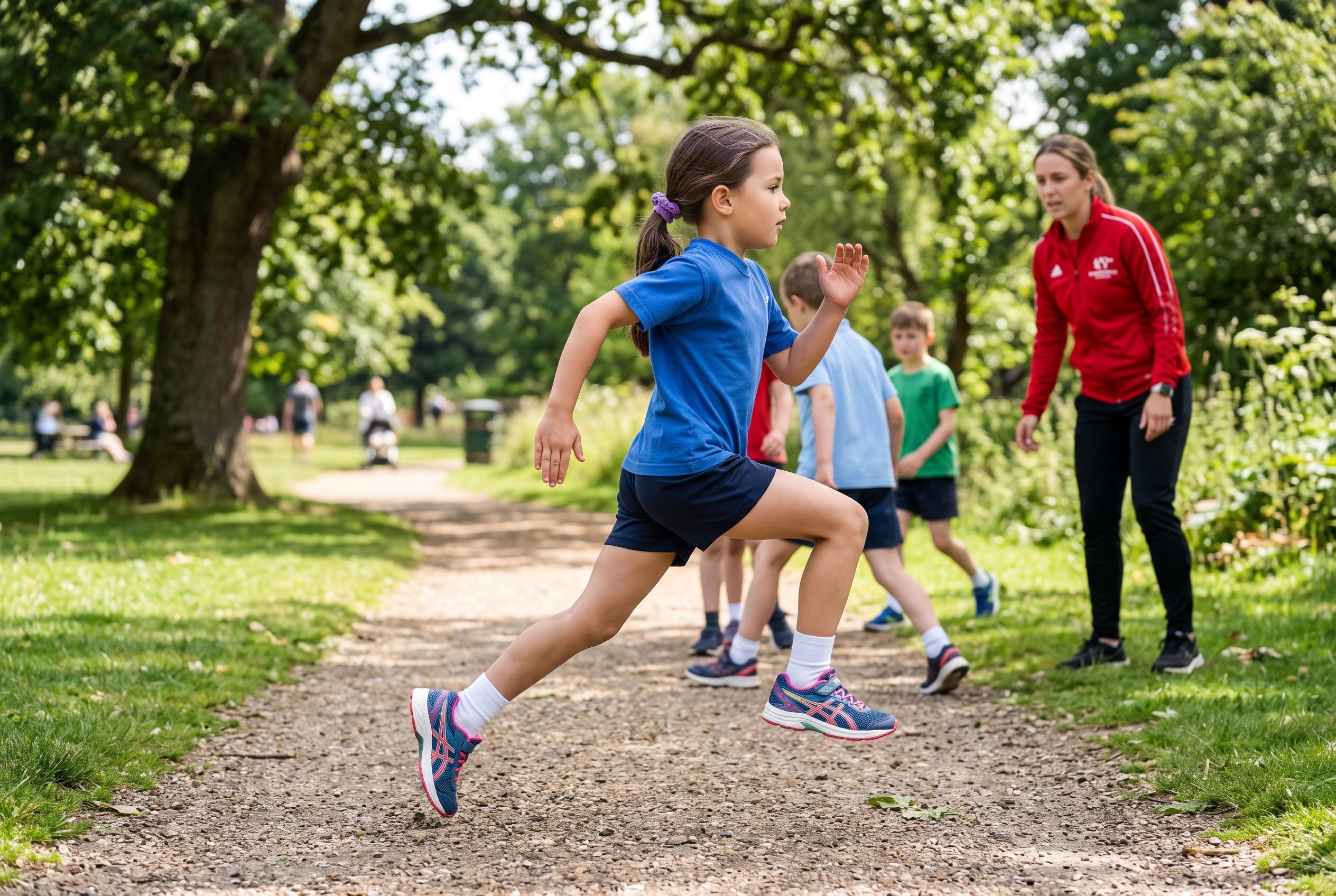

Research from north-west Italy reveals that professionally guided, structured exercise programmes yield specific fitness benefits in primary school children, surpassing the effects of popular routines like The Daily Mile, though overall gains remain modest.
A six-month school trial in north-west Italy suggests that not all activity breaks are equal when it comes to children’s fitness. Researchers following 263 boys and girls aged 9 to 11 found that a structured programme led by a sports science specialist produced clearer gains in some measures than The Daily Mile or standard physical education lessons, although the effects were limited to particular outcomes rather than broad improvements across the board.
The study, carried out in primary schools outside Turin, compared three approaches: a specialist-led exercise session built around movement skills, strength work and aerobic activity; a semi-structured version of The Daily Mile combined with regular class activity; and usual school physical education taught by a generalist teacher. Children were tested before and after the intervention on sprinting, endurance, balance, grip strength, jumping and flexibility. The researchers also accounted for baseline fitness, age, changes in body mass index and classroom clustering in their analysis.
The clearest result was in lower-limb power. Children in the structured group jumped further than those in both comparison groups, while they also outperformed The Daily Mile group on a balance test with eyes open. The programme did not produce stronger results in handgrip, sprinting or shuttle-run endurance. A sex effect also emerged: boys recorded better shuttle-run scores than girls, while the children’s earlier activity status did not appear to alter the training response.
The findings fit with a broader pattern seen in school-based exercise research. A Cochrane review has found that such programmes may improve physical fitness, but have little or no effect on body mass index, underlining how difficult it is to shift body composition through school activity alone. Earlier trials, including Fit-4-Fun and the KISS study, reported gains in health-related fitness and aerobic capacity when activity was built into the school day in a structured way. More recently, studies of The Daily Mile have suggested benefits for fitness, wellbeing and even cognition, but the Italian data imply that a short, familiar routine may be less potent than a more deliberately designed session.
Taken together, the evidence suggests schools can help children move more and, in some cases, become fitter, but the design of the intervention matters. The Italian researchers say the benefits they saw were outcome-specific and modest rather than universal, which means policymakers and schools may need to be cautious about assuming that any activity break will deliver the same results. For now, the strongest message is that structured, professionally guided exercise may be more likely than a simple running break to improve selected elements of fitness in primary school children.
Disclaimer: This content is for informational purposes only and is not intended to be a substitute for professional medical judgment, advice, diagnosis, or treatment.