

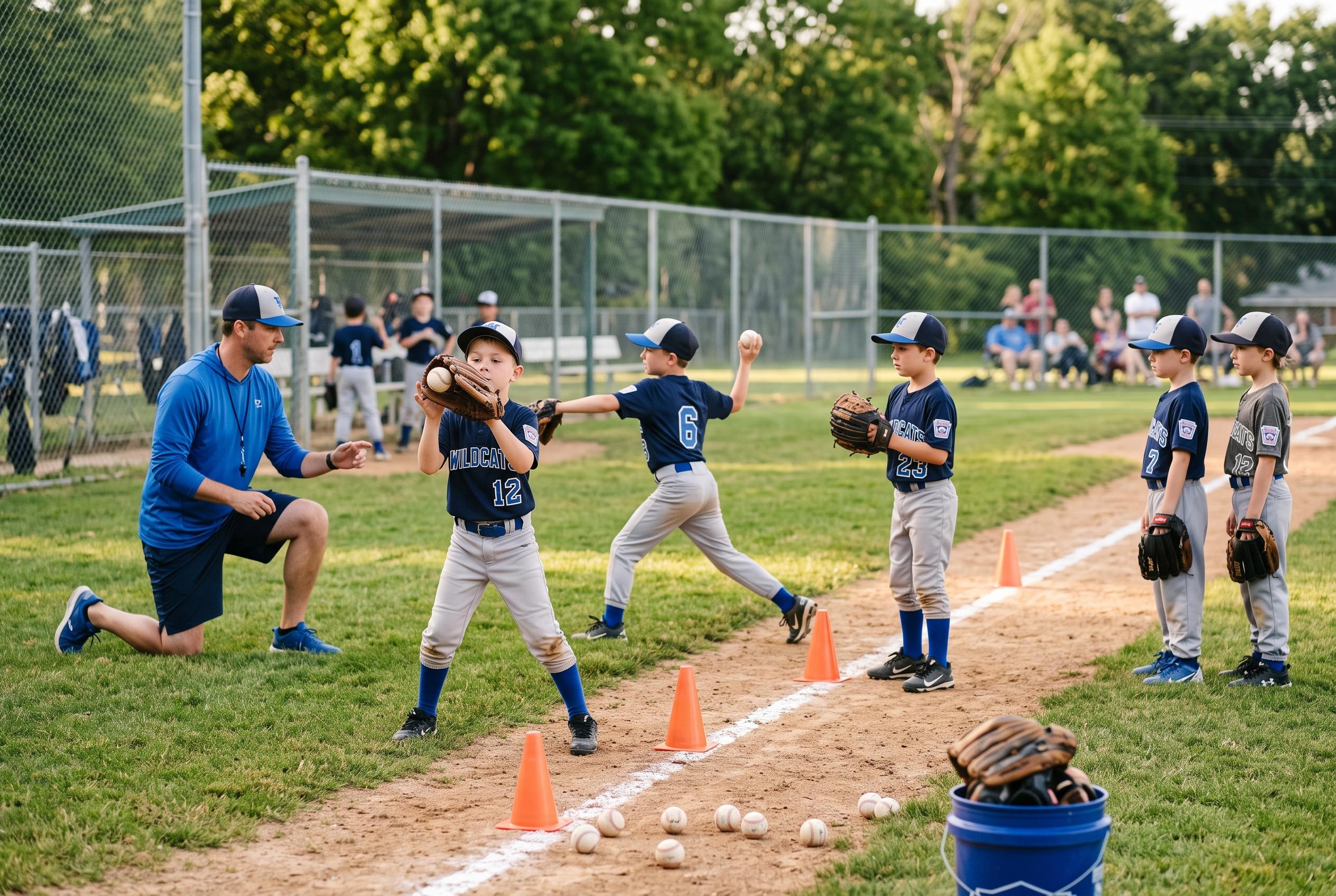

New approaches emphasising organisation and rhythm instead of complexity are transforming coaching sessions for young players, boosting engagement and skill development.
A well-run practice for players aged seven to nine depends less on complexity than on rhythm. The coach behind Coaching Youth Baseball argues that the session should be tightly organised, with each block serving a clear purpose and no long stretches in which children are left idle. That approach matches other youth coaching guides, which stress short, varied activities that keep children moving while they learn the basics of catching, throwing, fielding and hitting. Coaches who plan with that structure in mind are more likely to hold attention and build confidence at the same time.
The session begins before the official start time with a simple gathering drill, giving early arrivals something purposeful to do while the rest of the team filters in. From there, the emphasis shifts to warm-ups, running and team stretching, which the article frames as both preparation and a way to help children settle into the practice as a group. Similar plans for young players from Veo and local coaching resources also build in early movement and team routines, reflecting the idea that children this age respond well to activity that feels energetic and organised rather than formal or repetitive.
After that opening, the practice turns to defence. The article recommends making catching, throwing and ground-ball work the first serious skill block, both to maximise focus and because younger players are often more alert early in the session. Other age-specific practice outlines, including 90-minute plans for eight- and nine-year-olds, follow the same logic by front-loading defensive drills and using a mix of relay throws, fielding repetitions and game-like situations. The shared theme is that instruction should be active and repetitive enough to give every child plenty of turns without leaving anyone standing around for long.
Hitting then takes up the bulk of the session, with the article urging coaches to avoid a single-file batting line and instead set up several stations. The aim is simple: more swings, more movement and less waiting. The plan suggests using coach pitch, tee work, paired fielders and rotating stations so that children cycle through tasks on a regular schedule. Guides from Ball Base Backup and Baseball Coach Lab make a similar case for structured hitting blocks, soft toss and station-based work, showing that even at this age coaches can create a busy practice without losing control. If time allows, the final stretch can be used for baserunning, team defence or a short game that pulls the day’s skills together and ends on a high note.
Disclaimer: This content is for informational purposes only and is not intended to be a substitute for professional medical judgment, advice, diagnosis, or treatment.



