

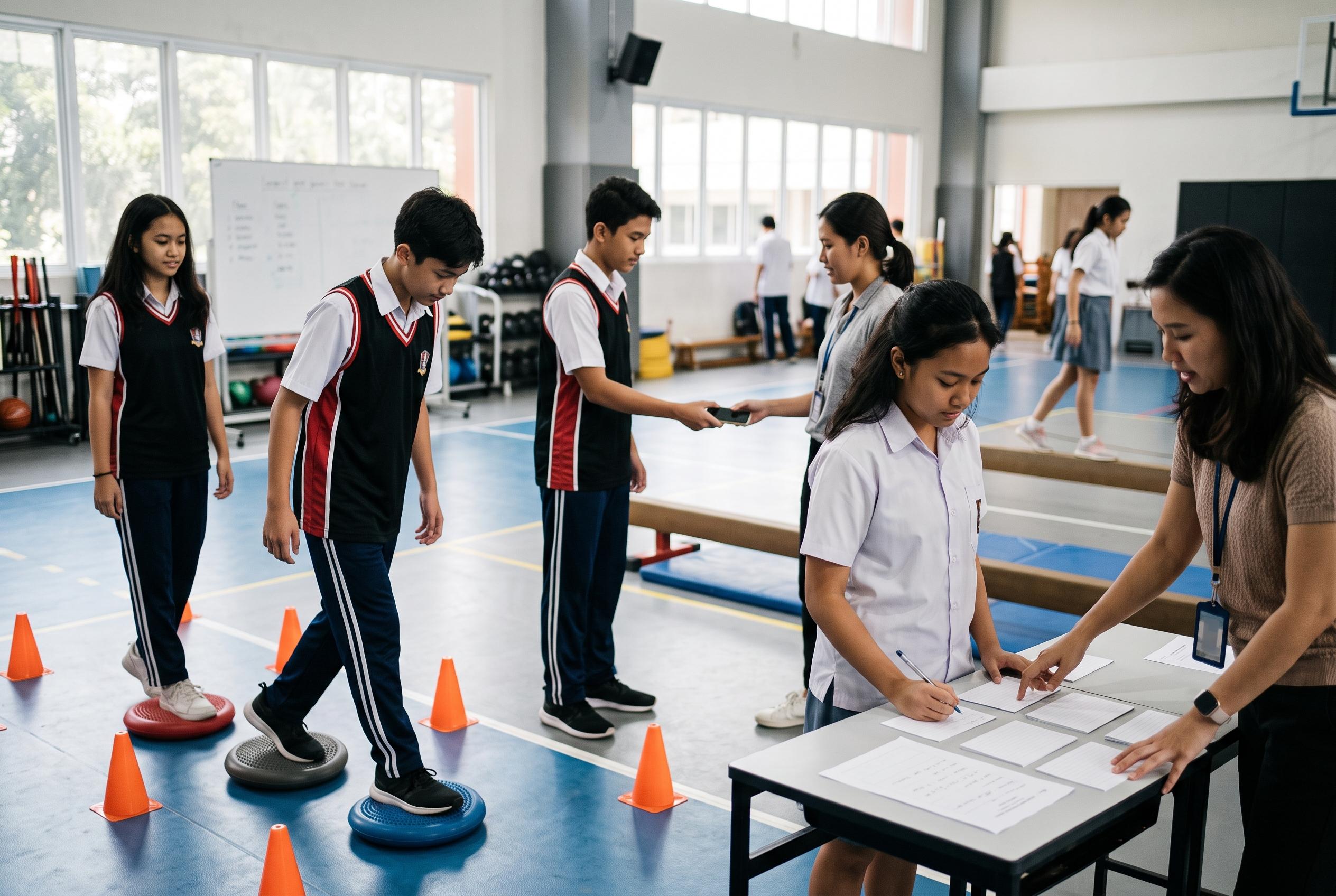

A 12-week combined movement and cognitive training programme in Jakarta improves motor skills and reasoning while decreasing problematic internet use, highlighting the benefits of structured extracurricular activities for youth development.
A 12-week after-school exercise programme that mixed movement drills with cognitive tasks was linked to better motor skills, sharper reasoning and lower problematic internet use among Indonesian adolescents, according to a Frontiers in Psychology study. The findings add to a growing body of research suggesting that structured extracurricular activity can influence not only physical fitness but also behaviour tied to screen use.
The randomised trial involved 88 junior high school students in Jakarta, aged 12 to 16, who were assigned either to the extracurricular multilateral training programme or to standard school physical education. Researchers said the sessions took place twice a week after school and were built around activities such as relay races, balance work, throwing drills and games that required children to react to colours, numbers, rules and memory cues at the same time. The control group continued normal physical education lessons.
After the intervention, the training group recorded stronger gains in motor proficiency and cognitive ability, while also showing a bigger drop in problematic internet use than the comparison group. The authors said the results held even after adjusting for baseline scores, daily physical activity, gender and parental education. They also reported that, before the programme began, better cognitive scores were associated with better motor performance and less problematic internet use in both groups.
The paper’s authors argued that the programme’s value may lie in its combination of physical challenge and mental engagement. That fits with earlier research cited by the journal, including a Frontiers in Education study showing that participation in structured activities such as extracurricular sports can support motor development and reduce problematic internet use, and a Frontiers in Psychology report suggesting that coordinated-ability training can improve adolescent cognition and movement proficiency.
The new study also comes as researchers and educators are paying closer attention to how adolescents’ digital habits intersect with learning and health. A separate Frontiers in Psychology article found that digital literacy education, including work on self-efficacy and delay of gratification, may help young people manage problematic internet use. Other research has also indicated that gaming and screen-based activities can have mixed effects, sometimes supporting certain cognitive or motor skills while also carrying behavioural risks. The authors of the Indonesian trial said their results support the inclusion of structured, cognitively demanding physical activity in school-based after-school programmes, while noting that more work is needed to see whether the benefits last and whether they translate into wider academic or wellbeing outcomes.
Disclaimer: This content is for informational purposes only and is not intended to be a substitute for professional medical judgment, advice, diagnosis, or treatment.



