

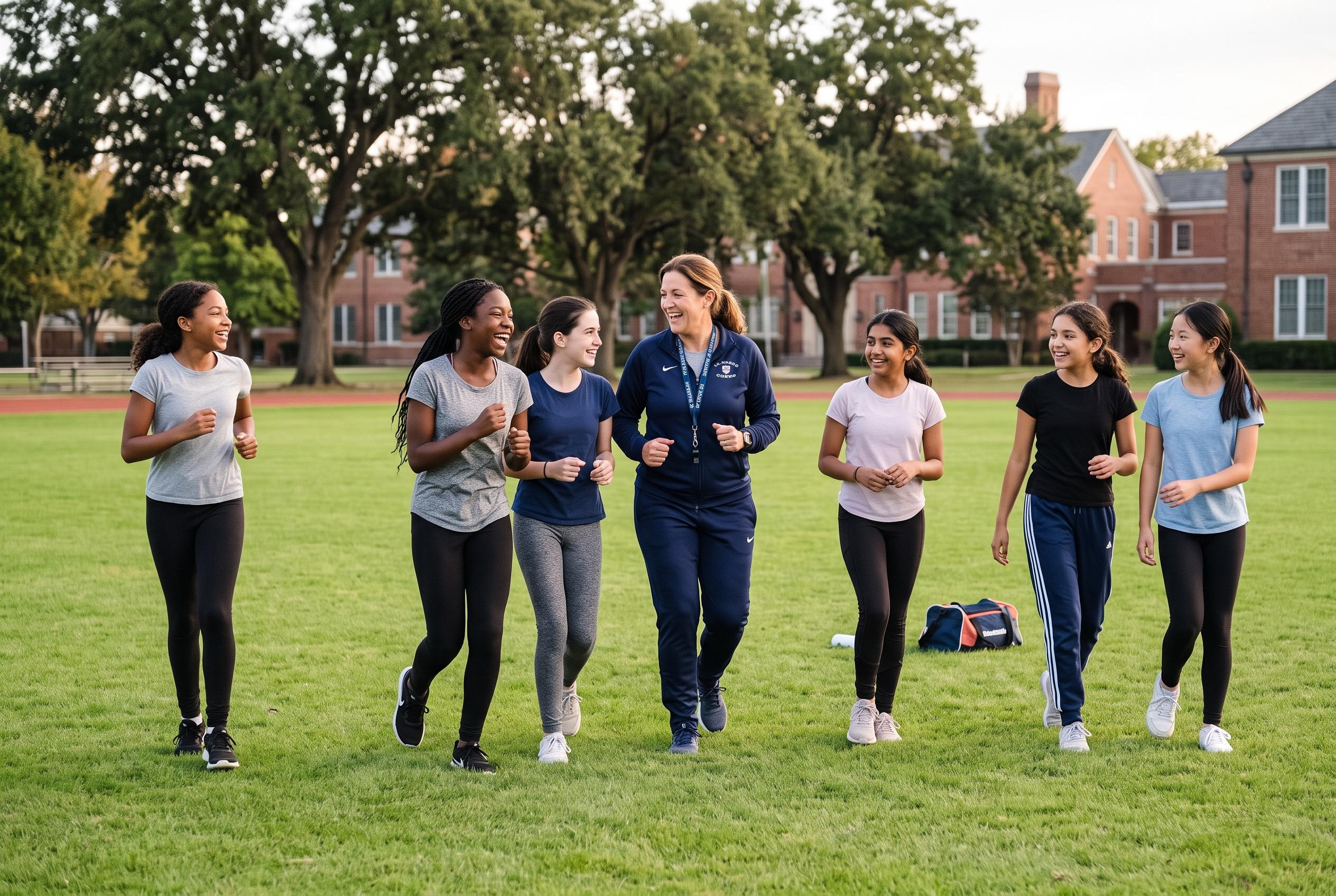

Asha Riley is reshaping physical education at St Swithun’s School around confidence, daily movement and inclusion, arguing that lasting participation begins beyond the scoreboard.
Asha Riley is trying to change how girls experience physical activity by changing the culture around it. Speaking on the PE Insights podcast with Nathan Walker, the head of Active Well-being at St Swithun’s School in Winchester set out a model of school sport that places belonging, confidence and daily movement ahead of results on the scoreboard. Her argument is straightforward: if schools want young people to stay active for life, they need to offer more than fixtures, selections and medals.
Riley’s thinking is shaped by a career that has moved from elite lacrosse to secondary teaching and international leadership. Before taking on her current role at the all-girls independent school, she coached and taught alongside a decade in international lacrosse. That background, she said on the podcast, showed her how easily the demands of school sport can push aside the pupils who are least comfortable in competitive environments. Her response has been to focus on the everyday habits, spaces and messages that help girls feel movement is for them, not just for the naturally sporty few.
At St Swithun’s, that approach has meant widening access to activity rather than protecting it for a small number of first-team athletes. Riley introduced lunchtime exercise clubs open to all pupils, alongside more familiar sports provision. The school now offers sweat sessions, speed and agility work, and endurance running clubs, all designed to give girls low-pressure entry points into exercise. She has also opened strength and conditioning to pupils from Year 8 upwards, a move that challenges the idea that weight training is only for elite performers. The result, she said, is a gym culture in which girls learn how to train safely, follow programmes and build confidence with equipment long before they leave school.
The department has tried to make that participation visible and valued. Rather than praising only competitive success, St Swithun’s recognises attendance at activity clubs with loyalty cards and whole-school praise, while also celebrating recreational participation through its communications channels. Riley’s wider curriculum model draws a sharp distinction between games and PE: games are for team sport, while PE is protected as a place to build movement skills, fitness and confidence. A central part of that work is MOVE60, a six-lesson scheme she created to help pupils understand the physical and mental benefits of movement before moving on to more sport-specific work.
Riley is also clear that culture change should be measured, not assumed. She used the Youth Sport Trust’s Girls Active Survey to test whether her department’s efforts were making a difference, and the figures suggested strong gains compared with national averages. Pupils were more likely to say the school encouraged them to be active, more likely to report enjoying physical activity, and more likely to feel they could be themselves when active. The school has also tackled female health issues more openly, with assemblies, workshops and sports-bra fittings aimed at normalising conversations about periods and appropriate kit. That practical focus appears to have had an effect on behaviour as well as awareness.
Her experience overseas helped shape that outlook. During five years at Marlborough College Malaysia, Riley and her husband, then director of sport, built a programme from the ground up at a school still developing its facilities. When she saw that girls had limited competitive opportunities in the region, she introduced touch rugby after connecting with coaches in Singapore, eventually helping to establish a tournament that grew into a major girls’ event in south-east Asia. She said that experience reinforced a lesson she has carried back to Britain: schools cannot rely on competition alone to keep young people active. They need to build a foundation of fitness, movement competence and enjoyment first.
That message runs through her work with pupils, trainee teachers and colleagues. Riley warns against tying a young person’s identity too tightly to a single sport, arguing that injury, exam pressure, family life or simple loss of interest can make that identity fragile. She also urges teachers to treat reluctant pupils with patience and warmth rather than judgement, and to see every lesson as a chance to shape attitudes to health and exercise. For her, the purpose of physical education is not only to produce better sportspeople. It is to help girls grow into adults who know how to move, how to adapt and how to feel at home in their own bodies.
Disclaimer: This content is for informational purposes only and is not intended to be a substitute for professional medical judgment, advice, diagnosis, or treatment.



