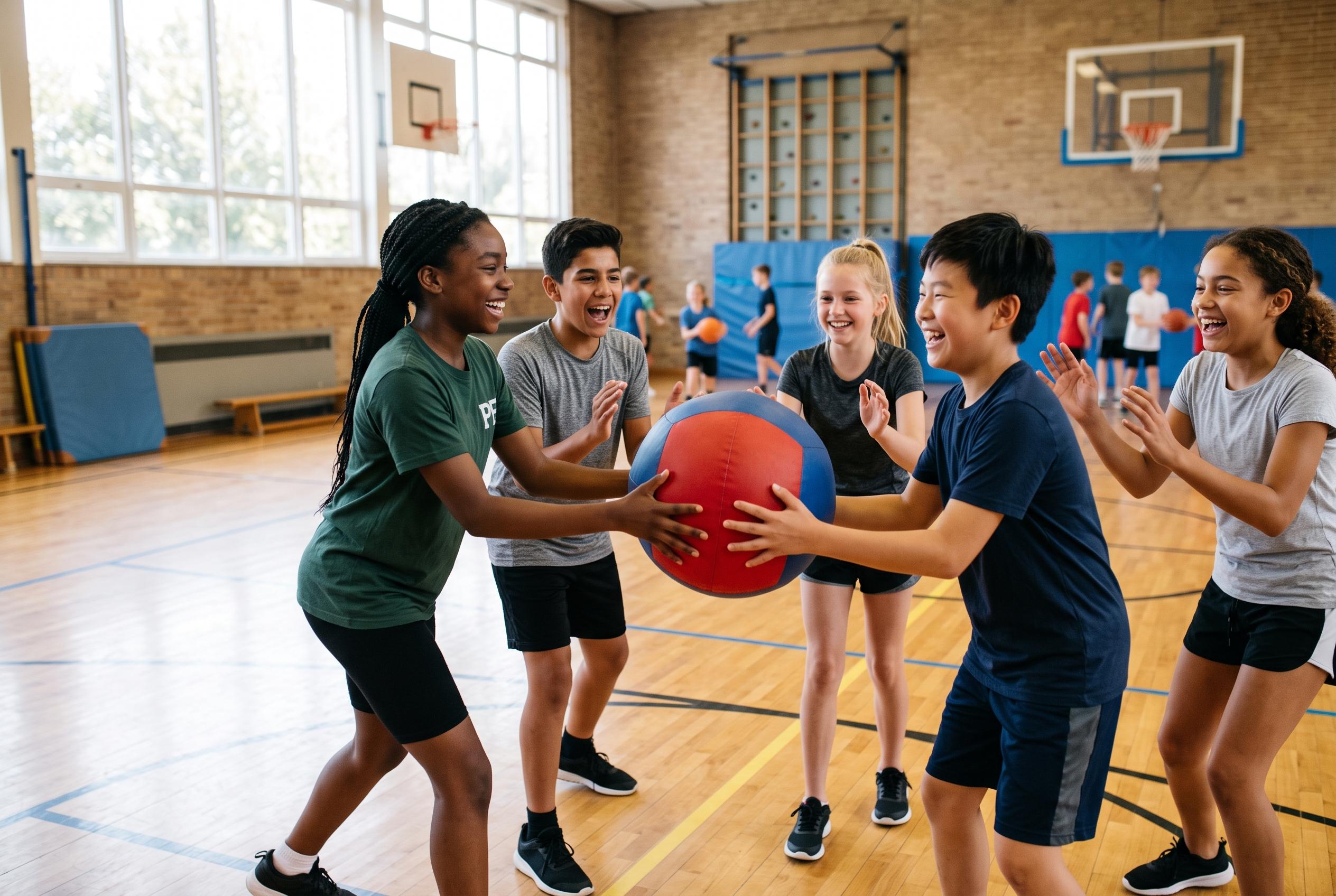

Research in South Korea reveals that a supportive peer environment focused on effort and cooperation significantly boosts moderate-to-vigorous physical activity among middle school pupils, highlighting the importance of relationships in promoting healthier habits.
A study of middle school pupils in South Korea suggests that the social tone of physical education lessons may matter almost as much as the activities themselves for how much moderate-to-vigorous physical activity students do in class. Researchers writing in Frontiers in Psychology examined whether a peer climate built around effort, cooperation and improvement was linked to more movement, and whether a climate shaped by comparison, criticism and competition had the opposite effect.
The team studied 596 students aged around 14 from five co-educational middle schools in Daegu, using accelerometers to measure activity during a single 45-minute PE lesson and questionnaires to gauge how pupils viewed their classmates’ behaviour and why they took part. The results showed clear differences by gender and year group. Boys reported more supportive peer climates, stronger autonomous motivation and higher activity levels than girls. Pupils in higher grades, especially ninth-form students, generally showed lower task-focused climate scores, weaker autonomous motivation and less activity than younger pupils.
The pattern also held in the statistical links between climate, motivation and movement. A task-involving peer climate, where students feel encouraged to help one another and focus on personal progress, was associated with more movement in PE. It was linked to stronger autonomous motivation, such as taking part because the lesson feels worthwhile or enjoyable, and also to lower controlled motivation, which reflects pressure, obligation or fear of disapproval. By contrast, an ego-involving climate, where pupils feel judged against one another, was associated with lower physical activity and with more controlled motivation. Autonomous motivation did not explain that negative pathway.
The study adds to wider evidence that school-based physical activity is shaped by relationships, not just curriculum design. Earlier research cited by the authors has found that motivational climates in PE, teacher behaviour and students’ sense of choice are all linked to later activity habits, while review evidence has shown that many school lessons still produce relatively modest amounts of movement. In that context, the new findings suggest that PE teachers and schools may need to pay particular attention to girls and older pupils, and to create lessons that reward effort and mastery rather than status, teasing or constant comparison.
Disclaimer: This content is for informational purposes only and is not intended to be a substitute for professional medical judgment, advice, diagnosis, or treatment.