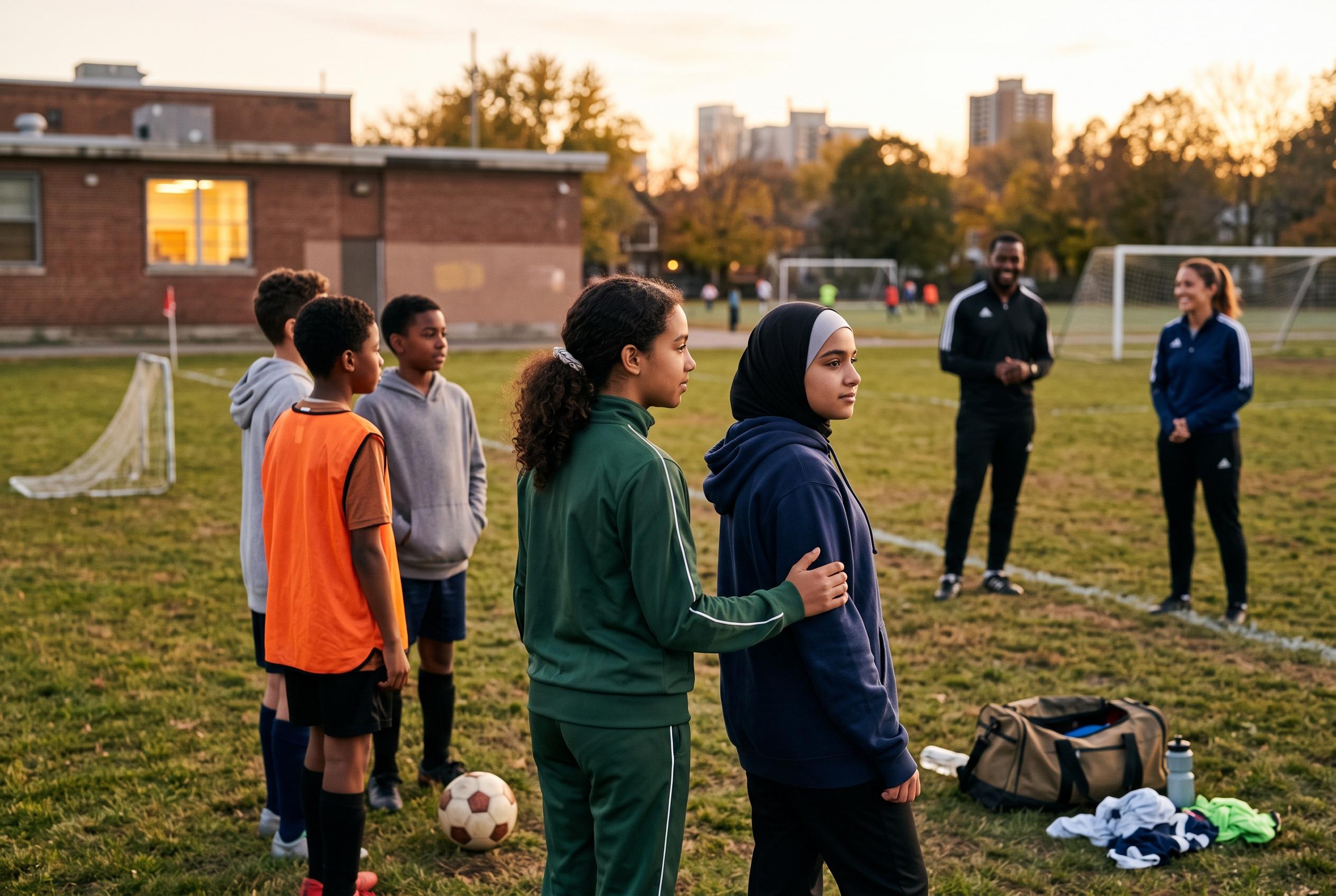

Soccer Without Borders emphasises how their programmes foster belonging, confidence, and resilience among newcomers through football, academic support, and trauma-informed community activities, transforming lives beyond the pitch.
Soccer Without Borders says the value of its programmes starts with something simple: making newcomers feel they belong. Ryan Gitonga, the programme manager for SWB Maryland, said young people arriving in the US are often dealing with several upheavals at once , a new country, a new school, a new language and a new neighbourhood , and that can leave them isolated. He said the pandemic made that even clearer, when the loss of in-person sessions showed how much participants relied on the team environment.
Gitonga described SWB’s pitches as a place where the football does more than fill time. In his view, the game gives young people a way to communicate when they do not yet share the same language, and the organisation’s rule to “Practice English” is meant to encourage effort rather than perfection. The aim, he said, is to create a safe setting where participants can relax, make friends and stop feeling like the new kid or the English learner for a while.
That emphasis on relationships is central to SWB’s wider model. The organisation says its programmes combine football with academic support and community-building activities, and that they are designed to be trauma-informed. Its youth impact figures for the 2024 fiscal year show 98 per cent of participants said they felt comfortable using English at SWB, while 100 per cent said they felt safe, accepted, valued and respected. The group also reported that 85 per cent of youth participants felt more confident handling challenges inside and outside the programme.
Gitonga said his own coaching style rests on being authentic and interested in what players have to say. He said many of the challenges young people raise , at school or at home , come down to feeling unheard or misunderstood. By building trust, coaches can help participants practise the language and confidence needed to advocate for themselves with teachers and other adults, he said. SWB says that approach is part of how it helps young people develop self-efficacy, resilience and leadership skills.
He pointed to one participant, Edea, as an example of that growth. He said she joined SWB in fifth grade, later became a youth coach and intern, and this year represented the organisation’s young people at the United Nations in New York. More broadly, Gitonga said he wishes more families saw sport as more than a distraction from school. He argued that football can teach persistence, teamwork and the ability to recover from setbacks , lessons that, he said, can shape how young people navigate education and life beyond the field.
Disclaimer: This content is for informational purposes only and is not intended to be a substitute for professional medical judgment, advice, diagnosis, or treatment.