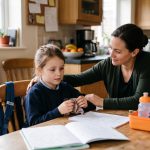
Establishing straightforward, consistent habits in sleep, eating, movement and emotional regulation can significantly boost children’s confidence and well-being, especially during periods of family transition.
Teaching children to look after themselves does not require an elaborate plan, a subscription or a perfect household routine. It usually begins with a few repeatable habits that help them sleep, eat, move, calm down and ask for help when they need it. Public health guidance from the US Centres for Disease Control and Prevention, UNICEF and the New South Wales government all points to the same basic idea: children do best when healthy routines are simple, steady and tied to everyday family life.
Sleep is the habit that does the heaviest lifting. The CDC recommends 9 to 12 hours a night for children aged 6 to 12 and 8 to 10 hours for teenagers, while sleep specialists at the Sleep Foundation say consistent bedtimes and a calm pre-sleep routine can make it easier for children to settle. Limiting screens before bed, keeping the bedroom cool, dark and quiet, and following the same order each night can all help turn sleep into a reliable part of the day rather than a nightly battle.
Water, food and movement matter just as much. The CDC and UNICEF both recommend regular physical activity, healthy eating and sensible limits on recreational screen time, with the CDC advising no more than two hours a day for children and teens. Small choices can make a big difference here: letting a child fill their own water bottle, choose between two healthy snacks, or head outside for active play gives them a sense of control while reinforcing the basics of looking after their bodies.
Simple self-care also includes hygiene and calming routines. The New South Wales government says that everyday habits such as handwashing, teeth brushing and regular movement help children grow into confident, healthy young people. PBS KIDS for Parents and Understood both highlight practical ways to teach emotional regulation, including belly breathing, drawing, writing and other quiet activities that help children name and manage big feelings before those feelings spill over into a meltdown.
For younger children, self-care should look like practice, not independence. Toddlers and preschoolers can copy adults by washing hands, choosing from two snacks or taking a few slow breaths with a parent nearby. Primary-school children can start taking over parts of a bedtime routine, packing part of a lunch or remembering where their calm-down tools are kept. The point is not to do everything alone; it is to learn the next small step with support.
Older children and teenagers usually need more privacy, more say and more trust. That is especially true around sleep, phones and how they manage stress. UNICEF and the CDC both stress the importance of healthy routines for teens, while the Sleep Foundation notes that screen-heavy evenings can get in the way of rest. A phone that charges outside the bedroom, a fixed wind-down time and an easy way to contact a trusted adult can all become part of a teen’s self-care toolkit.
These habits can be especially helpful during family change, including after separation or when a child is moving between homes. Predictable routines give children a few solid points in the day when everything else feels uncertain, and the NSW government notes that consistency is central to building confidence. Parents do not need to do everything at once. One habit that sticks, such as a calmer bedtime or a drink of water after school, is more useful than an ambitious routine that collapses after three days.
The broader lesson is that self-care for children is not a luxury or a mood booster; it is a set of practical life skills. The best versions are free, boring and repeatable. They work because they fit into the day you already have, not the ideal one you wish you had.
Disclaimer: This content is for informational purposes only and is not intended to be a substitute for professional medical judgment, advice, diagnosis, or treatment.