

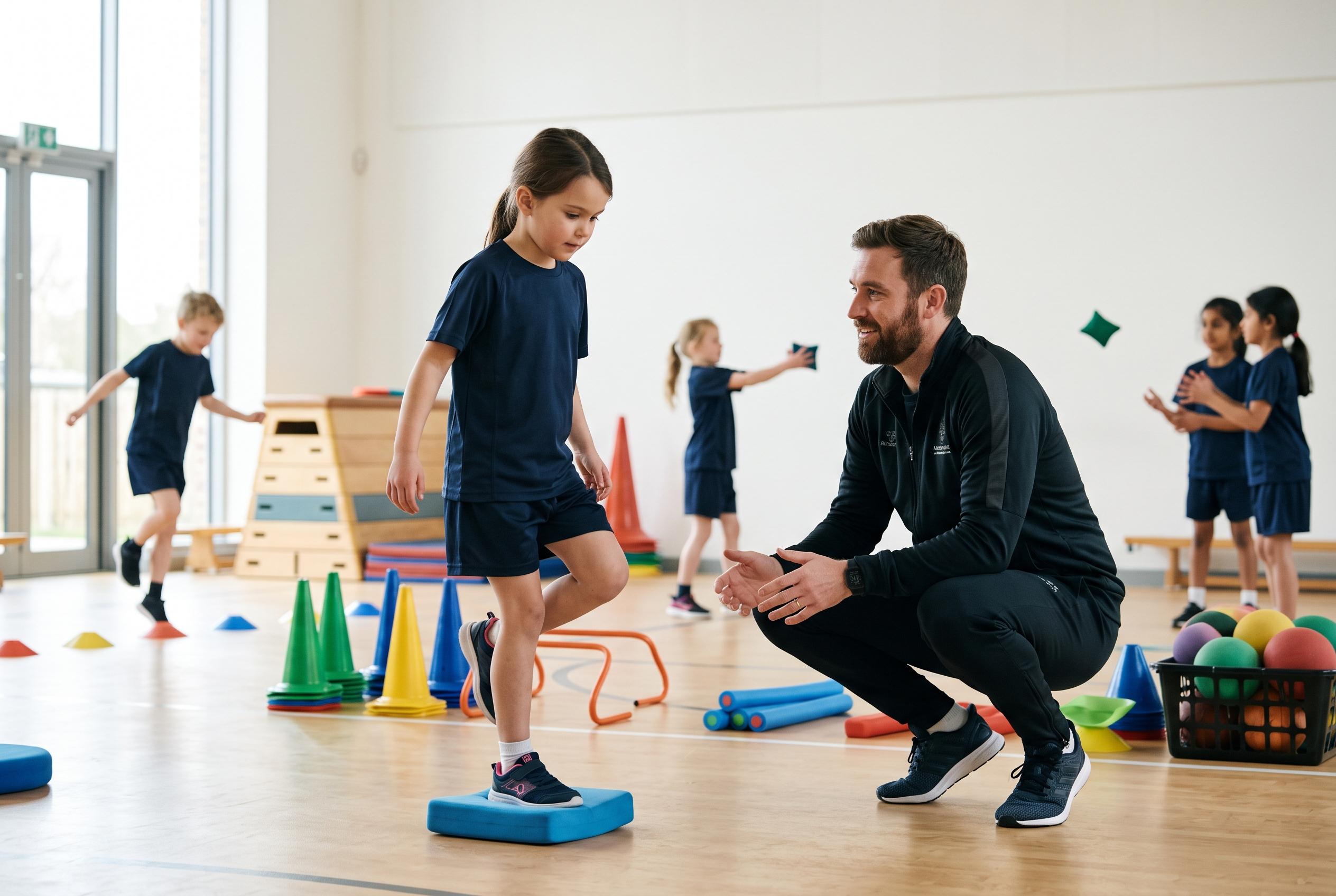

A new UK study questions the effectiveness of traditional fitness testing in schools, urging a shift towards fostering confidence and lifelong physical activity through a broader concept of physical literacy.
Fitness testing remains embedded in many secondary school PE lessons across the UK, even as teachers themselves question whether it does more harm than good. A 2024 study of 260 secondary schools in England, Wales, Scotland and Northern Ireland found that four in five still used fitness tests, while 62% of PE teachers either agreed that such testing could damage pupils’ psychological wellbeing or were unsure. That split captures the wider debate: whether school sport should be built around measurement and ranking, or around confidence, competence and a lasting relationship with movement.
The idea of physical literacy offers a different framework. The concept, first developed by Margaret Whitehead and later refined in work cited by the International Physical Literacy Association, places motivation, confidence, physical competence, understanding and knowledge at the centre of lifelong participation in activity. In England, Sport England and partners set out a national consensus statement in 2023 describing physical literacy as a person’s relationship with movement and physical activity throughout life. That framing is deliberately broader than a test score, and it shifts attention away from a single performance on a given day towards whether a child feels able and willing to stay active as they grow.
Yet the evidence on current school practice suggests that many pupils are still being measured in ways that may not help that long-term aim. The same UK survey found that the sit-and-reach and the multi-stage fitness test, often known as the bleep test, were the most common assessments. Most departments compared results with age-based norms, rather than with a child’s own previous performance, and many teachers were unsure whether their training had prepared them to deliver the tests well. That matters because public comparison can turn a lesson into an exercise in social sorting, especially for pupils who are already less confident in their bodies or abilities.
Research on how children experience these lessons points in the same direction. A study published in 2025 found that pupils were less physically active during fitness-testing lessons than during ordinary PE classes, largely because so much time was spent waiting, resetting equipment and taking turns. The same research also suggested that children with weaker physical self-concept tended to leave testing sessions feeling less positive. Separate work from Australia and the UK has found a similar pattern: pupils who already feel competent are the ones most likely to enjoy testing, while those with lower confidence are more vulnerable to a negative experience.
That does not mean the case for fitness testing is closed. A pilot study has reported no overall decline in body image, self-esteem or mood across a small sample of students exposed to traditional testing lessons, although older teenagers did show some drop in self-esteem and attitudes. Other voices argue that schools should not abandon measurement altogether. A 2026 paper in Pediatric Research described fitness testing as an underused chance to monitor child health, while a Centre for Social Justice report published in May 2026 called for stronger national standards in physical development, including baseline and end-of-primary assessments. In other words, even among those concerned about inactivity, there is no consensus on whether the answer is less testing or better testing.
What seems clearer is that the most useful predictors of later activity are not the scores usually emphasised in school fitness tests. Longitudinal research from Australia found that object-control skills such as throwing, catching and kicking were linked to later physical activity and cardiorespiratory fitness, whereas locomotor skills such as hopping and jumping were less predictive. Another review of school-based physical literacy interventions found strong gains in physical competence but little evidence that programmes increased children’s actual activity levels. A separate English trial of a games-based movement programme improved pupils’ sense of their own ability, but did not significantly change measured movement competence, in-class activity or muscular fitness. The lesson is not that physical literacy has failed, but that schools should be cautious about claiming more than the evidence can support.
A rapid ethnographic study of three English primary schools in Bristol added further context. It found that where schools treated movement as part of the whole day, rather than as something delivered only in one PE slot, staff were more confident and opportunities for activity were more consistent. Where outside coaches carried most of the provision, the effect was narrower and less integrated. Taken together, the research suggests that schools do not have to choose between rigour and care, but they may need to think differently about what rigour means. If the goal is to raise active adults, the evidence points more strongly towards teaching children to move well, feel capable and enjoy activity than towards making them perform on command.
Disclaimer: This content is for informational purposes only and is not intended to be a substitute for professional medical judgment, advice, diagnosis, or treatment.



