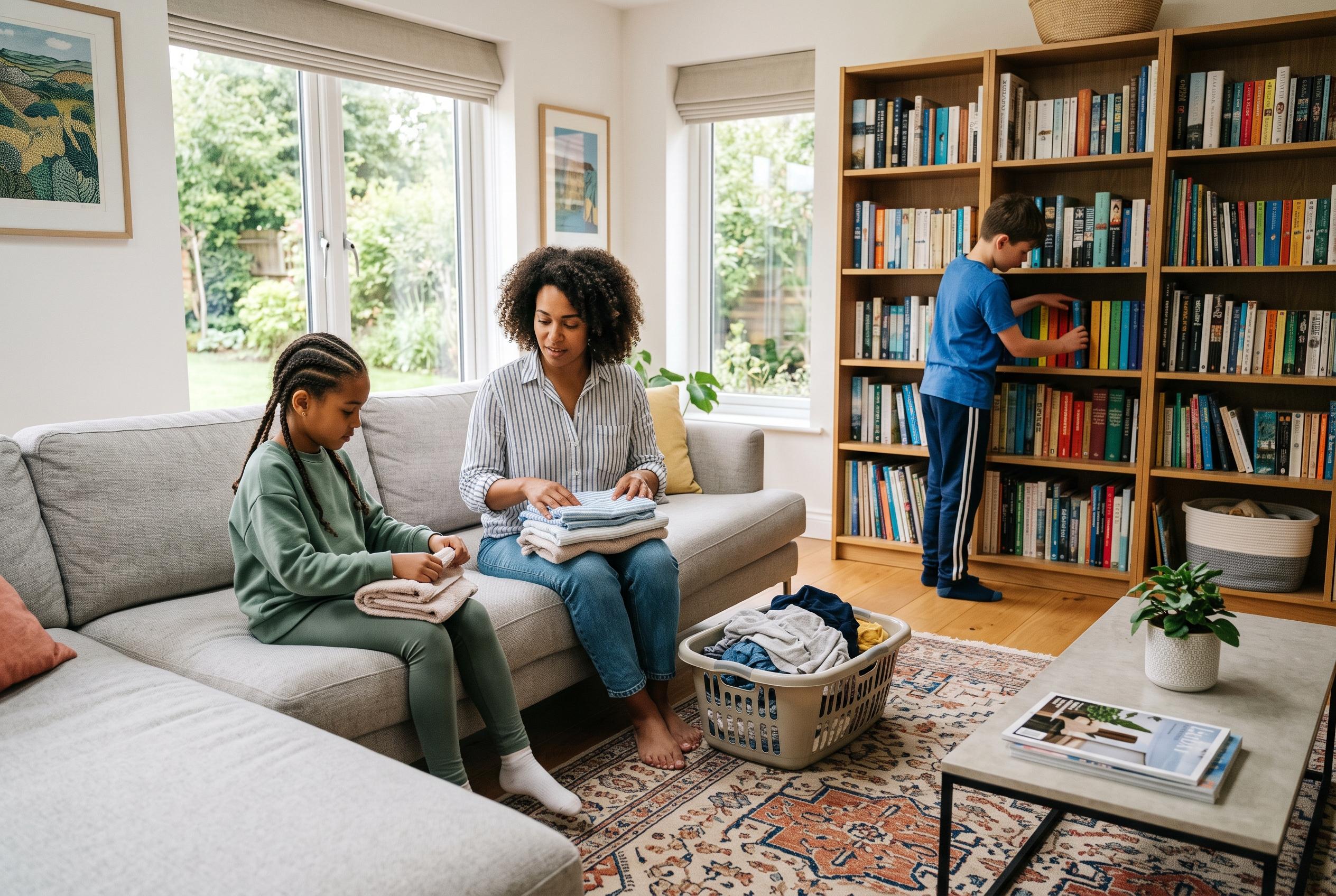

Experts caution against tying routine household tasks to money, emphasising the importance of shared responsibility and practical skills for children’s development, while suggesting a balanced approach to rewards.
Giving a child pocket money for tidying a room can seem like an easy bargain: the job gets done, the nagging stops and everyone moves on. But child development experts say the message can shift if every routine task comes with a price tag. According to the American Academy of Pediatrics, chores can help children build responsibility and practical life skills when they are matched to age and ability.
The key distinction is between ordinary family duties and extra work. Basic tasks such as putting toys away, carrying laundry to a basket or helping set the table are usually best treated as part of family life, not as paid labour. Gigi Foster, an economist cited in the source material, argues that once normal help is routinely tied to money, children may start to see home life as a transaction rather than a shared responsibility.
Research on motivation also suggests caution. Edward Deci and Richard Ryan’s self-determination theory has long argued that external rewards do not always improve behaviour and can, in some cases, weaken a child’s natural interest in a task. At the same time, HealthyChildren.org, which is run by the American Academy of Pediatrics, says rewards and praise can still be useful for reinforcing specific behaviours in some children. In other words, money is not automatically wrong; it depends on what parents are trying to teach.
A practical compromise is to reserve payment for bigger, occasional jobs that fall outside a child’s usual duties, such as washing a car or helping clear out a storage room. That approach also fits with guidance from the Consumer Financial Protection Bureau, which encourages parents to use allowance and age-appropriate conversations to teach children about earning, saving and spending, rather than making every chore a paid event. The bureau suggests that children can start learning these lessons in the school-age years, when they are ready to think about choice, patience and trade-offs.
That matters because chores themselves have value. A long-term study of primary school children found that regular participation in household tasks at a young age was linked later with greater confidence, better social behaviour and a stronger sense of coping with everyday demands. Other research has connected chores with executive functions such as planning, memory and self-control. As the Center for Parenting Education notes, families can choose different systems, but the most useful one is usually the one that separates shared responsibility from financial education.
Disclaimer: This content is for informational purposes only and is not intended to be a substitute for professional medical judgment, advice, diagnosis, or treatment.