

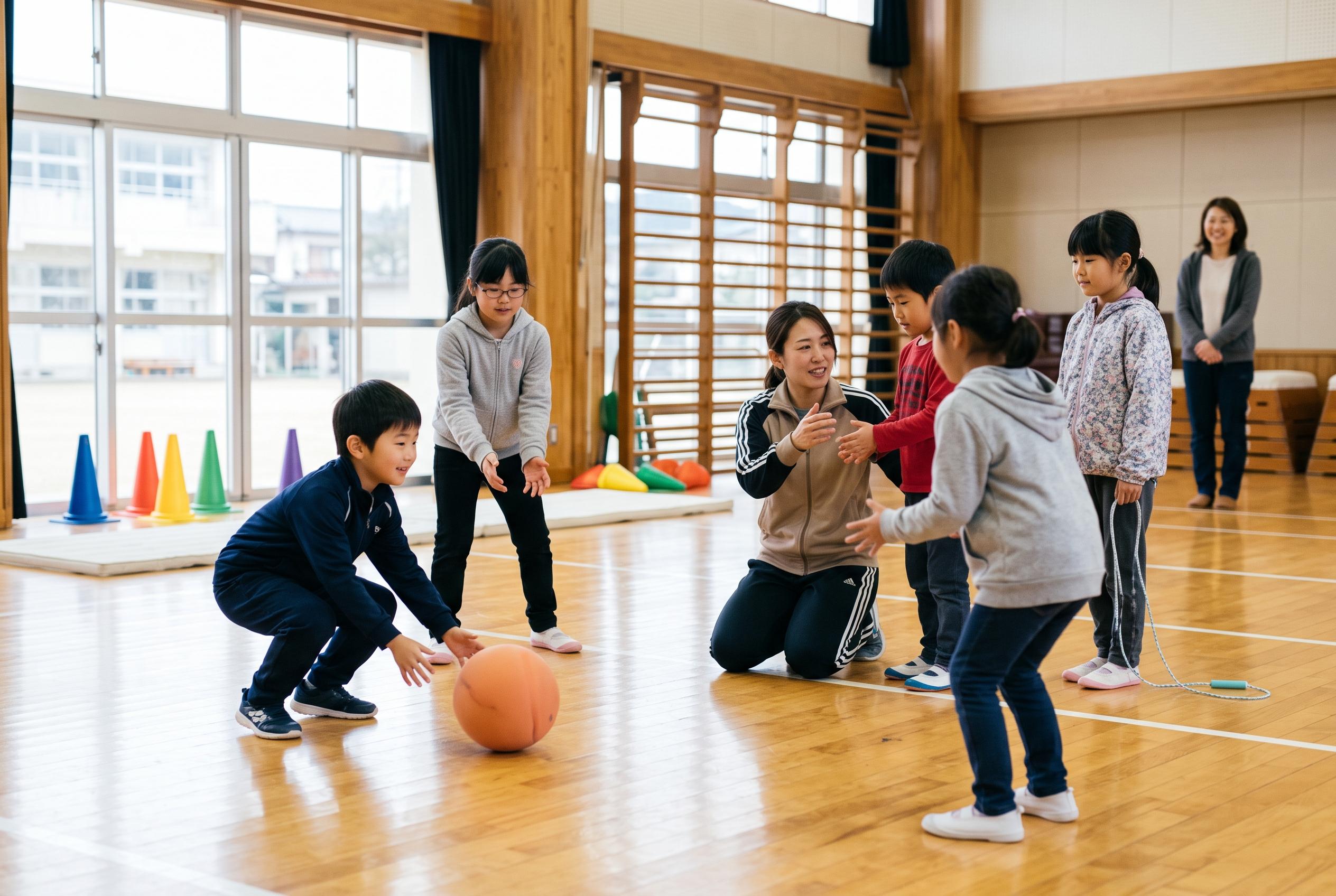

Experts argue that Japan’s traditional sports education may inadvertently deepen children’s dislike of physical activity; a gentler, more inclusive approach could foster better lifelong relationships with movement.
For many people in Japan, autumn brings school sports days, marathon events and a fresh round of pressure to move, compete and perform. Yet for those who have long felt uneasy about exercise, the season can sharpen a different emotion: not enthusiasm, but reluctance. The problem, according to Takuya Sakamoto of the University of Tsukuba, is that dislike of sport is often rooted less in laziness than in experience, particularly the way physical education is taught in school.
Sakamoto, who specialises in philosophy of sport and physical education and wrote “Taiiku ga kirai” (“I Hate PE”), said many children first encounter sport through school, and that the classroom and gym can become the place where confidence is lost. He argued that being made to do the same task at the same pace as everyone else, or being mocked for lacking ability, can turn a once-neutral attitude towards movement into lasting aversion. In his view, the way lessons are structured matters as much as the subject itself.
He also said the standards often used in PE are too narrow. The national curriculum, he noted, calls for activities such as running and ball games, but does not require pupils to run faster or kick harder. Yet in practice, those become the implicit goals. Sakamoto said that the language of modern sport , faster, higher, stronger , has seeped into schooling, even though education should be about helping children develop a richer relationship with their bodies. That, he said, could mean moving more slowly, passing more gently or recognising that there are many valid ways to do an exercise well.
Japan’s sports policy has wrestled with the same issue. The Ministry of Education, Culture, Sports, Science and Technology set a target in the Second Sports Basic Plan to halve the share of middle-school students who disliked sport, from 16.4% to 8%. But the ministry’s own later review showed that the goal was not achieved. The figures improved on one measure , the proportion of pupils who wanted to take part in sport rose , but the broader effort to reduce dislike did not deliver the intended result. The subsequent Third Sports Basic Plan again stressed daily exercise habits and physical fitness, while acknowledging that the challenge remains.
Sakamoto said that setting dislike itself as a policy target is misguided, because feelings cannot simply be ordered away. He compared sport with subjects such as Japanese language or mathematics, which children may like or dislike, but are still regarded as essential for daily life. In the same way, he said, learning how to use and care for one’s body is a basic part of living, not just a matter of preference. For people who already feel turned off by sport, he suggested a gentler approach: no one has to play if they do not want to, but even a few minutes of stretching or light movement each day can improve how the body feels, how fatigue eases and how well a person sleeps.
Disclaimer: This content is for informational purposes only and is not intended to be a substitute for professional medical judgment, advice, diagnosis, or treatment.



