

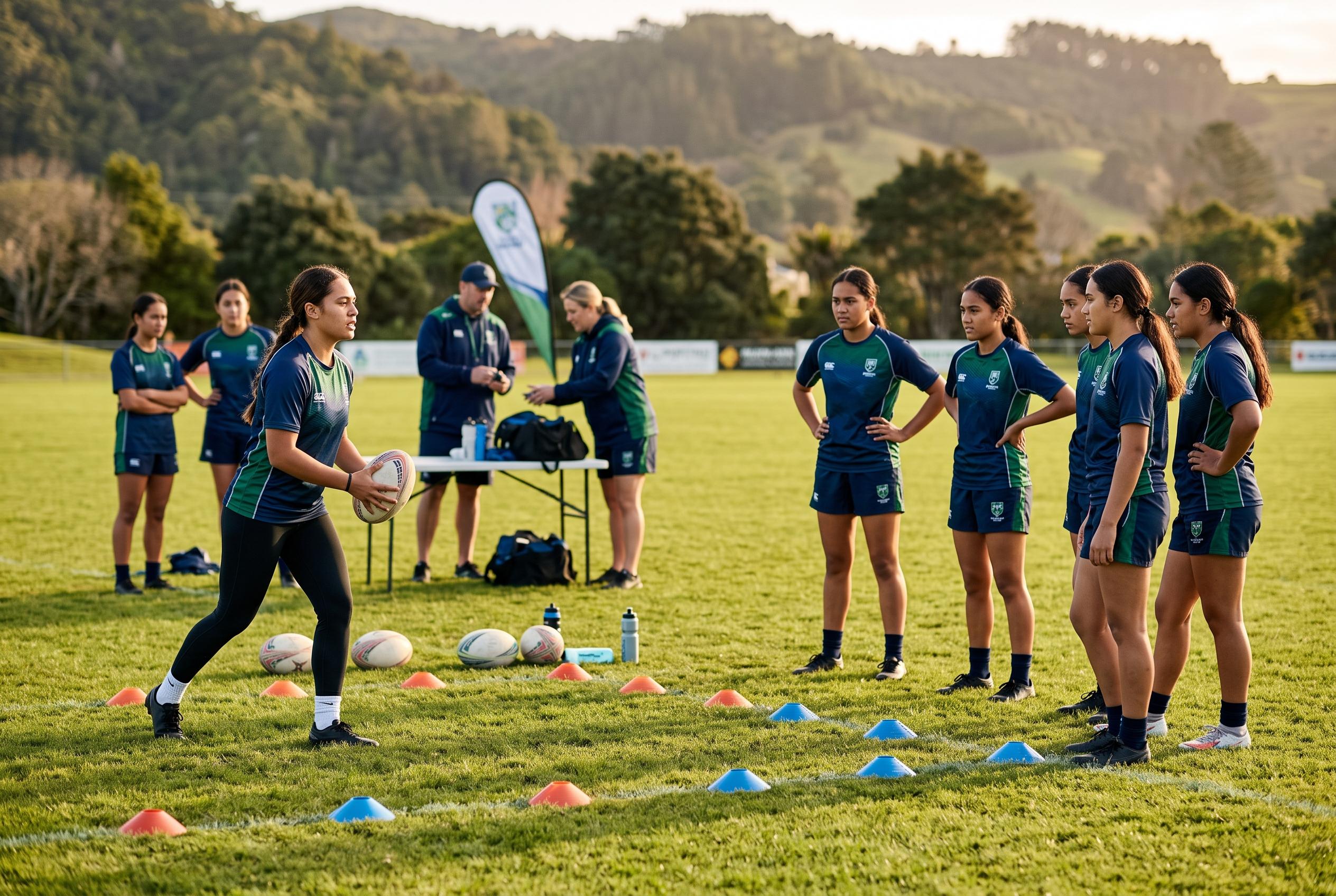

New Zealand experts argue that addressing systemic barriers in sports environments is essential to increasing participation, confidence, and leadership opportunities for girls and young women, rather than focusing solely on individual confidence-building.
Girls should not have to be taught confidence as a substitute for fair access.
That is the argument made in a recent Newsroom commentary, which says New Zealand risks misdiagnosing a participation problem among girls and young women as a personal shortcoming. Instead of treating lower activity levels as evidence that girls need fixing, the piece argues that the deeper issue lies in the settings, expectations and culture that shape whether they feel able to take part at all.
Sport New Zealand’s latest Spotlight on girls and young women’s participation provides much of the evidence behind that case. Drawing on responses from more than 62,000 young people in 2024-25, the survey found that about 58% of girls and 50% of young women met physical activity guidelines, while boys and young men were more likely to do so. Young women were also nearly three times as likely as young men to say they were not confident enough to be active, and girls were more likely to say they disliked being watched, feared making mistakes or struggled in overly competitive environments.
The pattern becomes clearer in the school setting. According to Sport New Zealand, there was no gender gap in enjoyment when children were active after school or at weekends, yet differences appeared during physical education and break times. That suggests the barrier is not simply the activity itself, but the conditions surrounding it: who the space is designed for, how success is defined and whether girls feel they belong.
That distinction matters because it changes where responsibility sits. If the problem is framed as a confidence deficit, the instinct is to create more confidence-building programmes. If the problem is treated as a system failure, the response has to be broader: better teaching, more inclusive coaching, safer environments and stronger links between schools, sport organisations and community recreation. The Ministry for Women’s Manatū Wāhine Physical Activity and Wellbeing Fund has already backed efforts to widen access, with a total investment of $1 million supporting initiatives delivered to thousands of women and girls between August 2023 and February 2024.
Research beyond schools points in the same direction. A study in BMC Public Health found that young women in New Zealand, particularly those living in more deprived areas, had lower odds than young men of meeting combined physical activity recommendations, underlining the need for tailored approaches rather than one-size-fits-all encouragement. Sport New Zealand’s annual report for 2024/25 also said a smaller share of female young people aged five to 18 met the guidelines than male young people, although the gap narrowed during the year.
The broader message is that participation is not just about getting girls through one PE lesson or boosting a single statistic. Early experiences of movement can influence how young people think about health, competition, leadership and where they fit in public life. If girls repeatedly encounter settings that leave them feeling watched, judged or excluded, fewer will stay involved long enough to move into coaching, officiating, administration or governance. In that sense, access, enjoyment and leadership are linked, and the answer is not to expect girls to adapt to a system built without them in mind, but to redesign the system so they can thrive.
Disclaimer: This content is for informational purposes only and is not intended to be a substitute for professional medical judgment, advice, diagnosis, or treatment.



