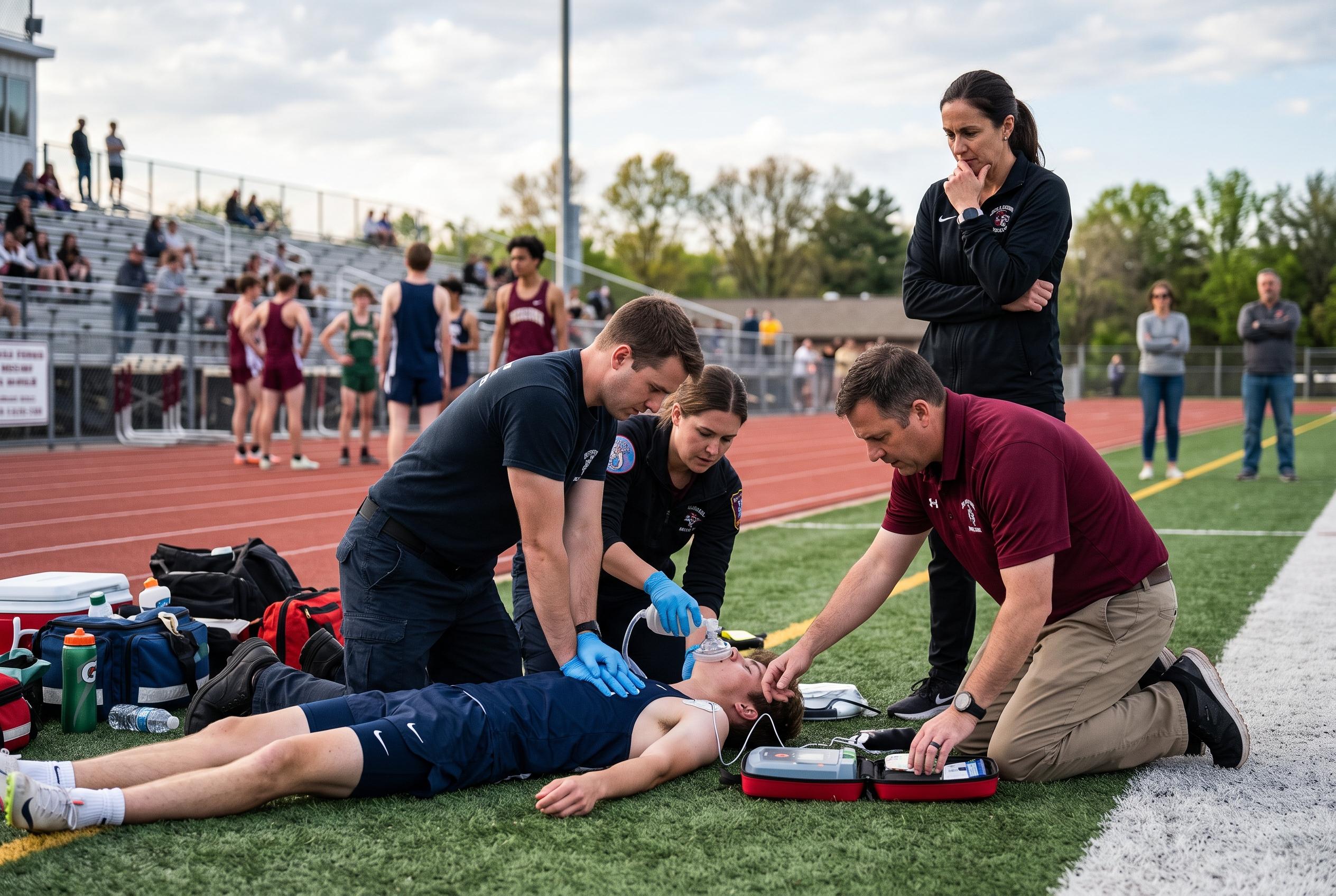

New research highlights the critical importance of quick bystander CPR and access to automated external defibrillators in improving survival chances for young athletes experiencing sudden cardiac arrest, urging a broader extension of preparedness beyond sports venues.
New research suggests young athletes who suffer sudden cardiac arrest are far more likely to survive if someone nearby starts cardiopulmonary resuscitation quickly and an automated external defibrillator is available on site. The findings, drawn from more than two decades of case data and published in the Journal of the American College of Cardiology: Advances, reinforce the long-held view that the first few minutes are critical.
Bradley Petek of Oregon Health & Science University, the study’s lead author, said the team wanted to look beyond school campuses because most recent policy efforts have focused there. The researchers examined 742 cases of sudden cardiac arrest or sudden cardiac death linked to cardiomyopathy in athletes aged 11 and older, using databases from the University of Washington and the National Centre for Catastrophic Sports Injury Research.
The study found that survival was strongly associated with a witnessed collapse, bystander CPR and use of an onsite AED. Among survivors, 97.6% received bystander CPR, compared with 80.6% of those who died, and 72% of survivors had an AED used on site, versus 16.2% of athletes who died. Most events happened at sporting facilities and, in nearly three-quarters of cases, during practice or training rather than competition.
That pattern echoes earlier research presented at the American College of Cardiology’s annual meeting, which also found that sudden cardiac arrest is more likely to strike during practice than games. Medical references including the Merck Manual note that sudden cardiac death in athletes is rare but particularly associated with male athletes and with sports such as basketball and football in the United States. The new study’s authors and outside cardiologists said the message is straightforward: preparedness cannot stop at school walls or major venues, because emergency response needs to follow athletes wherever they train.
The researchers also pointed to policy gaps. Congress signed the Cardiomyopathy Health Education, Awareness, and Research, and AED Training in Schools Act in 2024 to expand education and training in public schools, and the NFL-backed Smart Heart Sports Coalition has pushed for better emergency planning. But the study said access to CPR training and AEDs remains uneven across districts, sports and community facilities. Jalaj Garg of Loma Linda University Health said cardiac emergency preparedness should be extended to public and community venues as a public health priority.
Disclaimer: This content is for informational purposes only and is not intended to be a substitute for professional medical judgment, advice, diagnosis, or treatment.