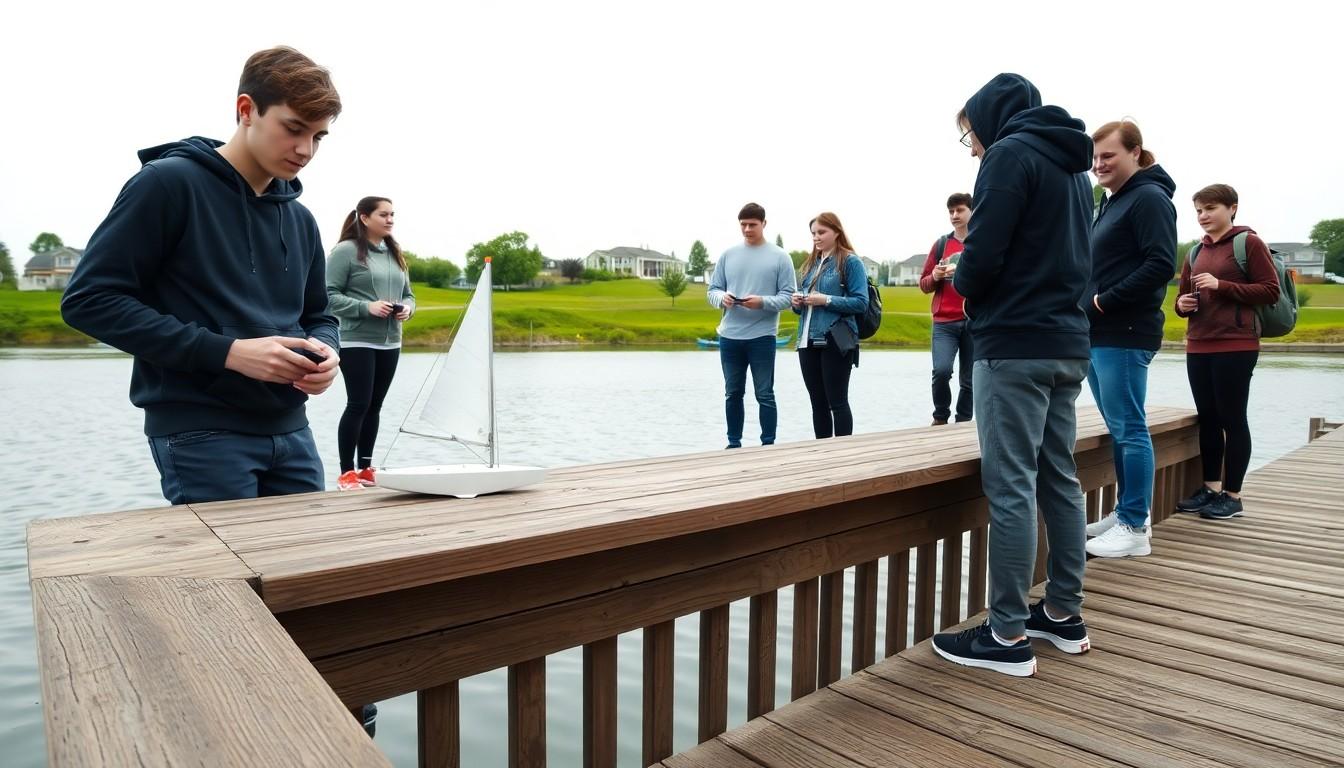

Bob Johnstone champions radio-controlled sailboats as a practical tool to connect young people, families, and communities, revitalising interest in sailing through inclusive, mentorship-driven competition and hands-on STEM learning.
Bob Johnstone has spent decades helping shape modern sailing, first alongside his brother Rod at J/Boats and later through MJM Yachts, where he built a reputation for combining performance with accessibility. Now, at a time when many sailing programmes are struggling to hold on to young participants, he is arguing that the sport has to do more than introduce children to boats: it must connect them to older sailors, families and communities in a way that keeps them involved for life.
His latest focus is radio-controlled sailboats, which he sees as a practical bridge between generations. In his view, the appeal is obvious: the boats are affordable, scalable and open to participants of almost any age, size or physical ability. That inclusiveness is part of the attraction. A teenager can compete directly against a retiree, and the result, Johnstone believes, is a form of sailing that is as much about mentorship and community as it is about competition.
The idea is not entirely new. According to archival references cited in the article, model-boat racing drew thousands of spectators in the early twentieth century, and cities once dug small ponds specifically for youngsters to race hand-built sailboats. Johnstone is effectively reviving that tradition in modern form, arguing that radio-controlled classes can deliver the same immediacy and excitement without the barriers that often keep children out of mainstream sailing. In Charleston, the model has already been linked to US Sailing’s REACH STEM approach, with added emphasis on students building their own boats as part of the learning process.
That educational angle is central to the pitch. Supporters say project-based STEM learning can cut through digital distraction by giving students something concrete to design, assemble and race. The report says the Charleston programme has already generated enthusiasm well beyond the sailing club, even prompting a local newspaper writer to buy two boats for his own family. Johnstone’s case is that if youngsters can be drawn in through a hands-on project and then folded into mixed-age competition, sailing may rediscover a broader public appeal it has lost over time.
Disclaimer: This content is for informational purposes only and is not intended to be a substitute for professional medical judgment, advice, diagnosis, or treatment.