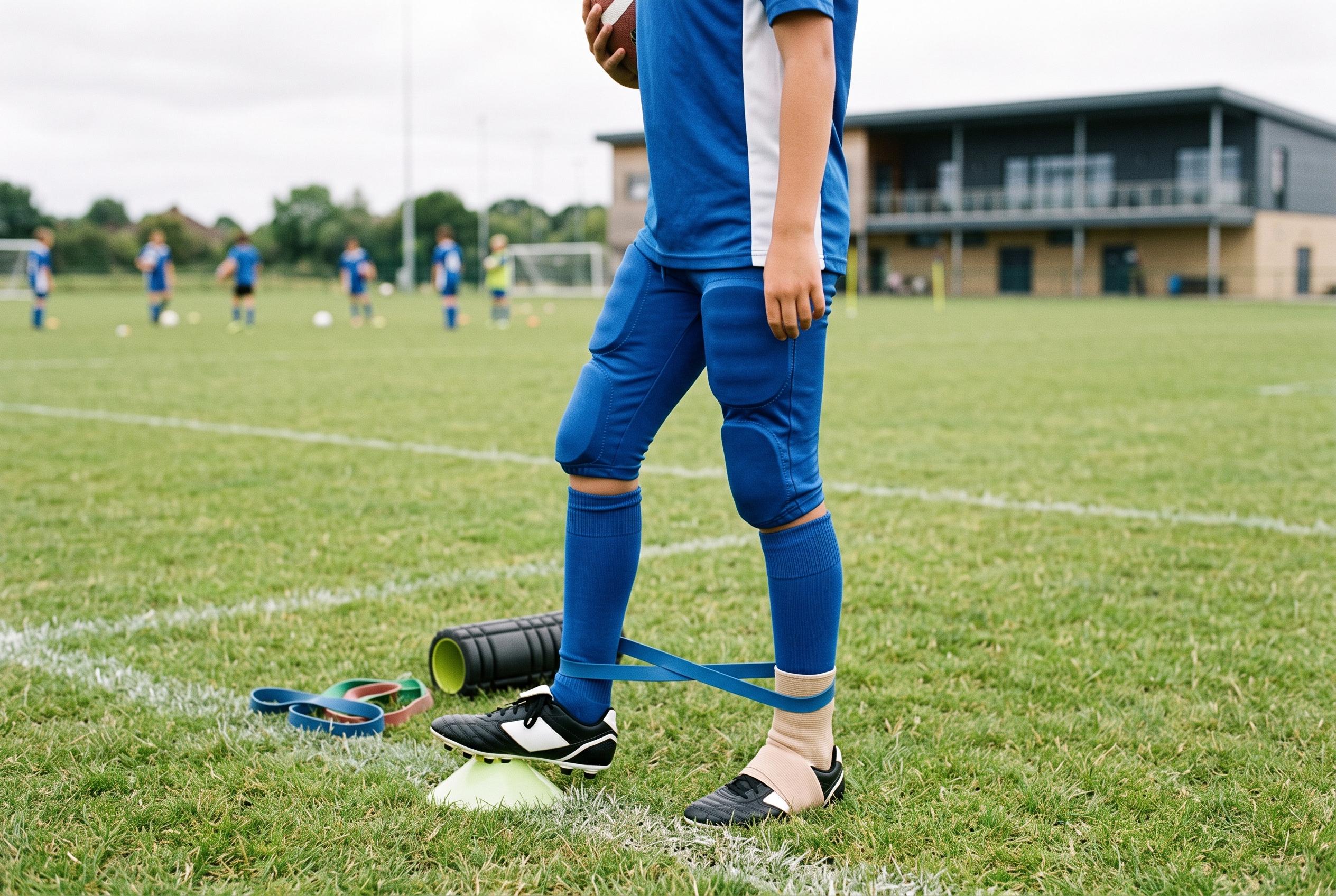

Expert guidance highlights that correct footwear, ankle strengthening, and early injury management can reduce lower-limb injuries in young football players amid high injury rates during growth spurts.
Properly fitted cleats, routine ankle strengthening and swift attention to pain can spare young football players from some of the sport’s most common lower-limb injuries, according to guidance from Naples Podiatry and sports medicine research. The Naples article says shoes should match a child’s current foot length rather than allow room to “grow into”, with sizing checked every 8 to 10 weeks during growth spurts. It also stresses that a simple 10-minute warm-up, ankle support for players with a previous sprain and twice-weekly strengthening work can reduce the chance that a small problem turns into a missed season.
The need for that caution is clear. The American Orthopaedic Society for Sports Medicine says football carries one of the highest injury rates in youth sport and notes that more than 80% of children sustain an injury at some point. In growing athletes, the foot and ankle are exposed to repeated cutting, planting and contact forces at the same time as bones and growth plates are still maturing, which makes sprains and stress injuries especially common between about ages 8 and 14.
Footwear is the first line of defence. Naples Podiatry warns that cleats bought too large can cause blisters, jammed toes and turf toe, the sprain-like injury to the joint at the base of the big toe. The article advises standing measurements rather than relying on older shoe sizes, because feet spread under body weight and can change quickly during growth. It also recommends moisture-wicking socks, a firm heel counter and a mid-cut design that keeps the foot stable without sacrificing speed.
Support devices matter most for players with a sprain history. The Naples guide says taping or a lace-up brace before every practice and game can lower the risk of repeat injury for the rest of the season. That approach is consistent with broader sports medicine evidence. A 2024 systematic review in the British Journal of Sports Medicine found that exercise-based prevention programmes, especially those using lower-body strength, mechanics and balance work, were linked with fewer injuries in youth team sports, including ankle injuries.
Surface and training habits also affect risk. Hard turf transmits more shock through the lower limb than grass, and the Naples article says teams that can alternate between surfaces should do so rather than training on turf every session. The piece also recommends players report foot or ankle pain the day it starts, before a minor strain becomes a stress reaction or a longer recovery. A limp lasting more than 48 hours should prompt a podiatry visit, the article says, rather than another round of ice and rest at home.
When an injury does happen, the pattern of symptoms matters. Swelling within an hour of a rolled ankle suggests an acute sprain, while a dull ache on the top of the foot that worsens over time can signal a stress fracture. A swollen, stiff big toe after a pile-up points to turf toe, and a crooked or bruised toe should not be dismissed as a simple jam. The broader message from sports injury research is straightforward: prevention works best when families treat foot and ankle complaints early, then keep up the strengthening and support work even after pain settles.
Disclaimer: This content is for informational purposes only and is not intended to be a substitute for professional medical judgment, advice, diagnosis, or treatment.