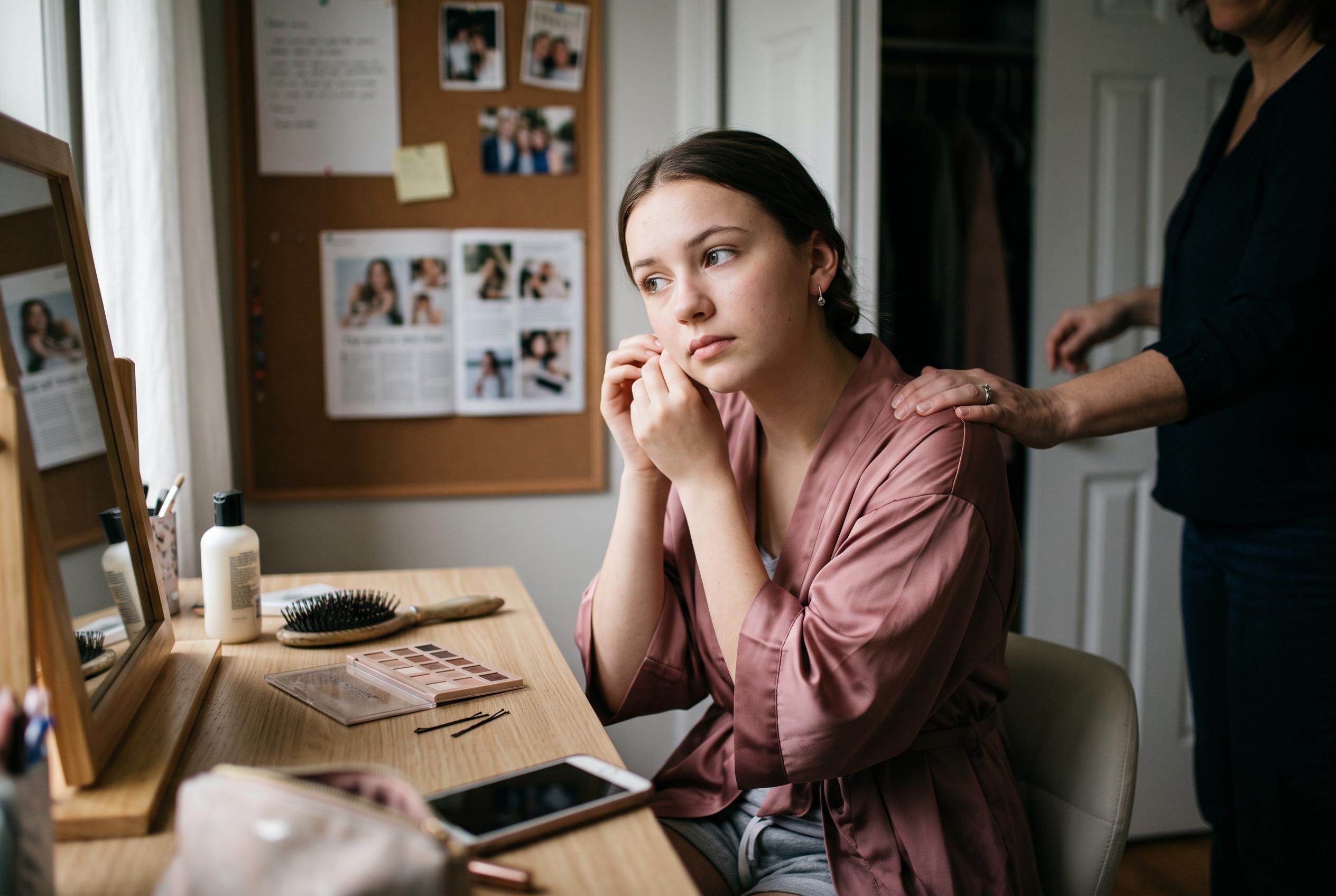

As prom season approaches, concerns about body image and social media pressures are affecting teenagers’ mental health, prompting experts to call for more supportive conversations and wellbeing-focused approaches.
Prom season can be a joyful milestone, but it can also intensify body image worries for teenagers. As young people search for the right outfit, hairstyle and make-up, they may also feel pressure to look a certain way, and that pressure can be especially strong when social media is filled with polished images of dresses, suits and so-called prom transformations. Research published in recent years suggests that body dissatisfaction in adolescence is closely linked with later anxiety, making these pre-event pressures more than a passing concern.
Body image is about far more than weight or body shape. It includes the thoughts, feelings and beliefs young people attach to their appearance, and the assumptions they make about how others judge them. Studies have found that appearance-related comparisons on social networking sites can fuel body surveillance, social appearance anxiety and broader emotional distress. Other research points to a similar pattern: the more teenagers compare themselves with idealised images, the more likely they are to feel their own appearance falls short.
Parents and carers can often spot the warning signs before a young person says anything directly. These may include sharper criticism of their own body, avoidance of outfit shopping, distress about photographs, or reluctance to attend prom at all because of how they think they look. Changes around food and exercise can also matter. Skipping meals, cutting out foods or exercising more than usual may simply reflect pre-event nerves, but they can also signal a growing preoccupation with weight and shape that deserves attention.
The most helpful response is usually calm curiosity rather than reassurance that shuts the conversation down. Health experts suggest asking what is really behind the worry, listening without rushing to fix it and gently challenging the idea that there is one correct way to look at prom. It can also help to encourage teenagers to scrutinise the images they consume online and unfollow accounts that leave them feeling worse. Researchers have also found links between better sleep and a more positive body image, which is a reminder that wellbeing matters as much as appearance. In the end, the real point of prom is not to achieve a flawless look, but to enjoy the night, feel included and make memories that last far longer than the photograph.
Disclaimer: This content is for informational purposes only and is not intended to be a substitute for professional medical judgment, advice, diagnosis, or treatment.