

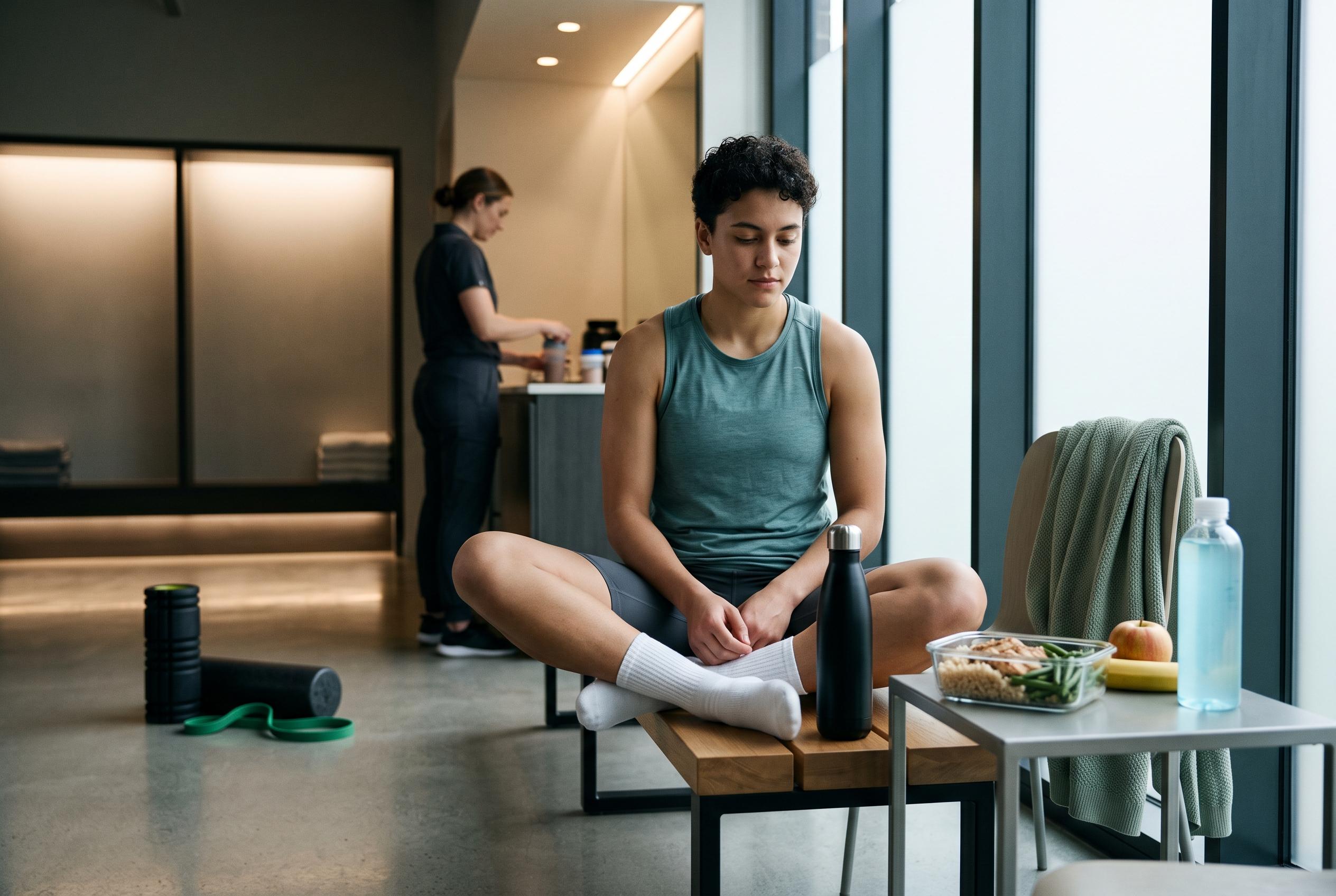

A comprehensive approach to recovery, covering sleep, nutrition, hydration, and rest, is essential for athletes to adapt and maximise performance, emphasising the importance of planned recovery as much as training itself.
In pre-season, coaches often focus on the part of training they can see: the drills, the strength blocks, the conditioning, and the steady rise in workload. But the more complete picture is less visible. Recovery is not a bonus or a reward for hard work; it is the other half of the training process, and the body only adapts when those two halves are working together. That idea sits at the centre of the Shift Movement Science piece, which argues that performance improves most reliably when training stress is matched by enough time, sleep, fuel, hydration and emotional bandwidth for the athlete to absorb it.
What makes the recovery side easy to miss is that it is not just passive rest. Fitness writers at Men’s Fitness note that recovery is an active process shaped by sleep, nutrition, stress levels and circulation, while HomeBodyPulse says adaptation is built during recovery rather than during the session itself. The practical lesson is straightforward: an athlete can have a well-designed programme on paper and still struggle if the body never gets a fair chance to repair and recharge. That is why recovery should be planned with the same care as sets, repetitions and event work.
Sleep is the clearest example. Research cited in the original article links shorter sleep in adolescent athletes with a higher injury risk, which gives pre-season bedtime routines a very concrete purpose. Good sleep habits are not mysterious: a steady sleep schedule, a cooler and darker room, less screen time before bed and earlier nights when training demands rise all help. For young athletes balancing school, family life and sport, the point is not perfection; it is consistency. The more demanding the training block becomes, the more important it is that sleep does not become the first thing sacrificed.
Food and fluids matter just as much. Sports nutrition guidance increasingly treats recovery eating as essential, not optional, with carbohydrate before training, a proper snack during longer sessions and a combination of protein and carbohydrate afterwards all helping the body recover more effectively. Hydration deserves the same attention on rest days as on training days. Articles from AWRA and Rest Timer Science both note that being under-hydrated can impair muscle repair, sleep quality and even strength recovery between sets. In other words, recovery is not only about what happens after practice ends; it begins long before the next session starts.
There is also a broader health issue behind under-recovery: chronic under-fuelling. The original article points to Relative Energy Deficiency in Sport, or RED-S, a condition recognised by the International Olympic Committee that can affect bone health, menstrual function, immunity, mood and long-term development. That is not something coaches or parents should try to diagnose by guesswork. The safer approach is to protect regular meals and snacks, watch for warning signs and involve a sports dietitian or doctor quickly if concerns appear.
The coaching challenge is to treat the schedule as a single system rather than a string of isolated workouts. Hard days need to be separated by enough time for the body to respond, and routine-preparation blocks should not be stacked so tightly that athletes are asked to absorb more than they can recover from. Strength Progression’s discussion of ramp sets makes a similar point in a different context: warm-ups should prepare the body without adding needless fatigue. The same principle applies to the wider season. When training ramps too quickly, or recovery is left to chance, the result is not toughness but breakdown. Balanced pre-season planning means checking both equations with equal seriousness.
Disclaimer: This content is for informational purposes only and is not intended to be a substitute for professional medical judgment, advice, diagnosis, or treatment.



