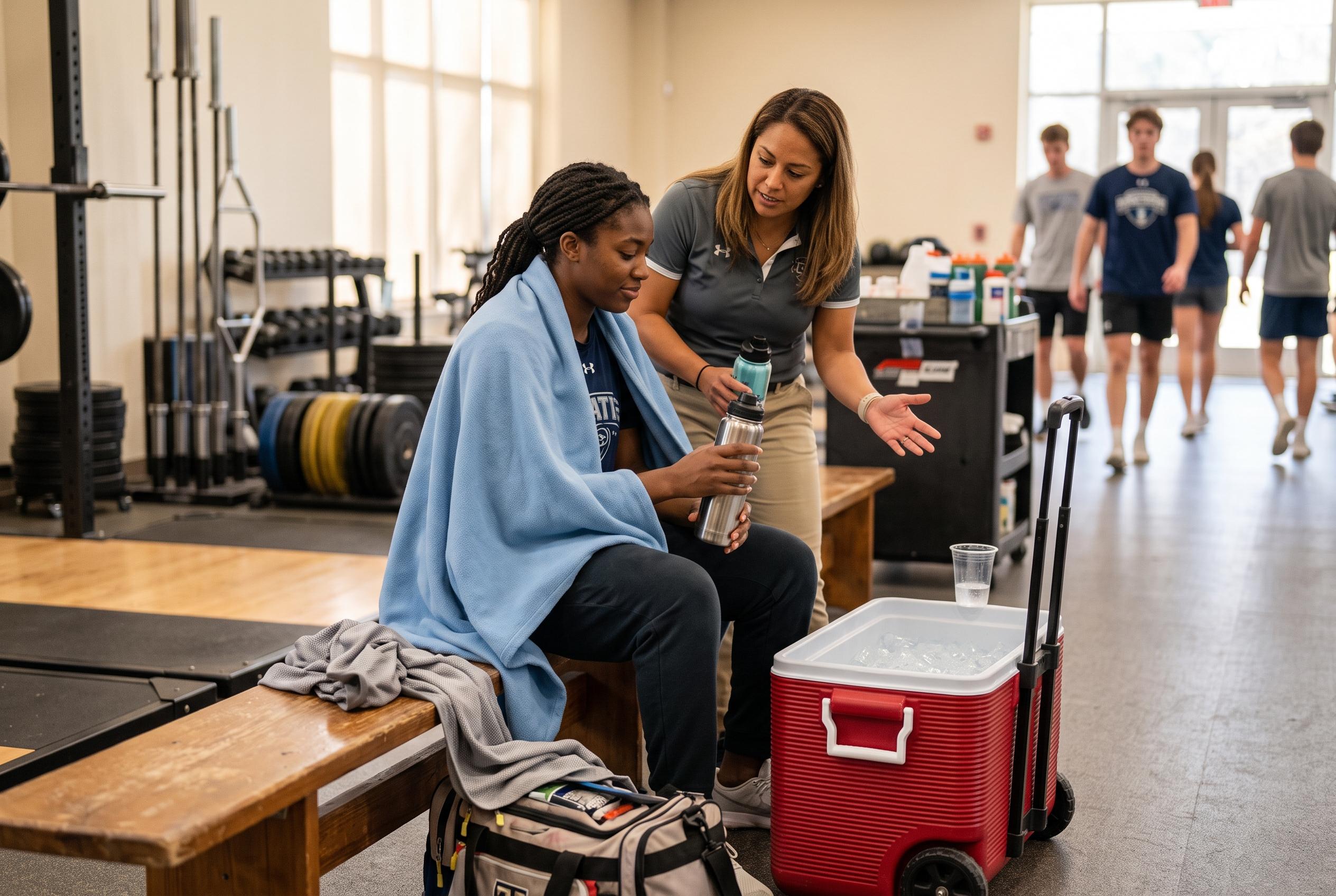

Public health expert Dr. Tomia Austin highlights the dangers of intense conditioning for athletes with sickle cell trait, emphasising simple safety measures to prevent tragic deaths amid rising awareness.
Every February, when college athletes return for off-season conditioning, a familiar danger can surface far from the pressure of game day. The problem, Dr. Tomia Austin says, is not competition itself but the hard, repetitive drills that often come before the season starts: no warm-up, no water and no real recovery time. For athletes with sickle cell trait, that combination can become life-threatening within minutes.
Austin, a public health specialist and behavioural scientist with the As One Foundation, says the same pattern keeps appearing. She points to recent cases, including the death of Calvin Dickey Jr at Bucknell University in 2024, as evidence that these tragedies are still occurring. Her view is reinforced by medical literature, which has long warned that sudden deaths linked to sickle cell trait have happened during intense conditioning sessions, especially when athletes are pushed too quickly from rest into exertion.
What makes conditioning especially dangerous, Austin says, is that it lacks the natural pauses built into a match. In football or basketball, there are stoppages, substitutions and breaks. In conditioning, athletes can be ordered to keep sprinting or repeating drills for long stretches with little relief. Medical guidance from the Inter-Association Task Force says best practice is gradual progression, proper hydration and enough rest between efforts, while research published in sports medicine journals has also tied these incidents to intense workouts without those safeguards.
Austin argues that coaches sometimes mistake a warning sign for ordinary fatigue. In her telling, an athlete with sickle cell trait may be dismissed as simply cramping when, in fact, they may be in crisis and need urgent care. She says punishment-based coaching culture can make matters worse when water is treated as a privilege rather than a basic safety measure.
Her prevention message is straightforward: “Warm up, drink up, rest up.” She says those steps should apply to all athletes, not just those known to have sickle cell trait, so no one is singled out or stigmatised. Through the As One Foundation’s Operation Hydration effort, Austin is pressing that message into locker rooms and training facilities in the hope that another conditioning season will not end in another preventable death.
Disclaimer: This content is for informational purposes only and is not intended to be a substitute for professional medical judgment, advice, diagnosis, or treatment.