


Experts emphasise the importance of early health checks, conditioning, proper equipment, and open communication to safeguard young athletes during sports seasons, revealing new insights into injury prevention strategies.
Parents can play a decisive part in lowering the risk of sports-related injuries before a season begins. New York Orthopaedics says the most effective approach starts well before the first whistle: a pre-participation physical, sensible conditioning, proper equipment, and open conversations about pain and fatigue all help young athletes stay safer once practices and matches start.
A sports physical can uncover problems that might otherwise be missed, including asthma, heart concerns or lingering effects of earlier injuries. Johns Hopkins Medicine, Scripps Health, KidsHealth and Essentia Health all stress that these pre-season checks are designed to assess whether a child is ready to play and to leave time for follow-up if anything needs attention. Essentia recommends arranging the appointment around six weeks before the season begins, giving families space to deal with any issues before competition ramps up.
Conditioning matters just as much as clearance to play. Johns Hopkins says gradual training, warm-ups, stretching and cross-training can help reduce overuse injuries such as stress fractures, shin splints and tendinitis. Safe Kids Worldwide also advises that young athletes should not jump straight into heavy workloads, and recommends time away from a single sport each year so the body has a proper chance to recover.
Rest is another key part of injury prevention. Safe Kids says children and teenagers should have an off-season that includes at least 10 consecutive weeks away from one sport each year, while Johns Hopkins emphasises the need for recovery between sessions. New York Orthopaedics also points to sleep as a major factor, recommending that children get plenty of it so their bodies can repair themselves and avoid burnout.
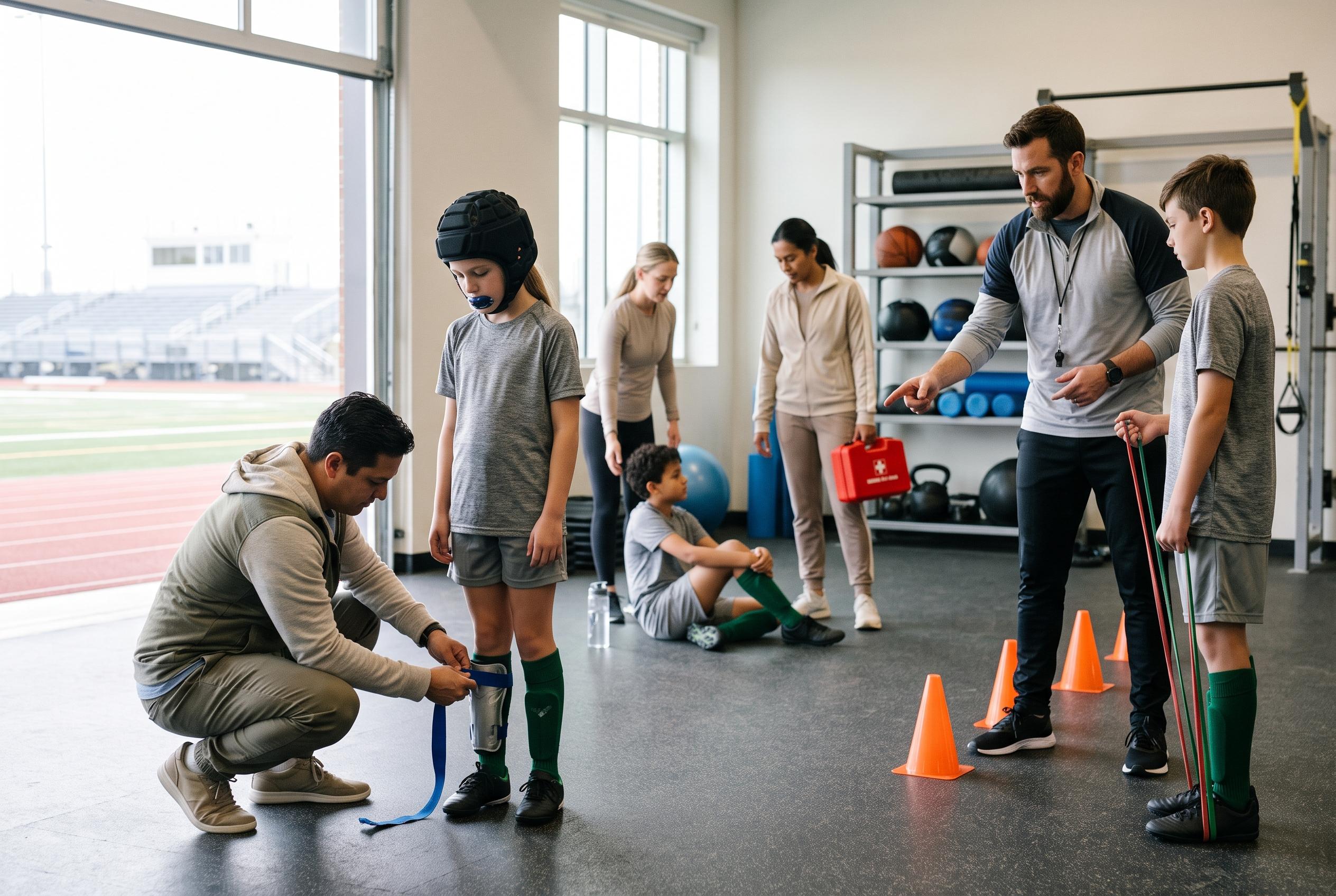
Equipment and technique also deserve close attention. Properly fitting shoes, helmets, mouthguards, pads and other protective gear can reduce the chance of avoidable harm, and parents should check for wear and tear before each season. Johns Hopkins and Sanford Health both note that poor form can lead to injuries, making coaching, drills and honest feedback from adults an important part of preparation.
Hydration, nutrition and communication round out the basics. New York Orthopaedics and Johns Hopkins both say children should drink water regularly and eat balanced meals with enough protein, fruit, vegetables and whole grains to support activity and growth. Parents should also make it easy for children to speak up about pain, soreness or limping. As the medical guidance across these sources makes clear, early action is usually far better than waiting for a minor problem to become a serious injury.
Disclaimer: This content is for informational purposes only and is not intended to be a substitute for professional medical judgment, advice, diagnosis, or treatment.



