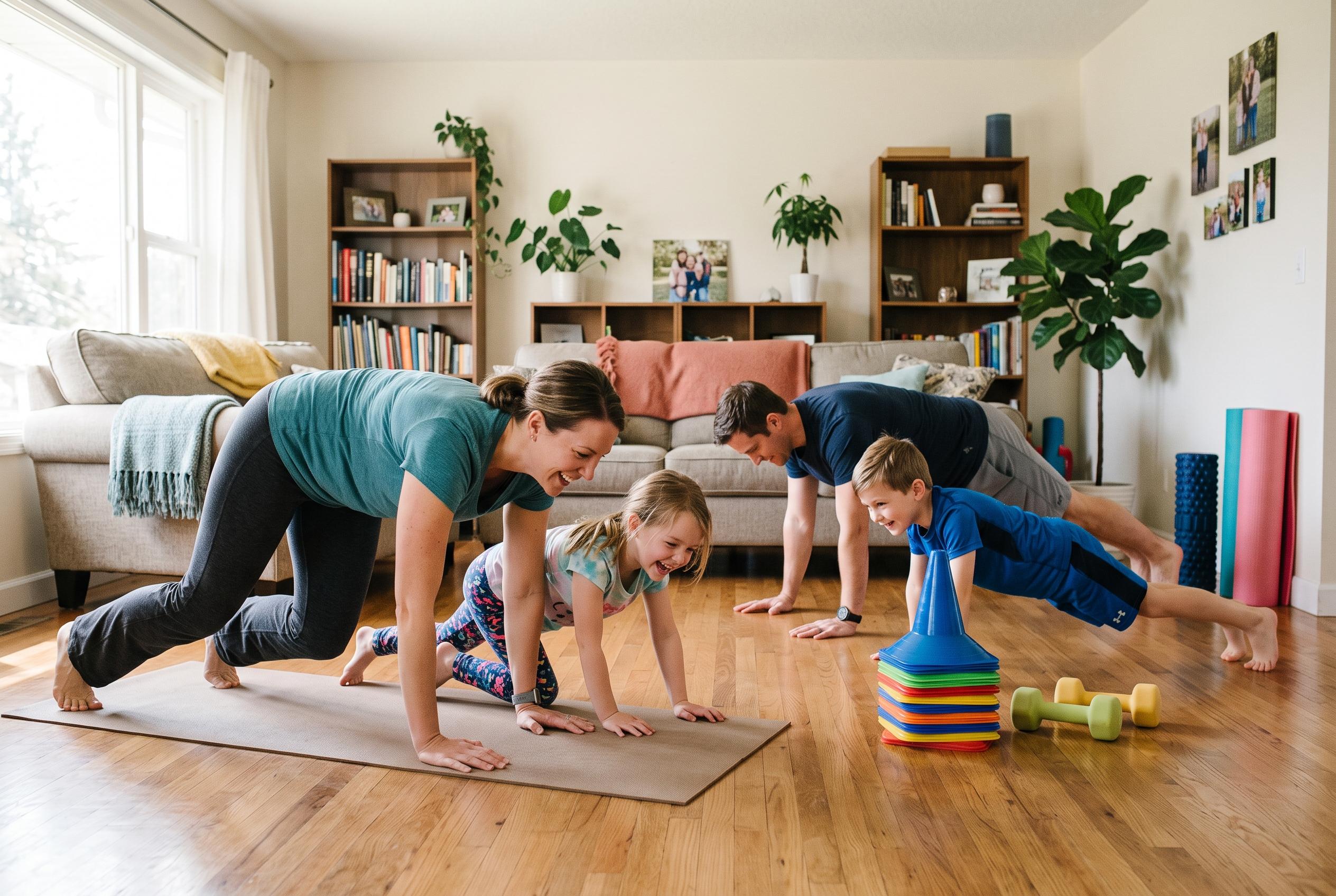

Fitness professionals and parents are integrating exercise into family life through playful and flexible routines, proving that working out can be a shared, meaningful experience even with children in tow.
For some fitness professionals, exercise does not stop when the working day ends; it becomes part of family life. In Lindsey Bomgren’s home in Minnesota, that means weekend trips to the park where she, her husband and their three children turn a simple outing into a shared training session. Bomgren, the personal trainer behind Nourish Move Love, says the family will run or cycle the half-mile there, then use benches, monkey bars and open space for push-ups, dips, pull-ups, squats and lunges while the children play nearby or join in.
Bomgren said she started these park routines when she became a new mother and had little uninterrupted time to train on her own. The habit has stayed in place even as her children have grown more independent. She says it helps them see their parents exercising, while also reinforcing lessons about repetition, effort and health. In her household, the conversation is not simply about being active; it is about why exercise matters, including a family history of heart disease and the need to build strength for the long term.
That theme of leading by example also runs through the routine of Betina Gozo Shimonek, a Nike Global Trainer and mother of three young children, with another baby on the way. She told Popsugar that she prefers to show her children what movement looks like rather than simply telling them to do it. Sometimes they become part of a workout, whether by riding a sled in the family gym or being chased during a game. At other times, they play close by while the adults finish a session. For Gozo Shimonek, the point is not perfect structure but consistency, adaptability and a sense that fitness can be part of everyday life.
Jess King, a Peloton instructor and mother of twins, has found that children can turn even routine activity into a workout. She said her toddlers are so active that keeping up with them often becomes exercise in itself, adding that watching the way they crawl, run and explore has changed how she thinks about movement. In her view, the basics of training are already present in children’s play, before they are ever labelled as drills. That perspective is echoed by other fitness parents who have built home spaces to encourage movement, from jungle gyms and trampolines to hanging rings and sensory swings.
The common thread is not equipment or precision, but flexibility. Fitness writers and trainers who have discussed parenthood in recent months have made the same point: routines change once children arrive, so the challenge is to adapt rather than abandon exercise. Some parents keep workouts short and realistic, while others fold movement into family games, walks, swimming or simple outdoor play. Even the cold does not always stop Bomgren’s family, who use snow, sleds and frozen landscapes as part of their routine. The message from these parents is clear enough: when children are involved, exercise may be messier, but it can also become more sustainable, more playful and, for many families, more meaningful.
Disclaimer: This content is for informational purposes only and is not intended to be a substitute for professional medical judgment, advice, diagnosis, or treatment.