

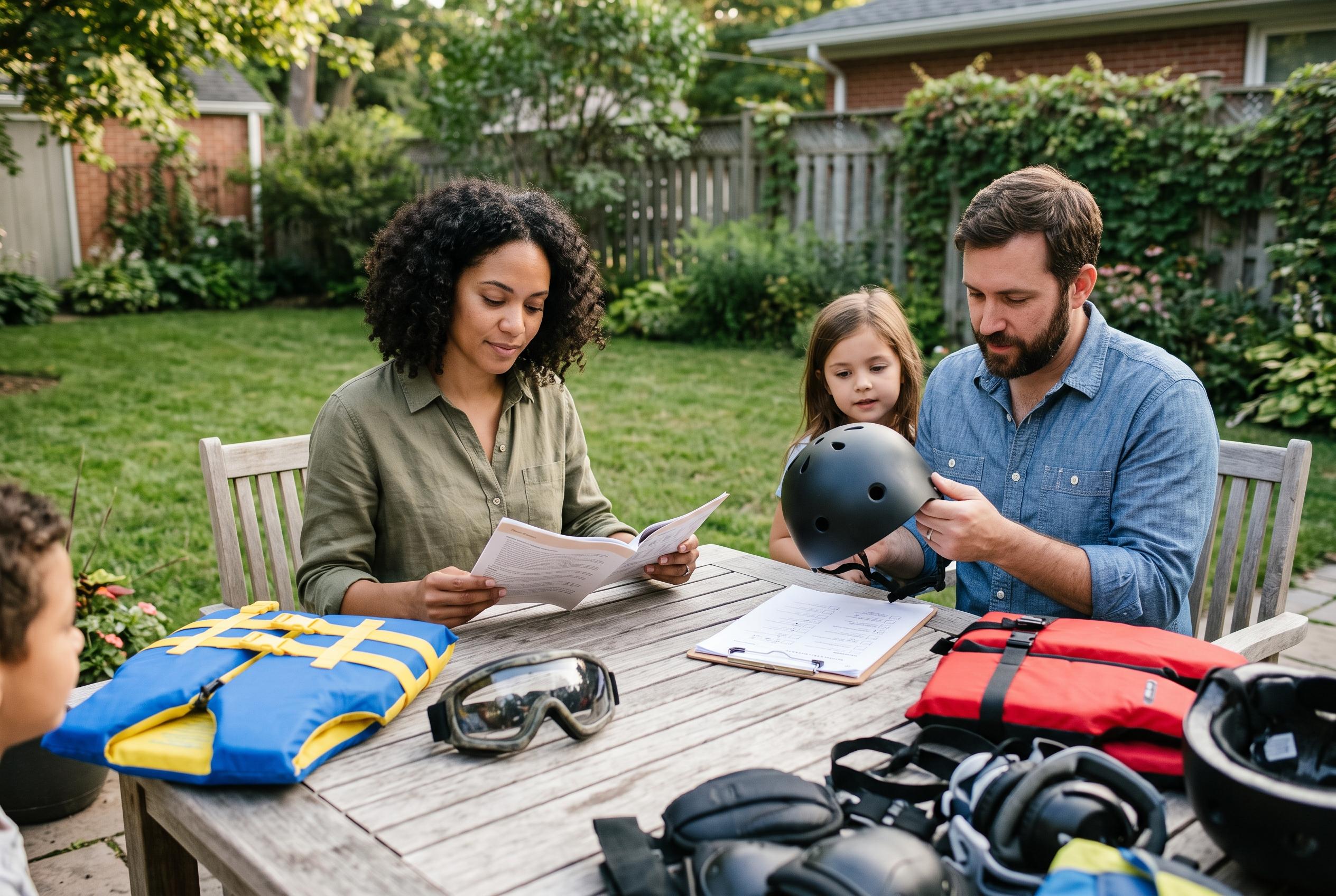

Growing parental caution is quietly altering children’s recreational choices, prioritising safety amid rising injury concerns across activities from trampoline parks to water sports.
Parents are becoming more selective about which activities they will let their children try, and the shift is often happening quietly. The decision is less about banning fun altogether than about weighing whether the risks have changed faster than the safeguards around them. In many families, that means declining a party invitation, asking tougher questions about coaching or supervision, or choosing a lower-risk alternative that offers the same excitement.
Trampoline parks are one of the clearest examples. Emergency departments in the US treat about 100,000 trampoline injuries a year, and research has found that injuries are more likely to be serious when several children jump at once. Studies have also suggested that children are more likely to suffer musculoskeletal and orthopaedic injuries at commercial parks than when using a trampoline alone at home.
Youth tackle football has also come under closer scrutiny, especially after a CDC study published in August 2025 found that players aged six to 14 sustained 15 times more head impacts than flag football players in practices or games. The same research found 23 times more high-magnitude head impacts in tackle football, strengthening the case for non-contact versions of the sport for younger children. That evidence fits with growing concern among paediatric specialists that repeated head blows, not just diagnosed concussions, can accumulate over time.
Bounce houses remain a fixture at birthday parties, but injury counts have risen sharply. A CHOC-led study covering two decades found that 159,569 children aged two to 18 were treated in US emergency departments for bounce-house injuries from 2000 through 2019. The study also noted that a significant share of injuries happened when children fell out of the inflatable or were struck inside it, while wind-related incidents have added to parents’ worries about how well these structures are secured.
All-terrain vehicles bring a different kind of risk. Federal data show that crashes have killed more than 3,000 children under 16 and sent nearly a million more to emergency departments over several decades. The American Academy of Paediatrics has also warned that most deaths and injuries in young riders happen on adult-sized machines, which are often too large and fast for children to handle safely. Helmets help, but many families now see the activity as far more hazardous than a casual weekend ride.
Cheerleading is another activity where the level of risk is often underestimated. Competitive routines now include basket tosses, pyramids and tumbling skills that can lead to falls from height, with injuries ranging from sprains to fractures and concussions. The concern for many parents is not only the athletic demand itself but also how uneven coaching standards can be across clubs and community squads.
Electric bikes and scooters have quickly become part of the conversation too. Their growing popularity among preteens and teenagers has outpaced both safety habits and regulation in many places, and emergency departments have reported more injuries linked to these vehicles. For some parents, the issue is not simply that children are riding faster machines, but that the equipment now has a speed and weight profile closer to motorised transport than to a traditional bicycle.
Open water swimming is another area where supervision matters more than many families realise. Lakes, rivers and quarries can hide cold spots, sudden drop-offs and currents that are difficult to judge from the shore, and lifeguards are often absent. Drowning remains one of the leading causes of unintentional death among young children in the US, and older children are especially vulnerable when social media and group chats encourage unsupervised outings to remote swimming spots.
Youth boxing and mixed martial arts training are also drawing closer attention as more children sign up for combat-sport classes. Even in controlled settings, sparring can involve repeated head contact at an age when the brain is still developing. Some gyms now offer no-contact or technique-only programmes, which many parents see as a safer way for children to learn discipline, fitness and footwork without the same level of impact.
The broader pattern is not that families are abandoning sport or play. It is that they are asking more detailed questions about supervision, protective gear, coach training and whether a lower-risk alternative exists. In many homes, that caution is being driven by a simple calculation: the activity may still be worth it, but only if the adults involved can explain exactly how the risks are being managed.
Disclaimer: This content is for informational purposes only and is not intended to be a substitute for professional medical judgment, advice, diagnosis, or treatment.



