

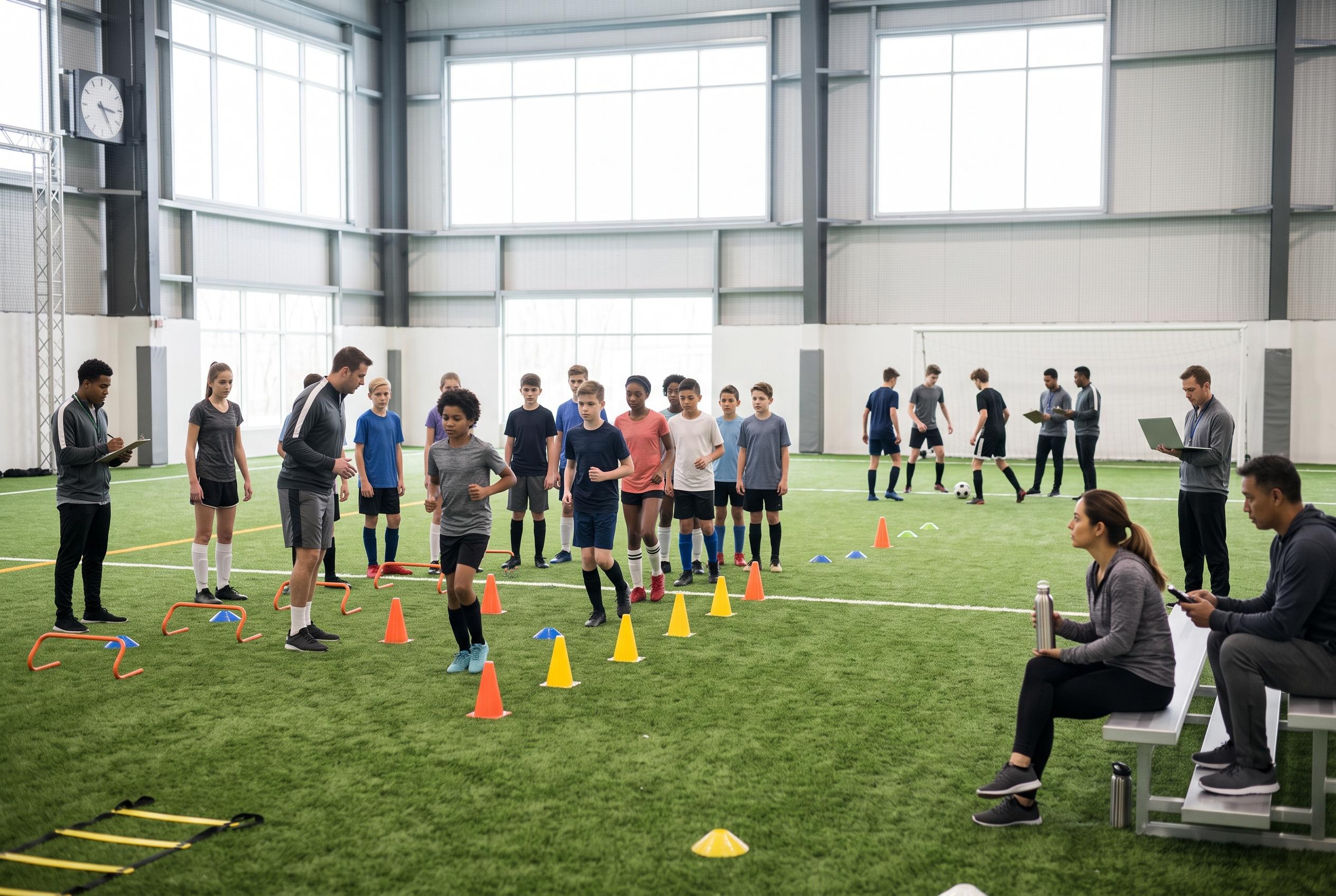

Research indicates that youth sports try-outs are most effective when they balance session length with structure, and employ multiple assessments to accurately gauge young athletes’ abilities and potential.
Youth sports try-outs work best when they are long enough to show what athletes can really do, but short enough to avoid unnecessary fatigue, according to TeamGenius. For most groups, the company says the most effective window is 90 to 120 minutes, giving coaches time to check players in, warm them up, run skills work, watch game play and complete scoring without stretching attention or energy too far. Reports from youth football, basketball and baseball guides point to a similar pattern: a well-planned session can reveal far more than a rushed one.
The structure matters as much as the clock. A common format begins with 10 to 15 minutes for arrival and warm-up, followed by 30 to 45 minutes of skills stations and sport-specific drills, then another 30 to 45 minutes for small-sided games or scrimmages, with a final stretch for instructions and next steps. Across sports, that balance is designed to capture both individual technique and live play, which coaches often need to judge effort, decision-making, teamwork and coachability, not just raw ability.
Age also changes the equation. Younger children generally do better in shorter evaluations of about 60 to 90 minutes, while middle-school and high-school athletes can usually handle 90 to 120 minutes, according to the material reviewed. Youth volleyball and basketball guides describe similar ranges for younger age groups, noting that attention span, stamina and the pace of drill work all affect how useful a longer session will be. Coaches are advised to adjust the schedule to the athletes in front of them rather than force every group into the same template.
Many organisations also find that one session is not enough. TeamGenius says a single try-out offers only a snapshot, and other guides on youth football and basketball make the same point, suggesting that two sessions often produce fairer decisions. One day can focus on skill work, testing and positional drills, while another can emphasise scrimmages and competitive situations. That approach helps account for nerves, poor timing or an off day, and it gives evaluators a better sense of how players perform across different settings.
The evaluation process can be strengthened further by keeping drills moving, using clear scoring criteria and involving more than one observer. TeamGenius recommends objective measures such as sprint times, agility tests, jump testing and timed skills, while the football guide highlights the value of independent evaluators to reduce bias. Several of the reviewed sports guides also stress the usefulness of small-sided games, which create more touches, more decisions and more chances to compare athletes directly. For clubs and leagues trying to make clearer team selections, the message is consistent: a good try-out is not simply longer, but better organised.
Disclaimer: This content is for informational purposes only and is not intended to be a substitute for professional medical judgment, advice, diagnosis, or treatment.



