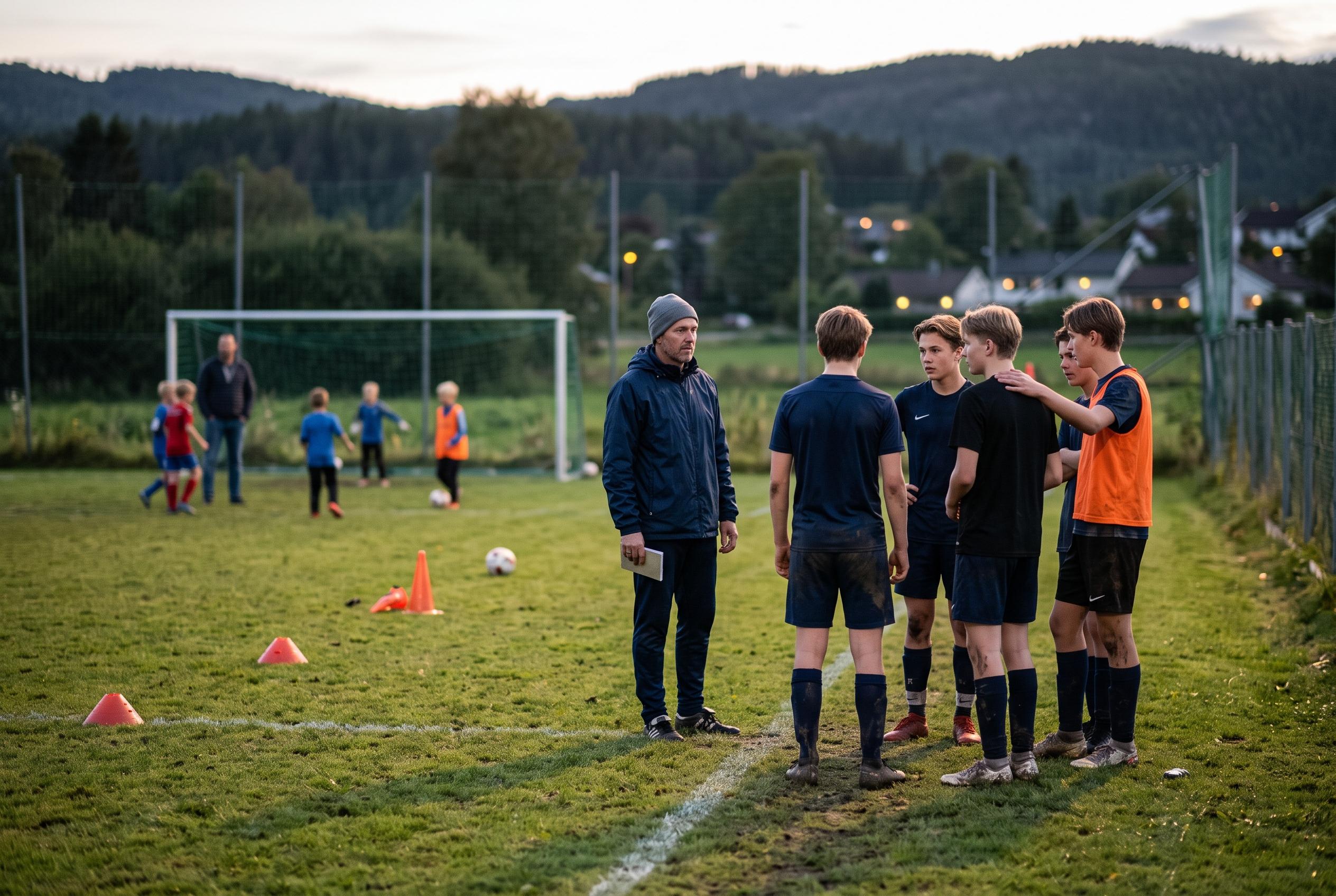

A review of Norwegian youth football participation reveals a broad base in childhood that sharply narrows by teenage years, raising questions about the sport’s approach to fostering lifelong involvement and top talent.
Norway’s youth football pipeline is broad at the bottom and sharply narrower by the teenage years, a pattern that has prompted renewed debate about what the game is asking of children and adolescents. VG’s review of figures from the Norwegian Football Association shows that about half of all 10-year-old boys played organised football last year, but participation fell steadily after that, even as the sport remained the country’s dominant team game. UEFA noted as far back as 2005 that football was already Norway’s leading sport, with more than 300,000 children aged six to 19 involved in club football.
For Eirik Øiestad, a children’s coach and creator of the podcast Pappatrenerne, the issue is not that young people have stopped liking the game. It is that many are pushed out by an environment that increasingly rewards commitment on the sport’s terms rather than the child’s. He argues that the sport has come to expect youngsters to be “all-in”, leaving little room for those who mainly want exercise, friendship and fun. In his view, the more realistic answer is to adapt football to what children actually want, even if that means offering different tracks for those who want to play casually and those aiming higher.
The numbers underline how quickly the field narrows. VG’s figures show that 10,427 six-year-old boys played football in Norway last year, rising through the primary-school years to a peak around fourth and fifth grade, when roughly half of all boys in a cohort were registered. By age 12, that number had already fallen to 16,094, even as selection began in earnest through the Football Association’s development structure. At 13, 15,886 boys were still playing; at 14, the figure had slipped to 14,391, while only 50 players were chosen for the national talent camp, the top level for that age group.
Håkon Grøttland, who leads the Football Association’s talent school, says the path to the top is extremely narrow. He says the evidence suggests that only one to three players from a given year group are likely to reach the senior national team. The contrast between mass participation in childhood and elite selection in adolescence reflects a system that seeks both broad involvement and high-end talent, but it also raises questions about how many children are lost along the way.
Research from the Norwegian School of Sport Sciences points to a familiar pattern: many teenagers quit when football starts to feel too serious, too demanding or too poorly fitted to the rest of their lives. School pressure, social life and other interests all compete for time, and those who remain longest are often the ones who experience progress, belonging and a strong group around them. A 2021 study published on ScienceDirect similarly found that adolescents often leave organised sport after weighing its value against other meaningful activities outside it.
That tension is at the heart of the wider Norwegian model, which has long promoted participation for as many children as possible for as long as possible. Øiestad questions whether that slogan still matches reality, arguing that the system now favours those willing to train and compete on adult terms. The challenge for clubs, coaches and governing bodies is whether they can keep the game open to the large majority who simply want to stay involved, while still nurturing the small minority who may one day make it to the top.
Disclaimer: This content is for informational purposes only and is not intended to be a substitute for professional medical judgment, advice, diagnosis, or treatment.