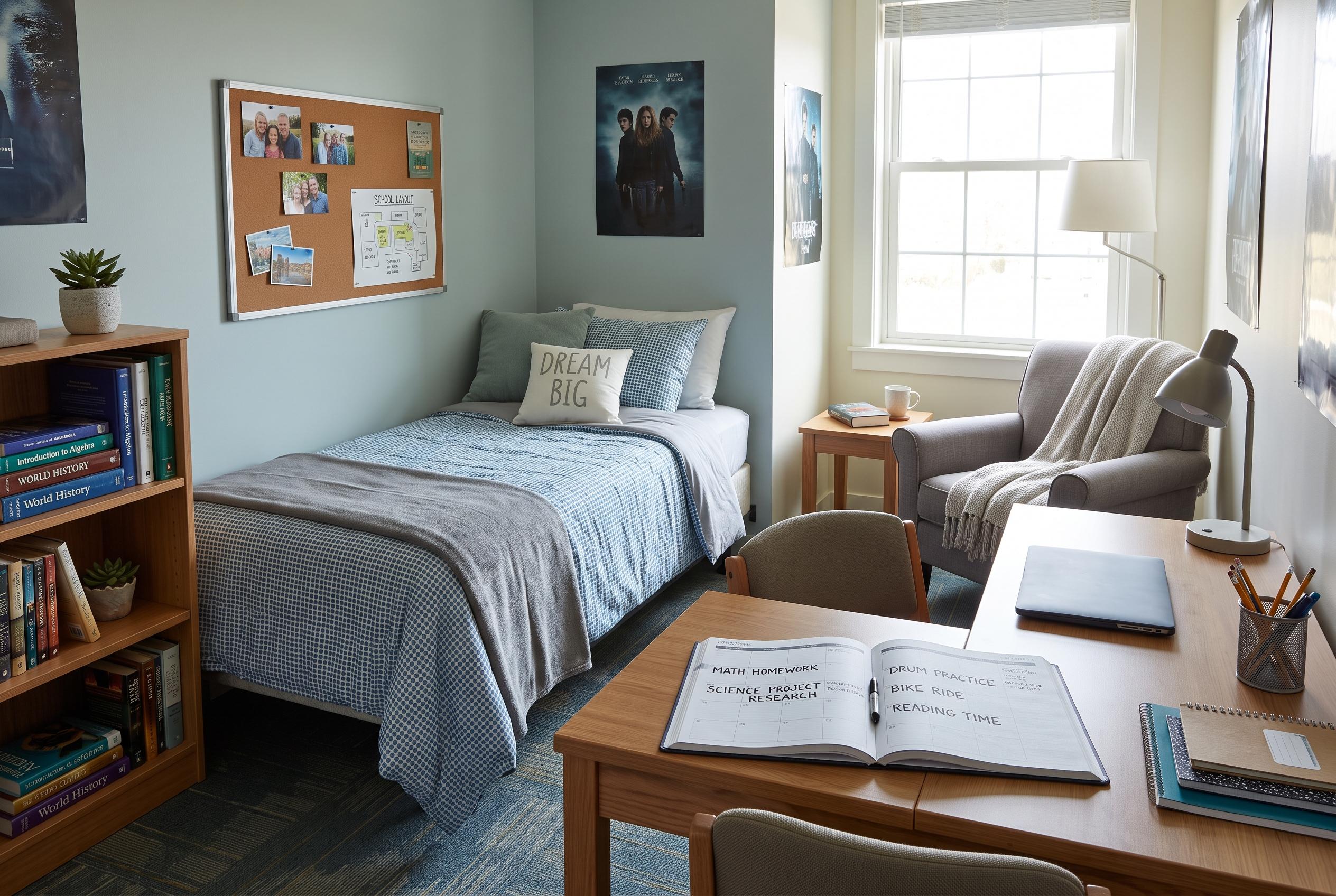

As teenagers face increased academic and social pressures, new studies emphasise the significance of establishing routines and granting autonomy to foster healthy habits and ease stress during the challenging move to secondary school.
Parents of teenagers often talk about balance, and for good reason. The move into secondary school can quickly turn ordinary family life into a juggling act, with longer days, heavier homework, more independence and a more complicated social world all arriving at once. Research published in the International Journal of Environmental Research and Public Health suggests that this transition is a difficult one for many adolescents, particularly because it can coincide with less physical activity and more screen time.
That matters because the habits formed at this stage can shape health and wellbeing well beyond the classroom. Studies indexed on PubMed have found that during the shift to secondary school, young people often become less active and spend more time on devices, patterns that can affect sleep, mood and general wellbeing. Researchers also say homework, screen viewing and exercise need to be considered together rather than as separate pressures, because families often expect all three to grow at once.
One of the simplest ways to steady that change is routine. A predictable pattern for bedtime, meals and homework gives teenagers some structure without turning home life into a timetable. It can also reduce friction around decisions that otherwise drain energy, such as when to study, when to switch off and where to put the phone overnight. The point is not perfection, but a rhythm that protects rest and leaves room for recovery.
Just as important is giving children permission to do less. Parents can feel pressure to fill every afternoon with clubs, revision and enrichment, but evidence from the University of Birmingham suggests that children’s movement and screen habits do not always develop in the way adults expect as they enter secondary school. In practice, that means balance may involve dropping one activity, or choosing a few that genuinely matter, rather than trying to keep everything going at once.
Schools also have a role. Research from Birmingham has looked at how phone policies influence adolescent wellbeing, finding that both restrictive and more permissive approaches can bring benefits and drawbacks. That points to a wider truth: balance is not only a family issue, but a school one too. The most helpful schools are those that treat pastoral care, exercise, homework and digital boundaries as part of the same conversation.
For parents, the goal is not to eliminate stress altogether. It is to help teenagers build the habits that make stress manageable. A child who sleeps properly, moves enough, has some breathing space and feels supported at school is better placed to cope with the demands of adolescence. In the end, balance is less about keeping every plate spinning and more about teaching young people which ones are worth holding, and which ones can safely be put down.
Disclaimer: This content is for informational purposes only and is not intended to be a substitute for professional medical judgment, advice, diagnosis, or treatment.