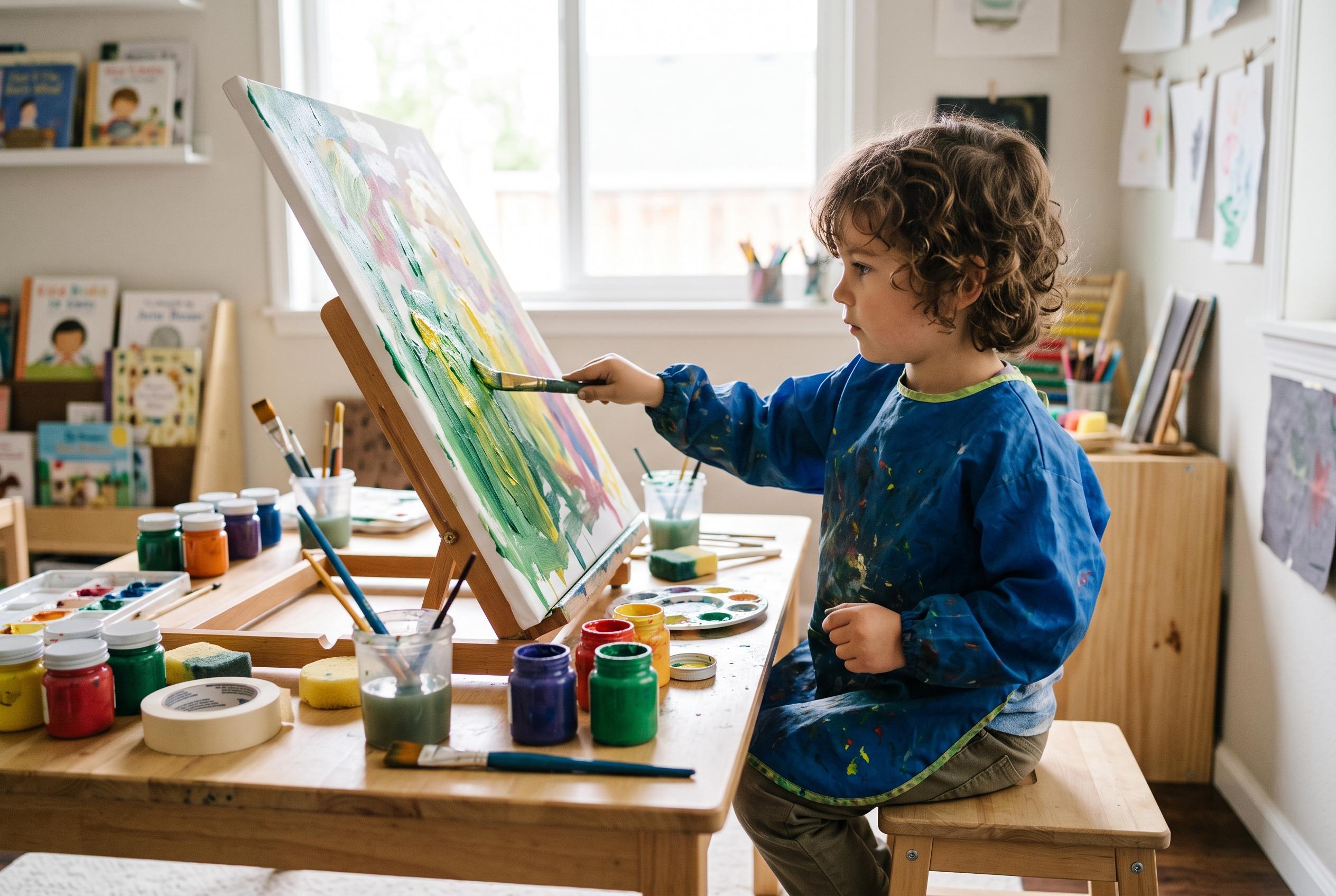

Recent studies emphasise that painting not only fosters early creativity and confidence in children but also enhances their cognitive skills, emotional expression, and problem-solving abilities, making it a vital tool for holistic development.
Painting can do far more for a child than fill an afternoon. It gives young children a way to experiment, make choices and show how they feel before they have the words to explain it. As a result, a simple activity with a brush and paper can become an early lesson in self-expression, creativity and confidence.
Research on art and child development has long pointed to cognitive benefits. A study in the Journal of Child Psychology and Psychiatry argued that art activity can change the way children think and perceive, while also helping them see the world as something that can be experienced aesthetically as well as practically. Other child development guides say painting encourages imagination by letting children decide what to make, what colours to use and how to represent the world around them.
It also builds useful practical skills. According to PBS Parents and other parenting resources, painting supports fine motor development because children must grip a brush, control movement and coordinate what they see with what their hands do. The same process can improve concentration, spatial awareness and attention to detail, especially when children work through shapes, lines and colour choices at their own pace. Guides on children’s art also note that painting often places youngsters in small problem-solving situations, such as correcting mistakes or deciding how to finish a picture, which can strengthen persistence and decision-making.
Painting may be especially valuable because it combines learning with enjoyment. Children can speak about their work, name colours, describe emotions and explain their choices, turning a visual activity into a broader exercise in communication. For parents, the point is not to treat painting as idle play but as a form of early learning that can support thinking, coordination and emotional expression at the same time.
Disclaimer: This content is for informational purposes only and is not intended to be a substitute for professional medical judgment, advice, diagnosis, or treatment.