

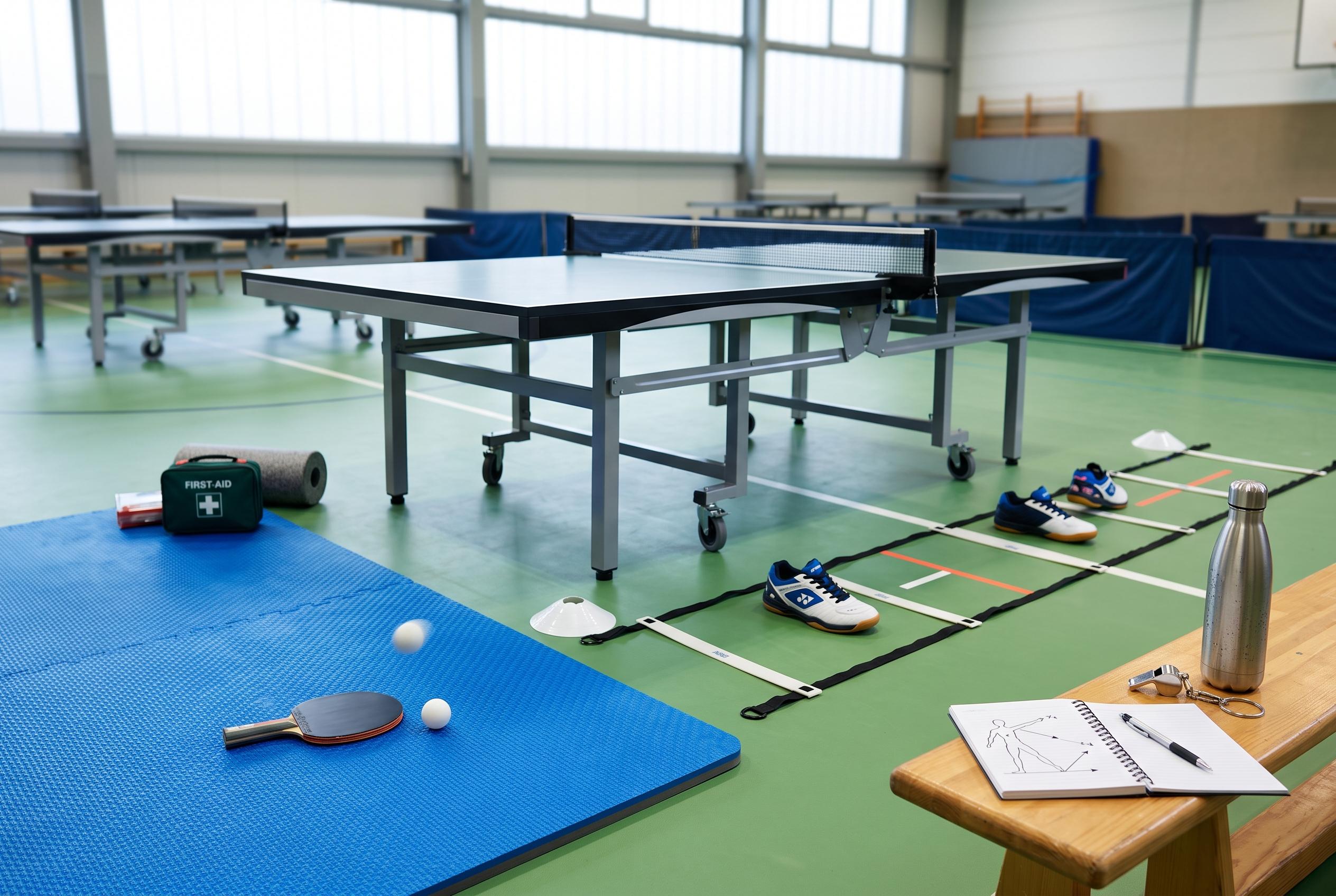

Recent research uncovers how repetitive footwork and biomechanics in table tennis can lead to acute and chronic injuries, prompting calls for improved training and injury prevention strategies.
Table tennis may look light on the body, but research suggests the sport can place a steady burden on players’ legs, backs and shoulders. Studies summarised in recent reviews point to a pattern of acute sprains and chronic strain injuries, particularly among athletes who repeat high-intensity footwork over long training blocks. The risk is not confined to one area: lower-limb, trunk and upper-limb problems all appear in the injury record, with the lumbar region, shoulders and knees among the most commonly affected sites.
A systematic review in PubMed, examining lower-limb biomechanics during the topspin forehand, found that efficient play depends on a chain of movement that starts at the hip and travels down through the ankle and foot. That proximal-to-distal sequence helps generate racket speed, but it also means the lower body is working hard to transfer force, stabilise landings and control rapid changes of direction. The review noted that the muscles around the ankle and subtalar joints are heavily involved when players land, underlining why strength and control in these areas matter for both performance and injury prevention.
Another review of table tennis physiology and biomechanics said the sport’s repeated bursts of effort can expose players to overuse injuries, while existing research still leaves gaps in understanding exactly how force flows between the lower and upper body. The authors also said epidemiological studies often lack detailed injury descriptions, making it harder for coaches and clinicians to tailor prevention work. A separate scoping review of 42 studies found the most common injuries included strains, sprains, tenosynovitis and benign muscle injuries, but cautioned that much of the evidence base remains methodologically weak.
Biomechanical studies of chasse steps, a common side-step used in table tennis, suggest that different footwork patterns can alter how the ankle and hip move and how quickly those joints are loaded. That helps explain why the sport can be tough on players who train hard without enough recovery or technique correction. The practical lesson from the research is consistent: coaches should clean up movement patterns, manage workload carefully and build lower-limb strength and stability into training, especially for athletes who rely heavily on fast, repeated footwork.
Disclaimer: This content is for informational purposes only and is not intended to be a substitute for professional medical judgment, advice, diagnosis, or treatment.


