

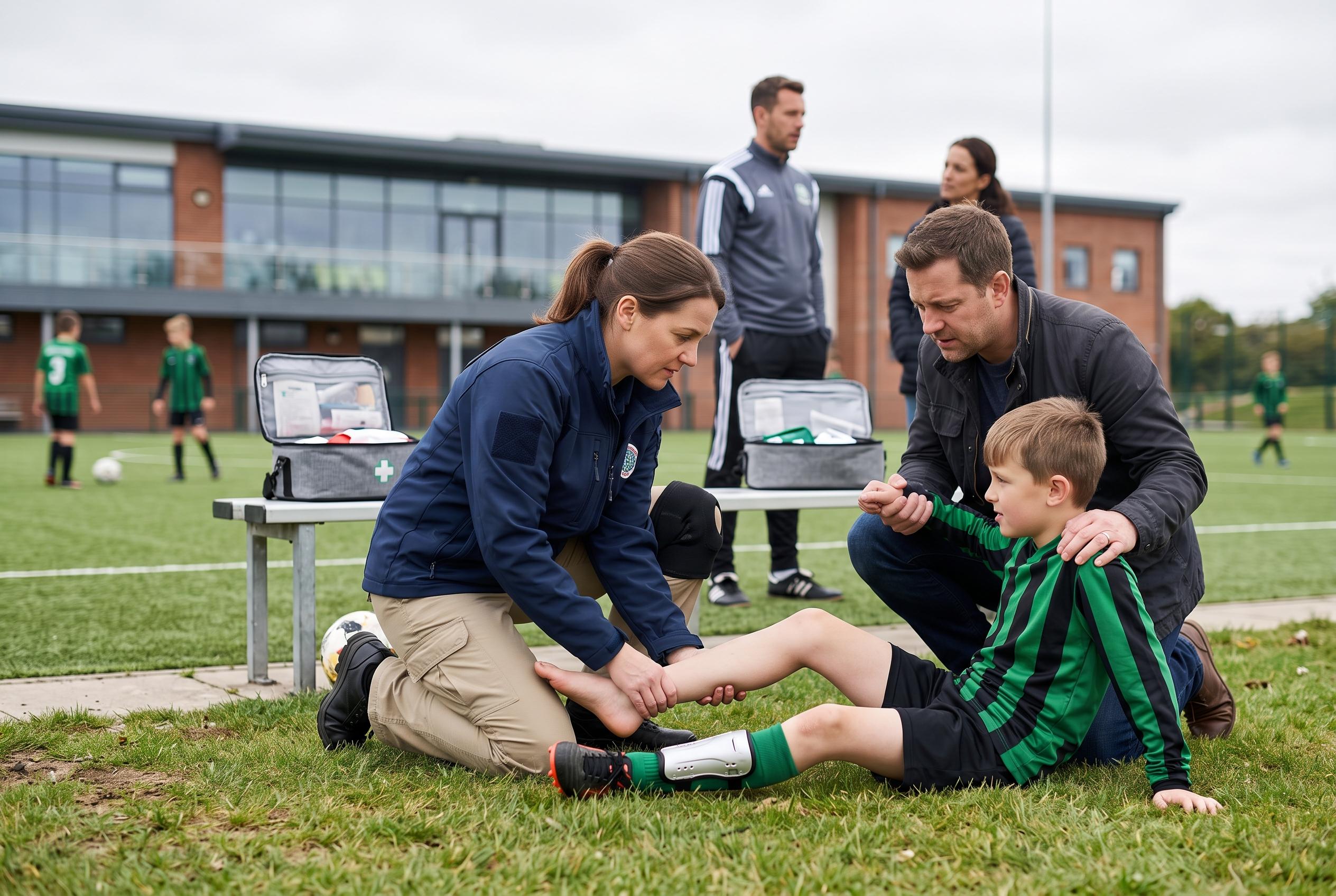

Parents are advised to recognise warning signs such as deformity, inability to move, and head trauma that require immediate medical attention, even in seemingly minor injuries, to prevent long-term damage.
A child who stumbles off the pitch, favours an ankle or insists they are “fine” can leave any parent weighing caution against delay. The safest approach is not to guess, but to look for a small group of warning signs that call for same-day medical care and to understand which problems can be watched briefly at home. HealthyChildren.org, Texas Health, St. Louis Children’s Hospital and Children’s Health all point to the same basic idea: some injuries settle with rest, while others should be assessed quickly before they worsen.
The clearest reasons to leave the sideline and seek urgent evaluation are visible deformity, inability to put weight on a leg or use an arm normally, and a joint that feels unstable or gives way. Numbness, tingling or any sense that a limb feels “dead” also suggests a nerve problem rather than a simple sprain. Texas Health adds that a popping sound at the moment of injury and severe swelling can be further clues that the damage is more than routine soreness.
Head knocks deserve particular care. If a child develops confusion, dizziness, headache, vomiting or an obvious change in behaviour after contact with the head, HealthyChildren.org says a concussion assessment should happen at once. Other emergency signs include repeated vomiting, loss of consciousness, seizure activity and worsening confusion after a hit, according to guidance from Wesley Healthcare and BJJ Rehab. Any neck or back pain with weakness, numbness or tingling in the arms or legs should also be treated as urgent.
Not every ache means a trip to the emergency department. Minor bumps, mild swelling and soreness that improve with rest can often be observed for a day or two, especially if the young athlete can still move the area and use it normally. Texas Health recommends the familiar RICE approach , rest, ice, compression and elevation , for uncomplicated injuries, while St. Louis Children’s Hospital and Children’s Health note that parents should keep a close eye on pain that appears during activity, persistent soreness or a drop in performance, which can point to overuse rather than a one-off collision.
The practical test is whether the injury is improving or declaring itself through more serious symptoms. If swelling climbs, movement becomes harder, pain intensifies or the child cannot return to normal use of the body part, the injury deserves a medical review. That is especially important in youth sport, where children are often keen to minimise symptoms and keep playing. In that moment, caution is not overreacting; it is the simplest way to avoid turning a short-term problem into a longer one.
Disclaimer: This content is for informational purposes only and is not intended to be a substitute for professional medical judgment, advice, diagnosis, or treatment.



