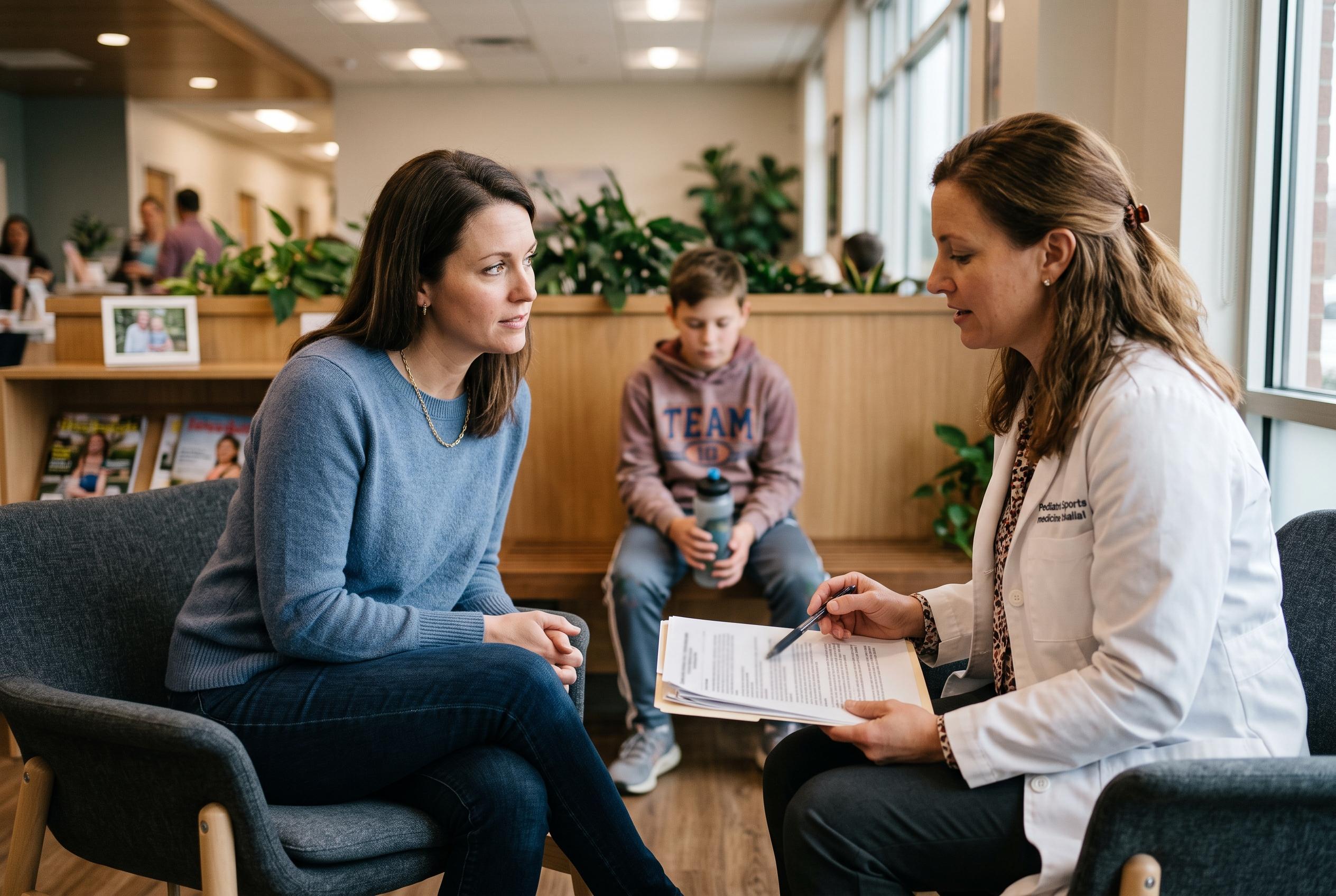

Updated protocols stress immediate removal from play, gradual return to school and sport, and close medical supervision to ensure full recovery following youth concussions.
A concussion in a young athlete is a brain injury, not just a knock to the head, and the safest response is to stop play immediately. The CDC says most children can return to school within one to two days, even if symptoms have not fully cleared, provided they have the right support. Children’s Hospital of Philadelphia and the American Academy of Pediatrics both stress that return to play must be gradual and medically cleared before contact sport resumes.
Symptoms can be obvious or subtle. Headache, dizziness, nausea, confusion, slowed thinking, poor concentration, light sensitivity and unusual fatigue are all common, and the New York City Department of Education notes that lack of coordination, memory loss and sleepiness can also occur. A child does not need to lose consciousness to have a concussion, and school staff or coaches should remove any student they suspect has one until a clinician can assess them.
Early recovery is no longer about total isolation. The CDC advises brief relative rest, then a step-by-step return to normal school and daily activity as tolerated, while the American Academy of Pediatrics says children do not need to be completely symptom-free before going back to class. Temporary adjustments such as shorter assignments, extra breaks, reduced screen time and extra time for tests can help students recover without falling behind.
The return-to-sport process is stricter. The CDC’s six-step progression, based on international concussion guidance, increases activity gradually, with each stage taking at least 24 hours and the athlete moving on only if symptoms do not return. Schools and families are advised to work closely with a healthcare provider, and when available, an athletic trainer. Contact practice comes late in the process, after regular school activities and non-contact exercise are tolerated.
Parents should also watch for warning signs that mean urgent medical care is needed. These include worsening headache, repeated vomiting, increasing confusion, seizures, weakness, slurred speech, trouble waking and loss of coordination. A concussion can overlap with neck injury, migraine, vision problems, anxiety and sleep disturbance, so persistent symptoms that affect school or daily life may need specialist care rather than simple rest.
The overall message is straightforward: remove the child from play, monitor for danger signs, get medical evaluation and then follow a staged return to learning and sport. HealthyChildren.org notes that many children recover fully within four weeks, but the pace varies. Recovery should be guided by symptoms and clinical advice, not by a tournament date or pressure to get back quickly.
Disclaimer: This content is for informational purposes only and is not intended to be a substitute for professional medical judgment, advice, diagnosis, or treatment.