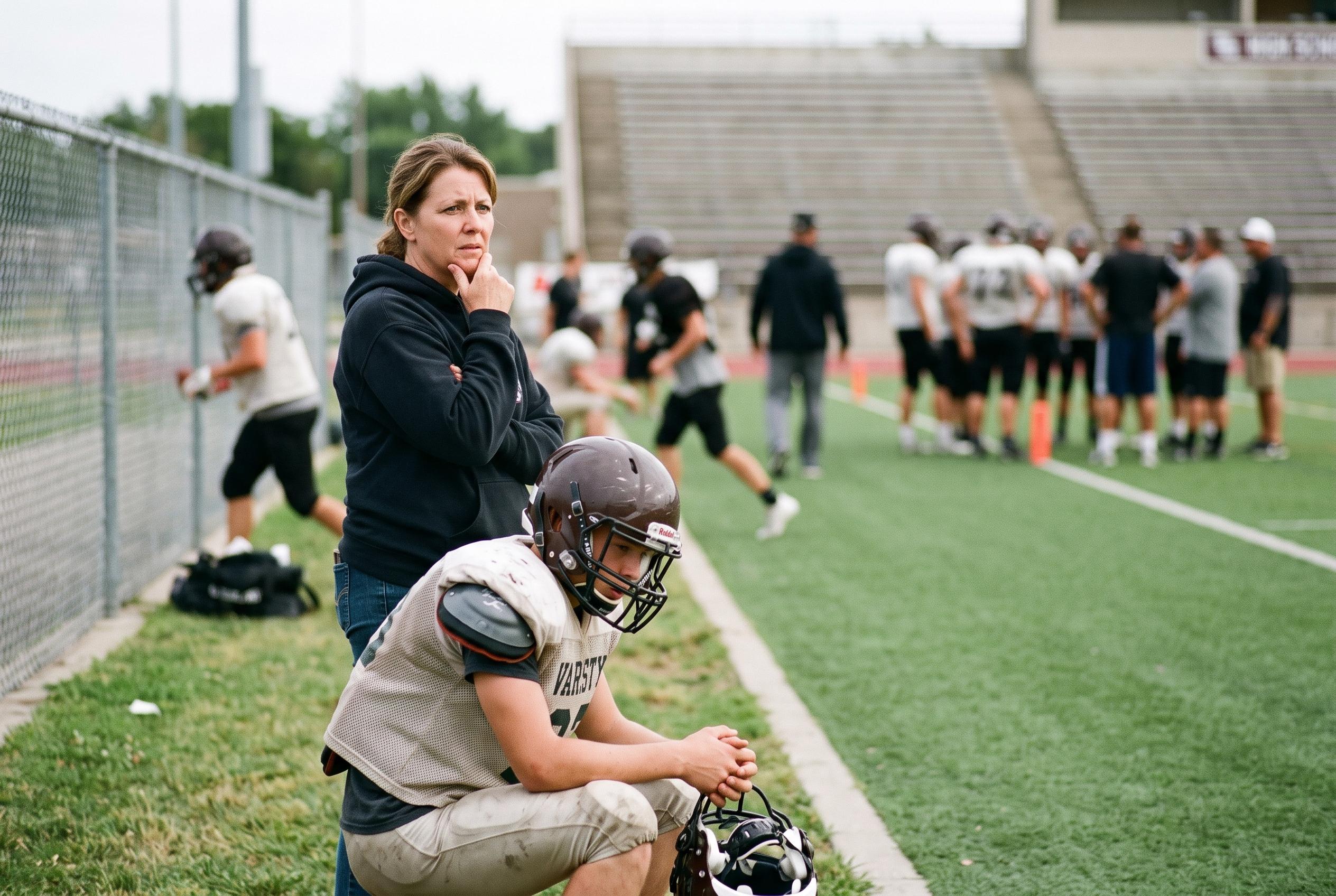

A recent study linking former NFL players to degenerative brain disease is reigniting parental concerns about teenage football, even as schools emphasise improved safety measures and declining participation rates.
A new study on chronic traumatic encephalopathy has revived anxiety among parents of teenage football players, even as coaches and trainers say the sport has become much safer than it was a generation ago. Researchers affiliated with Mass General Brigham, Boston University and the Concussion & CTE Foundation reported that at least one in four former NFL players who died between 2016 and 2021 had signs of the degenerative brain disease linked to repeated head impacts.
That finding has landed in the middle of a long-running debate over how much risk families are willing to accept. Allan Walsh, a sports agent and lawyer, called the research “a crisis” on social media, while some parents say the study is yet another reason to question whether children should take part in collision sports at all. Mike Hamilton, a former high school football and basketball coach whose son plays football at Chatsworth High, said the latest headlines have left him uneasy, even though his child loves the game and is careful about his health.
At the same time, school athletic staff say football safety has improved sharply. Tim Moscicki, head athletic trainer and director of student health at Loyola High School in Los Angeles, said practices, equipment, tackling instruction and concussion protocols are far stricter than they once were. He recalled an era when a player who had “got his bell rung” might briefly leave a game and then return, something he says is now unacceptable. Loyola also uses baseline testing to compare a student’s balance and cognitive function after a suspected concussion, and the school has added a return-to-class programme because head injuries can affect schoolwork as well as sport.
Moscicki said no system can eliminate concussion risk altogether, and he stressed that the final decision still rests with parents. That choice is becoming more complicated as participation patterns shift. According to the California Interscholastic Federation, 11-man football remained the most popular boys sport in the 2025-26 school year with 87,718 participants, but that figure was down 4% from the previous year. At the same time, Pierce College and Orange Coast College have paused junior college football programmes this year because of low numbers, and many high schools have already cut junior varsity teams for the same reason.
Disclaimer: This content is for informational purposes only and is not intended to be a substitute for professional medical judgment, advice, diagnosis, or treatment.