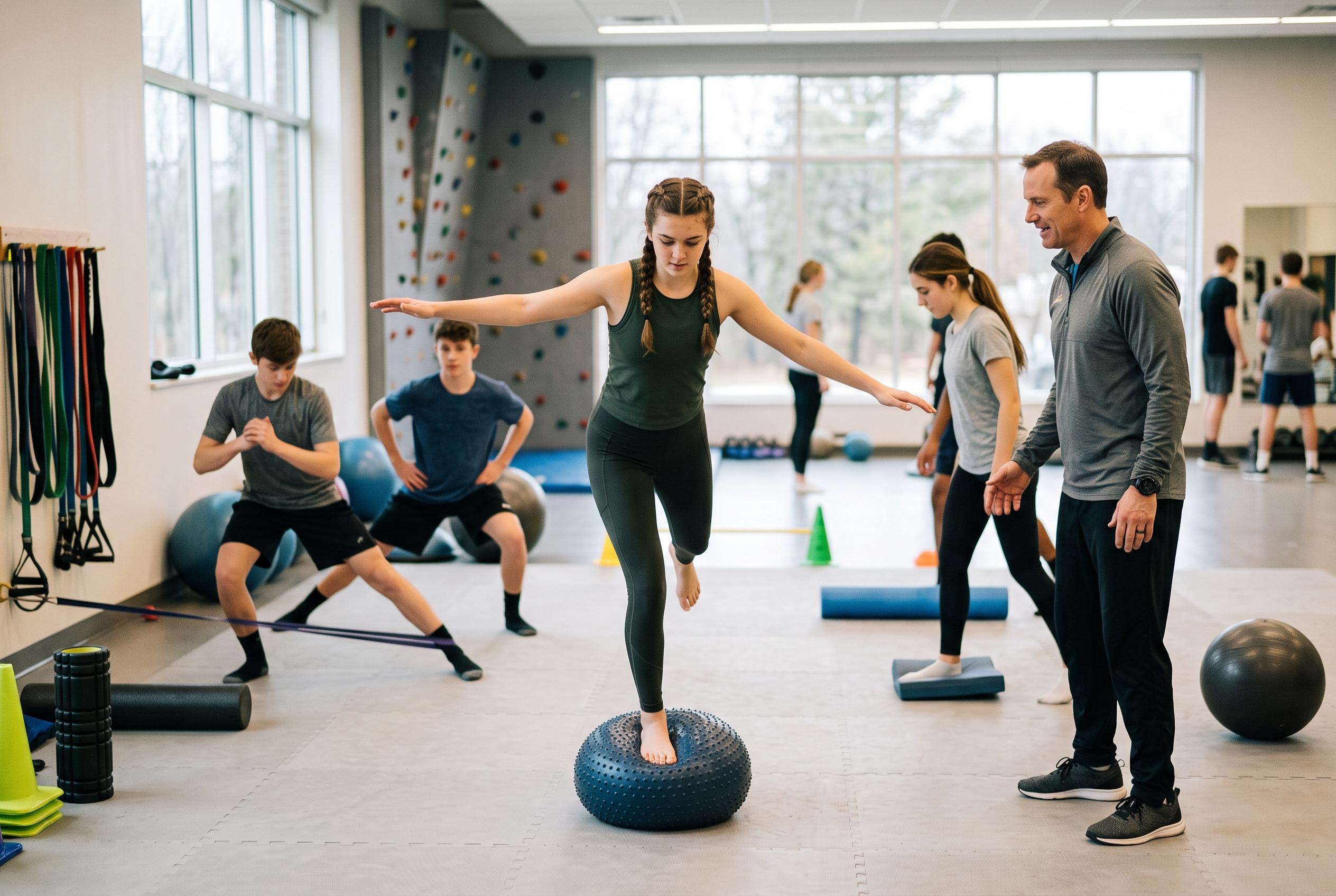

Emerging research highlights how targeted neuromuscular exercises can enhance balance, agility, and safety in teenagers during their critical growth phase, potentially reducing injury risks beyond sports.
Teenagers often seem to stumble more just as their bodies are getting stronger, and that is not simply carelessness. During puberty, bones lengthen, muscles adapt and the nervous system has to keep up. That lag can temporarily affect balance, coordination and movement control, making a once-easy jump, turn or landing feel awkward.
That is why neuromuscular training is drawing attention. The approach is designed to improve the way the brain, muscles and joints work together, sharpening balance, agility and reaction speed. Research summarised in PubMed reviews suggests that properly structured programmes can reduce sports injury risk in young athletes, while specialist guidance from the Hospital for Special Surgery says the method can also improve control, speed and body awareness.
A short routine can be done without equipment and does not need to be complicated. Exercises may include dynamic warm-up moves, such as knee lifts and trunk rotations; one-legged balance work with reaching movements; plank variations to strengthen the core and hips; soft-landing jumps that teach safer knee alignment; and controlled side-to-side or zigzag steps to build agility. The aim is not to lift more or train harder, but to move with better control.
That matters well beyond sport. As adolescent growth accelerates, young people can pass through a period of motor-skill vulnerability, when their bodies change faster than their movement patterns can adapt. Studies published in 2025 and 2026 indicate that neuromuscular training can help protect the knees and ankles and improve postural stability in young athletes. For schools, clubs and families, the broader lesson is simple: helping teenagers learn to balance, land and change direction safely is part of healthy development, not an optional extra.
Disclaimer: This content is for informational purposes only and is not intended to be a substitute for professional medical judgment, advice, diagnosis, or treatment.