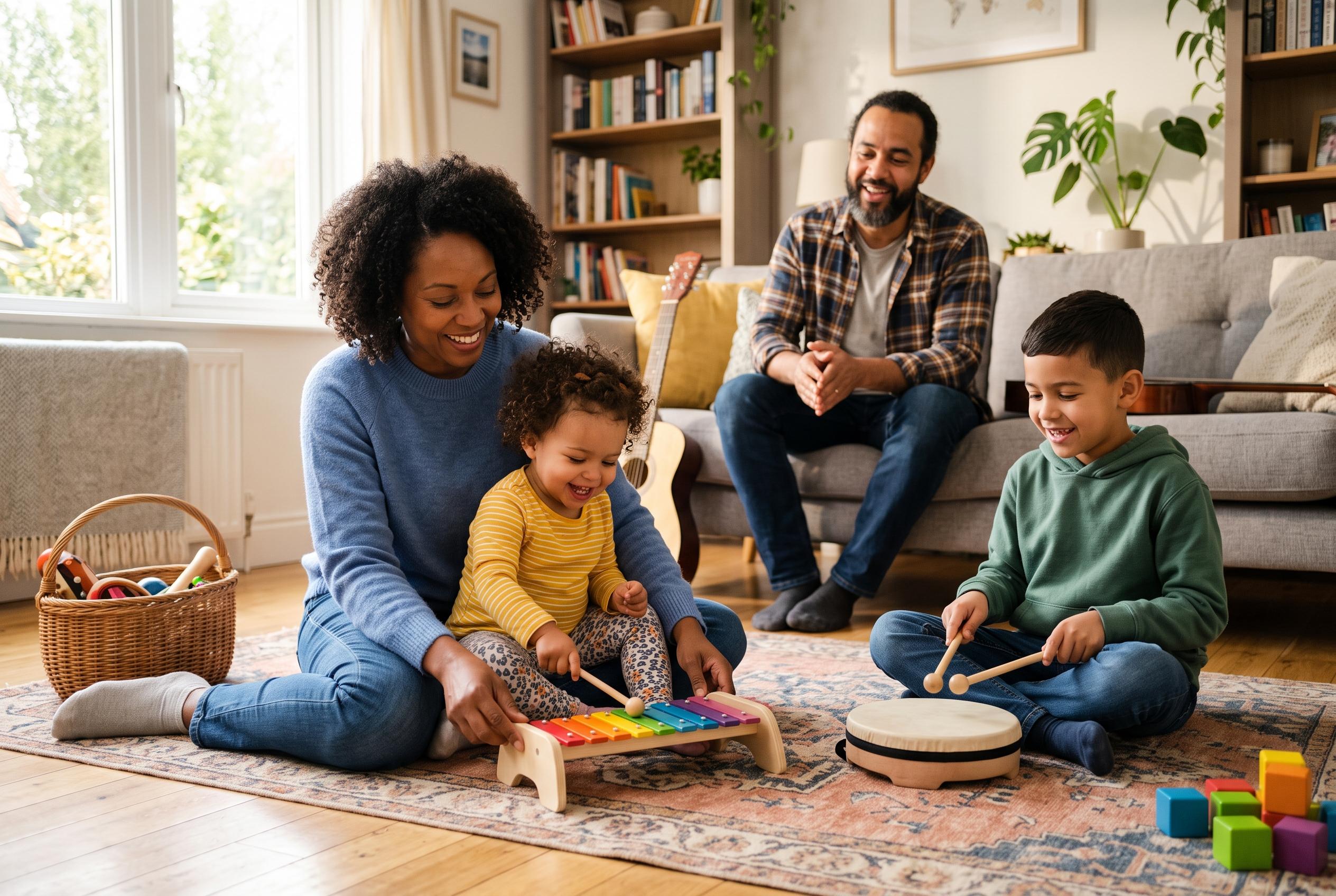

Research highlights how incorporating music into daily routines can bolster emotional well-being, social skills, and brain development in young children, offering a simple and cost-effective way for families to support early childhood growth.
Music can be a simple, low-cost way to help young children feel more settled, more expressive and more secure. Families often turn to it during moments of change, and child-health groups say it can support mood, ease stress and build confidence when used as part of everyday care.
That effect is not just emotional. The Mayo Clinic Press says music can help lower anxiety and improve mood, while the American Academy of Paediatrics notes that it may also support attention and learning. UNICEF has similarly said that music can shape brain development in early childhood, with benefits for memory, cognitive skills and social-emotional growth.
For parents, the practical value often lies in routine. A gentle song at bedtime, background music at breakfast or a familiar tune during tidying-up can give children clear signals about what comes next. The article from Identity Magazine argues that this kind of predictability can be especially helpful for children who feel uneasy in new settings or during transitions, because repetition builds comfort and reduces uncertainty.
Active music-making can help as well. Singing, clapping, dancing and simple instrument play give children a safe way to practise listening, coordination and self-expression. PBS KIDS for Parents says music can help children name feelings and work through them, while the University of Maryland highlights its role in social development through playful interaction with caregivers and peers.
Formal lessons may add another layer of support as children get older. Learning an instrument can build patience, focus and a sense of progress, but experts consistently stress that encouragement matters more than perfection. The broader message from child-development organisations is clear: music is most helpful when it is part of a balanced routine that also includes sleep, movement, healthy food and open communication. If anxiety begins to affect school, friendships or rest, families should seek advice from a paediatrician or mental health professional.
Disclaimer: This content is for informational purposes only and is not intended to be a substitute for professional medical judgment, advice, diagnosis, or treatment.