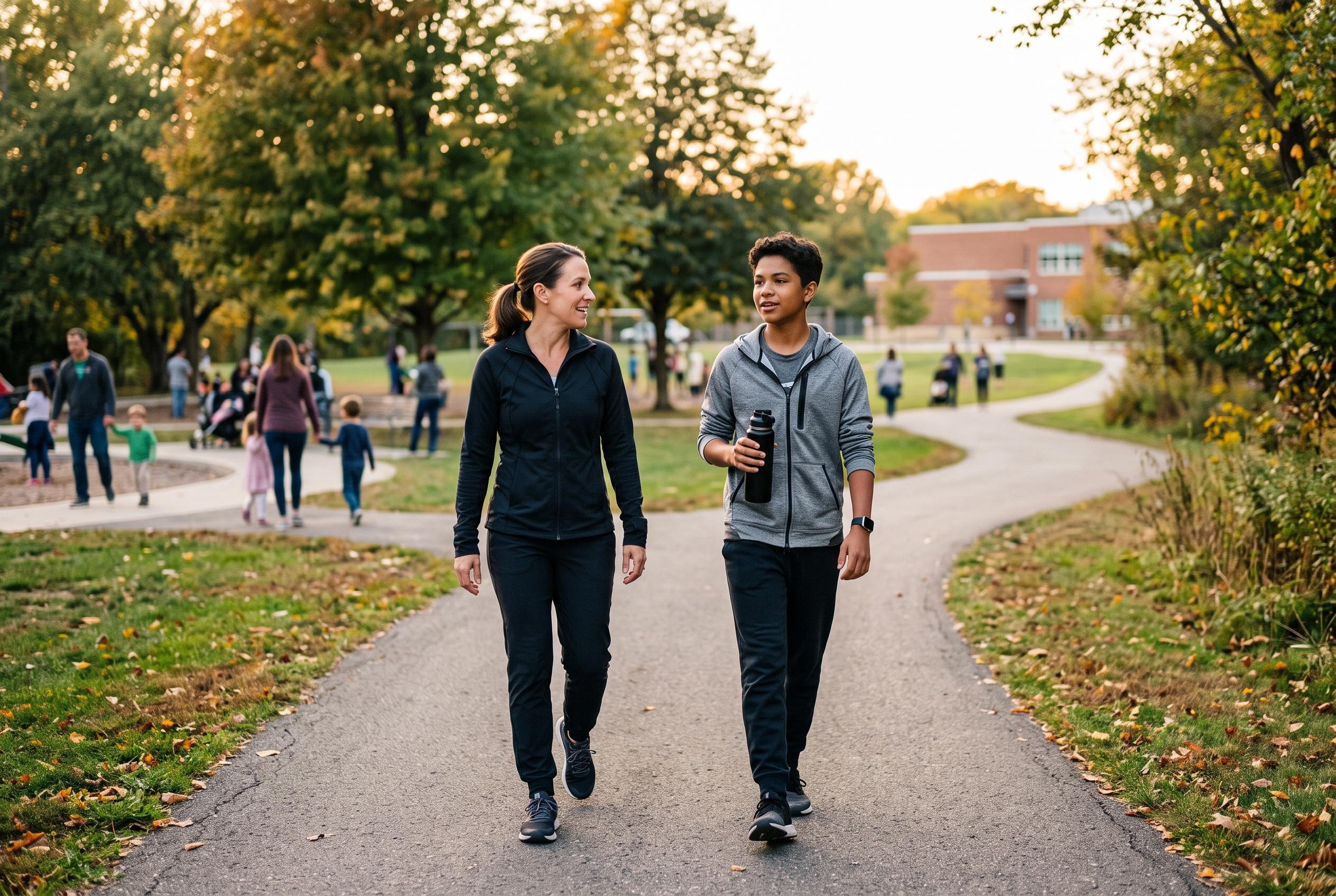

A University of Minnesota-led study highlights the potential of real-life mentoring relationships to improve teenagers’ physical activity and mental well-being, offering a promising approach amidst post-pandemic challenges.
A University of Minnesota-led study suggests that mentoring may help teenagers build healthier habits when it is tied to real-life relationships rather than lectures. The programme, called DiscoverU, paired college-age mentors with middle and high school students in an after-school setting and combined physical activity, mindful eating and social-emotional learning. In the Journal of Community Psychology, the researchers said the approach was designed to tackle two problems that worsened after the pandemic: poorer mental health and lower levels of exercise among adolescents.
The pilot was run with Columbia Heights Public Schools near Minneapolis and drew on surveys from 32 young people, together with focus groups involving students, mentors, facilitators and school staff. According to the published study and related summaries, the group was largely female and reflected a low-income school district, with most students eligible for free or reduced-price lunch and about a quarter screening positive for depression or anxiety. The programme was built around the idea that teenagers may respond better when health lessons are delivered through trusted near-peer relationships.
The results were modest but encouraging. Physical activity increased from about three days a week to four, and cooperative behaviour improved as well. Other measures, including self-efficacy and mindful eating, moved in the right direction but did not reach statistical significance, which the authors linked in part to uneven attendance. Even so, every student said they would recommend DiscoverU to a friend, and most reported feeling comfortable, accepted and engaged.
Attendance was the clearest weakness. Only about half of participants attended at least seven of the eight weekly sessions, and the researchers said absences often reflected homework, childcare responsibilities and exhaustion rather than lack of interest. Participation improved over time, with fewer students dropping in only once or twice during the second cycle. That finding matters because it suggests the young people who might benefit most from extra support are often the least able to stay after school.
The study’s broader lesson is that mentoring may be as important as the curriculum itself. Students repeatedly described mentors as confidants or older siblings, and the researchers said that trust appeared to drive engagement more than any single lesson. They argued that future programmes should remain flexible, account for family responsibilities and treat the mentoring bond as the main engine of recruitment and retention. The university-school partnership behind DiscoverU may be hard to replicate, but the model offers a practical example of how schools might link physical and mental health support for adolescents in one setting.
Disclaimer: This content is for informational purposes only and is not intended to be a substitute for professional medical judgment, advice, diagnosis, or treatment.