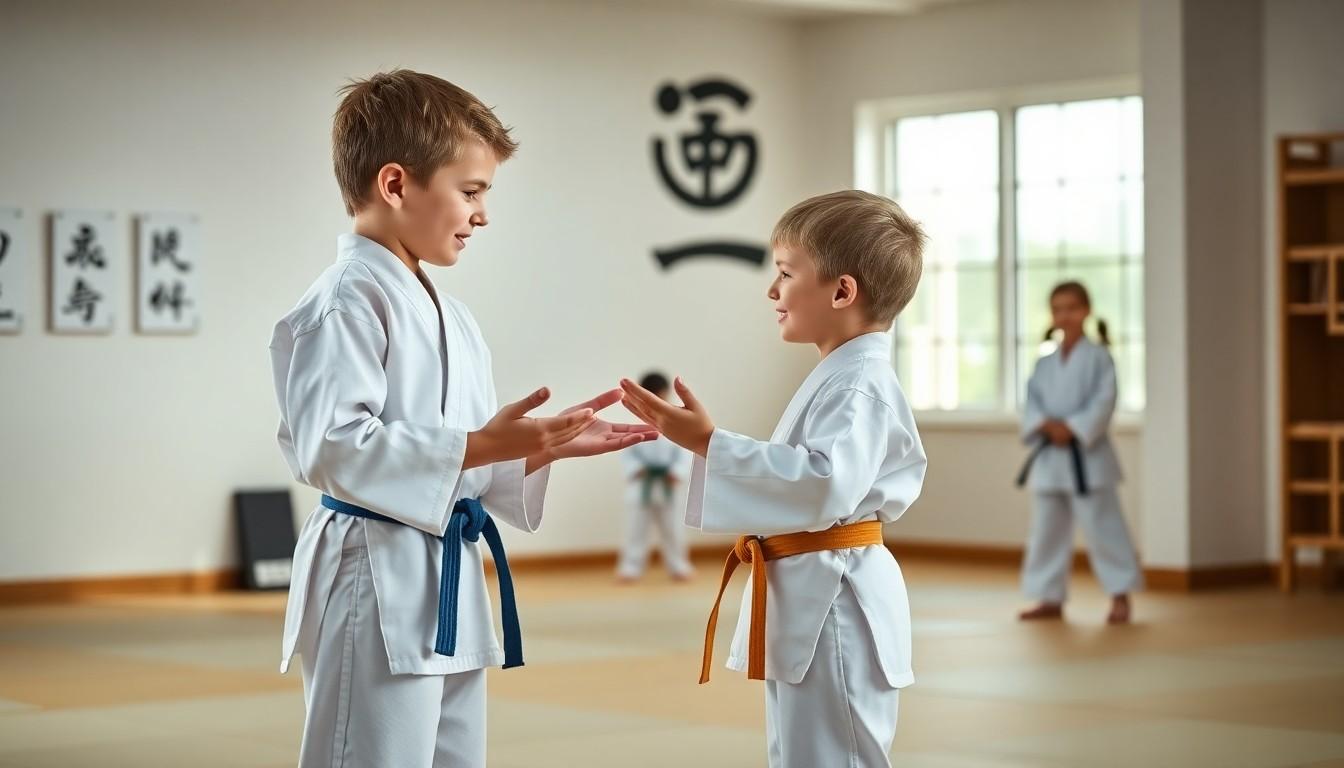

New insights suggest that qualities like respect and empathy foster stronger friendships among children, with martial arts schools serving as effective environments for cultivating these attributes beyond the pursuit of confidence.
Children do not need endless bravado to make lasting friendships. According to the material supplied, the qualities that matter most are respect, empathy and an ability to notice other people’s feelings and boundaries. The argument is that confidence may help a child step forward, but it is mutual regard that keeps a friendship strong. Martial arts schools are presented as one place where those habits are deliberately practised, because training depends on listening, cooperation and an awareness of others.
That emphasis on respect is consistent across several martial arts educators. Hive Martial Arts says the discipline encourages respect for instructors, peers and oneself, while Train at Summit argues that values such as respect and self-control are built into children’s development from the start. AG Martial Arts likewise describes a culture in which pupils line up, wait their turn and respond to instruction, reinforcing manners as well as technique.
The social value of that environment is not accidental. Partner drills, paired exercises and controlled sparring require children to read body language, judge timing and take responsibility for a training partner’s safety. As the lead article suggests, those repeated exchanges can help children understand personal space, non-verbal cues and the give-and-take needed for trust. In practice, the lesson is that friendship grows not from dominating a room, but from learning how to work well in one.
Martial arts advocates also argue that the lessons travel beyond the mat. American Tiger says respect, focus and responsibility often show up at home, while FMAC UK says traditional training teaches children to cooperate calmly and value collaboration over competition. That wider effect matters because children who can listen properly, accept correction and support others are often better equipped to handle school, family life and playground disputes.
The wider point is that confidence is only one ingredient in a child’s social life, and perhaps not the most important one. The more durable foundations are empathy, discipline and the habit of treating other people well. In that sense, martial arts are presented less as a route to self-assertion than as a framework for learning how real connection is built: patiently, respectfully and with attention to others.
Disclaimer: This content is for informational purposes only and is not intended to be a substitute for professional medical judgment, advice, diagnosis, or treatment.