

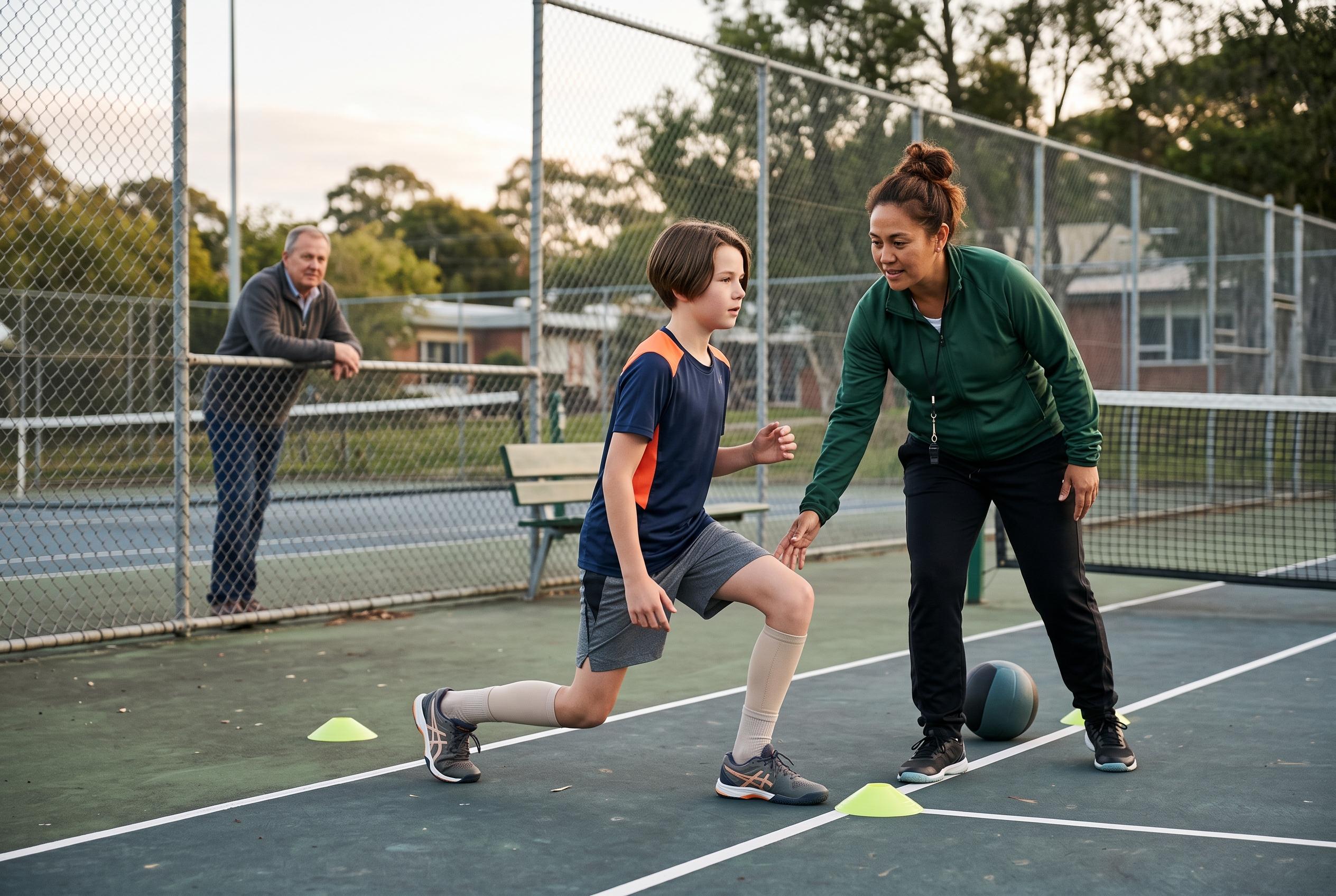

Properly designed strength training programmes for young tennis players can enhance performance and resilience, provided they focus on movement control and development tailored to the child’s stage of growth, moving away from adult weightlifting towards a gradual, technique-focused approach.
Young tennis players do not need to wait until they are adults before beginning strength training, but they do need the right kind of programme at the right stage of development. The central point, according to the Tennis Fitness guide and supporting sports medicine material, is that the question is less about a fixed age than about whether a child can move well, follow instructions and handle training that matches their current physical maturity. Properly designed programmes for juniors focus first on body control, coordination and sound technique rather than heavy loading.
Research backs that gradual approach. A six-week neuromuscular training programme studied in competitive junior tennis players found improvements in speed, agility, explosive power and aerobic conditioning, suggesting that structured physical work can strengthen the qualities tennis demands. A separate systematic review of young tennis players also found that resisted, plyometric and neuromuscular training can improve strength and power, although the best outcomes depend on choosing the right method for the athlete and the training goal.
That is why experts caution against confusing junior strength training with bodybuilding or adult weight training. The emphasis for younger players should be on movements such as squatting, lunging, pushing, pulling, balancing and landing with control. The goal is not to build maximal strength as quickly as possible, but to improve muscular control and resilience in a way that supports tennis and reduces the risk of overuse problems. Coverage from sports training outlets and youth fitness guidance also notes that properly supervised strength work is considered safe for children and adolescents and does not stunt growth when it is age-appropriate and progressively coached.
The order in which physical qualities are introduced also matters. Findings from research on youth elite tennis players suggest that the sequencing of neuromuscular training can influence gains in strength, power and agility, which means coaches should think carefully about progression. In practical terms, that often means starting with movement competence and stability, then layering in strength, and only later asking a player to perform more explosive work such as jumps, bounds, medicine ball throws and speed drills.
For parents and coaches, the clearest sign of a good programme is not how much weight a child can lift, but whether the training matches the child’s stage of development and builds toward better tennis. A well-structured plan should help a young player move better, recover more efficiently between points and develop the physical qualities that underpin stronger serving, quicker changes of direction and more controlled stroke production. In that sense, junior strength training is not a detour from tennis; it is part of preparing a child to play it better over time.
Disclaimer: This content is for informational purposes only and is not intended to be a substitute for professional medical judgment, advice, diagnosis, or treatment.



