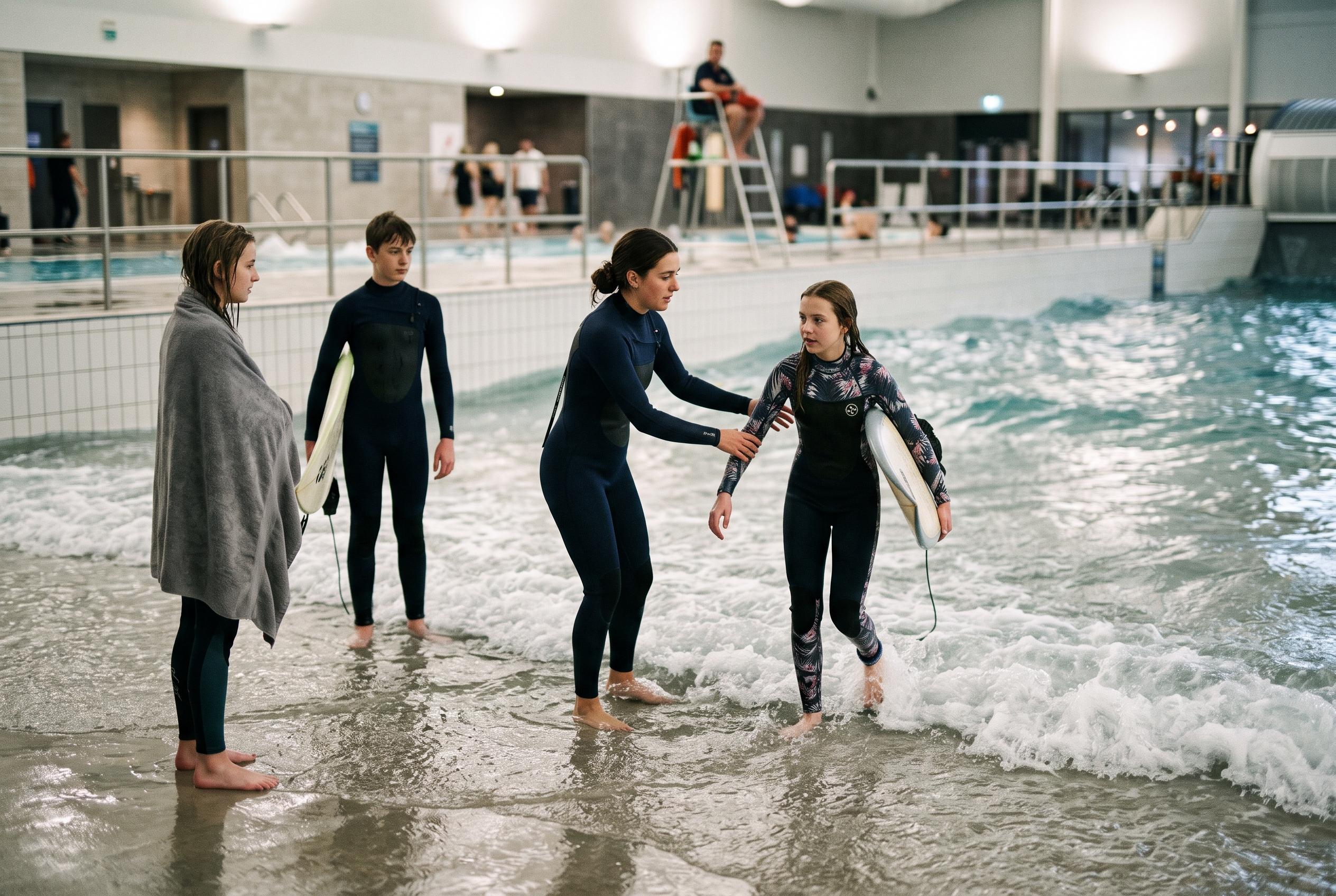

A new study reveals that inland wave pools offer mental health benefits similar to traditional coastal surf therapy, expanding access for young people across Britain.
A new evaluation of surf therapy programmes in Britain suggests that young people can benefit whether sessions take place on the coast or in inland wave pools, adding a firmer evidence base to what has long been anecdotally understood about the mental health effects of surfing. The study, which reviewed six-week programmes delivered during the 2025 season, found meaningful gains in wellbeing, self-belief, perseverance, pride in achievement and connection with others among 360 participants aged 8 to 18. According to the findings, the overall pattern of improvement was broadly similar in seaside and inland settings, even if some individual measures varied.
The research drew on 22 coastal beach sites and two inland venues run by The Wave Project, including The Wave in Bristol and Lost Shore Surf Resort in Edinburgh. All five measured outcomes improved significantly from the start to the end of the courses in both environments. The biggest difference between the two settings was seen in wellbeing, measured with the WHO-5 index, which rose by 20.1 points at beach locations and 10.6 points at inland wave pools. Four of the five measures showed no statistically significant difference in the scale of improvement between the two types of setting, and among experience-related measures, friendship was the only area with a meaningful gap.
Ramon Van de Velde, chief executive of The Wave Project, said the findings showed that coastal and inland programmes were not identical but that both produced significant positive outcomes. He argued that, at a time when children’s mental health services are under pressure, preventive support should be delivered more creatively and that blue spaces, including inland surf facilities, could play a major role. Julian Topham, chief executive of The Wave, said the Bristol venue had begun as a trial in 2020 and had since developed into a long-term partnership that had helped young people who could not easily reach the sea.
Lost Shore Surf Resort said the research was especially encouraging because it reinforced the impact it sees on the ground. Founder Andy Hadden said the Edinburgh site had seen young people grow in confidence, build relationships and achieve things they had never thought possible. Lost Shore, which is Europe’s largest inland surf resort, has made surf therapy part of its broader offer and has hosted programmes from The Wave Project and Inclusive Surfing Scotland. In 2025, The Wave Project delivered surf therapy there to 62 young people and provided more than 400 hours of follow-on Surf Club support, with the inland location extending access to referrals from Glasgow, Lanarkshire, West Lothian and parts of inner-city Edinburgh that were previously beyond reach.
Disclaimer: This content is for informational purposes only and is not intended to be a substitute for professional medical judgment, advice, diagnosis, or treatment.