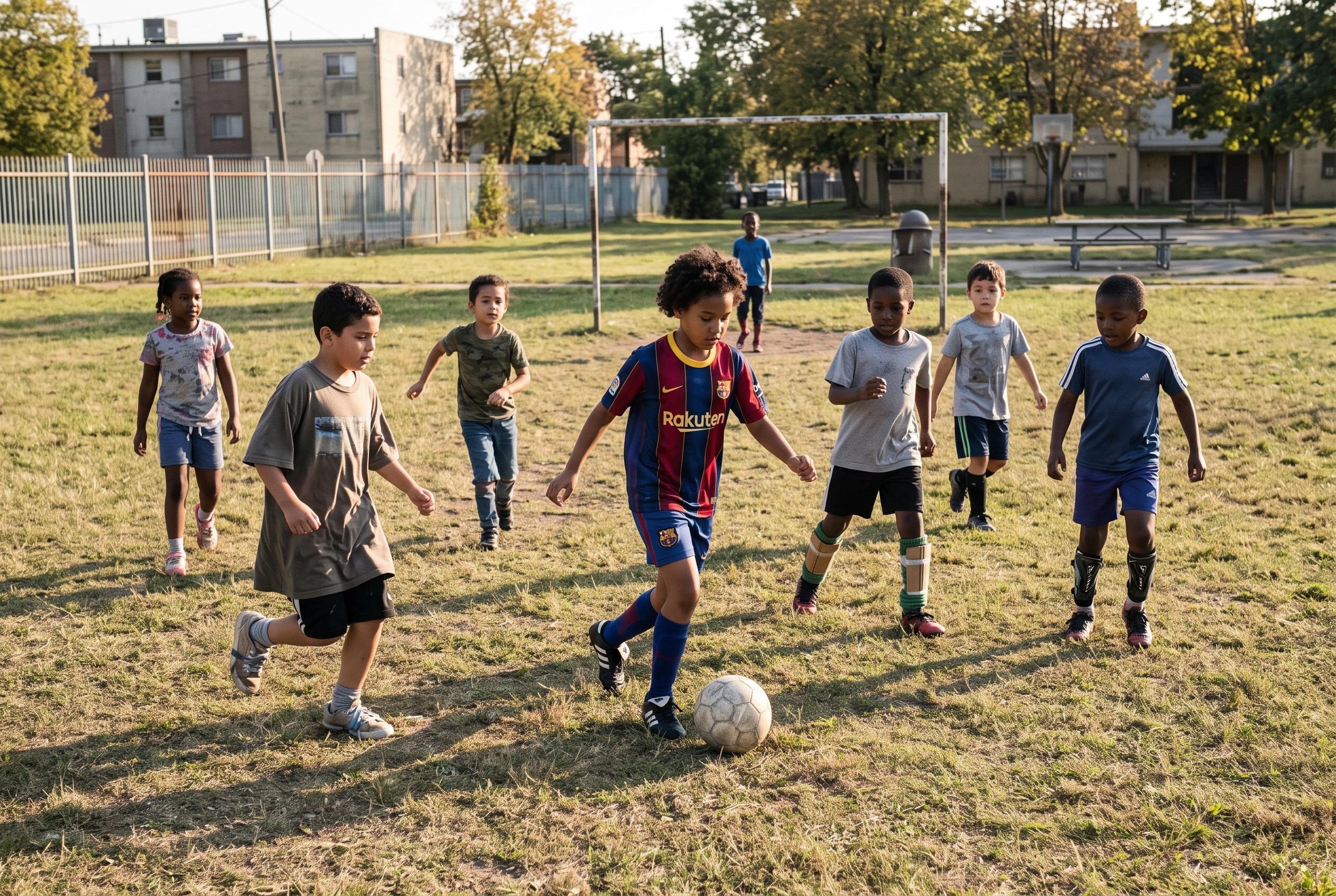

A recent AP-Ipsos poll reveals that while most parents acknowledge the advantages of organised sport for children, economic barriers significantly restrict access for lower-income families, raising concerns over long-term social and health disparities.
Americans largely agree that organised sport is good for children, but an AP-Ipsos poll suggests access to those benefits is still shaped by income. The survey found that about half of parents with school-aged children say their child plays a structured sport, yet participation rises to roughly 7 in 10 among households earning at least $100,000 a year and falls to about 4 in 10 among lower-income families.
Parents consistently point to a familiar list of advantages: teamwork, confidence, fitness, friendships, discipline and less time spent in front of screens. The poll found near-universal agreement among adults that organised sports can teach children how to handle setbacks and work hard, and many respondents said they also see a benefit in keeping young people active and connected outside school.
For many families, though, the price of participation is not trivial. About two-thirds of sports parents estimate they spend as much as $2,000 a year on equipment, fees, coaching and travel, while a smaller share spend more. The AP reported that higher-income families are somewhat more likely to cross the $5,000 threshold, but the survey suggests the bigger strain often falls on households with less room in the budget, even when their annual outlay is similar. The American Academy of Pediatrics has warned that lower-income families can face practical barriers such as transportation as well as cost.
The sacrifices are often justified in personal terms. Some parents say the value lies in the routine, social contact and confidence children gain through play. Others quietly hope sport may open doors later, whether through college admissions or scholarships, even though few young athletes will reach that level. The poll found that this hope weighs more heavily in lower-income households, where the possibility of future financial help can be a stronger motivator for signing up children in the first place.
Health experts have long backed that instinct. Research summaries from the University of Connecticut, the Cleveland Clinic and the American Academy of Pediatrics all point to physical, emotional and academic benefits from regular sport, from better fitness and sleep to stronger self-esteem and social skills. The poll’s broader message is that parents are not questioning those benefits; they are wrestling with how to pay for them.
Disclaimer: This content is for informational purposes only and is not intended to be a substitute for professional medical judgment, advice, diagnosis, or treatment.