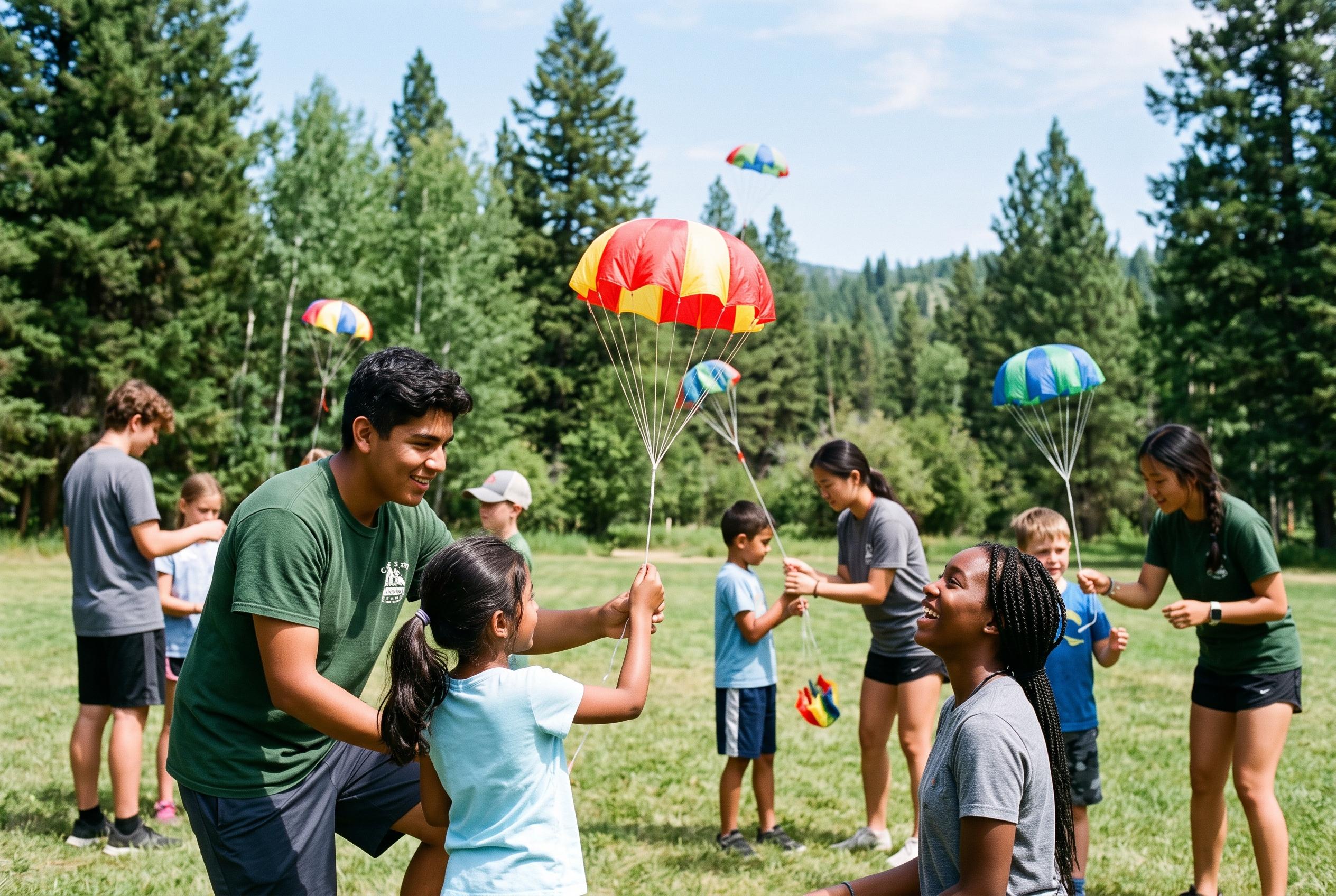

In Boise, a summer programme transforms traditional camp experiences by empowering teenagers as STEM mentors while inspiring younger children with physics activities that also foster confidence and future career interests.
On a smoky summer afternoon in Boise, a Parks and Recreation camp moved indoors to Whitney Elementary School gym, where a dozen and a half children gathered around teen STEM Ambassadors to learn how parachutes create drag. Marlena, 14, led the lesson with support from Sam, Kaya and Henry, handing out simple materials so the children could build miniature parachutes and test them in the gym.
The session was part of TMC Works, a workforce development programme run by the Idaho Out-of-School Network with the University of Idaho 4-H and out-of-school providers across the state. According to the programme description, it is designed to give teenagers and young adults hands-on experience in STEM teaching while building workplace skills, with support from the Idaho Workforce Development Council and STEM Next.
Behind the scenes, Boise Parks and Recreation’s STEM Ambassadors operated from Fort Boise Community Centre, where they rotated through roles such as leader, communications manager, data manager and supplies manager. Those responsibilities required them to plan activities, assemble kits and lead younger children through the lessons, giving many of them what was effectively their first job experience and a chance to practise speaking, organisation and problem-solving.
The young ambassadors spoke about career interests that already reflect the programme’s emphasis on science and engineering. Marlena said she hopes to become a doctor, Kaya is interested in marine engineering, Henry wants to run a business and Sam is drawn to rocket science. Their comments matched the broader aim of TMC Works, which, according to Idaho Out-of-School Network material, is meant to help participants explore possible careers while developing communication, collaboration and creative thinking.
For the younger children, the lesson was as much about confidence as it was about physics. Marie Hattaway, the programme manager, encouraged them to see themselves as scientists and to keep trying when they struggled with simple tasks such as tying knots. By the end of the activity, the children were racing parachutes across the gym and cheering each other on, while the teens had gained experience that may shape their next steps long after summer camp ends.
Disclaimer: This content is for informational purposes only and is not intended to be a substitute for professional medical judgment, advice, diagnosis, or treatment.