

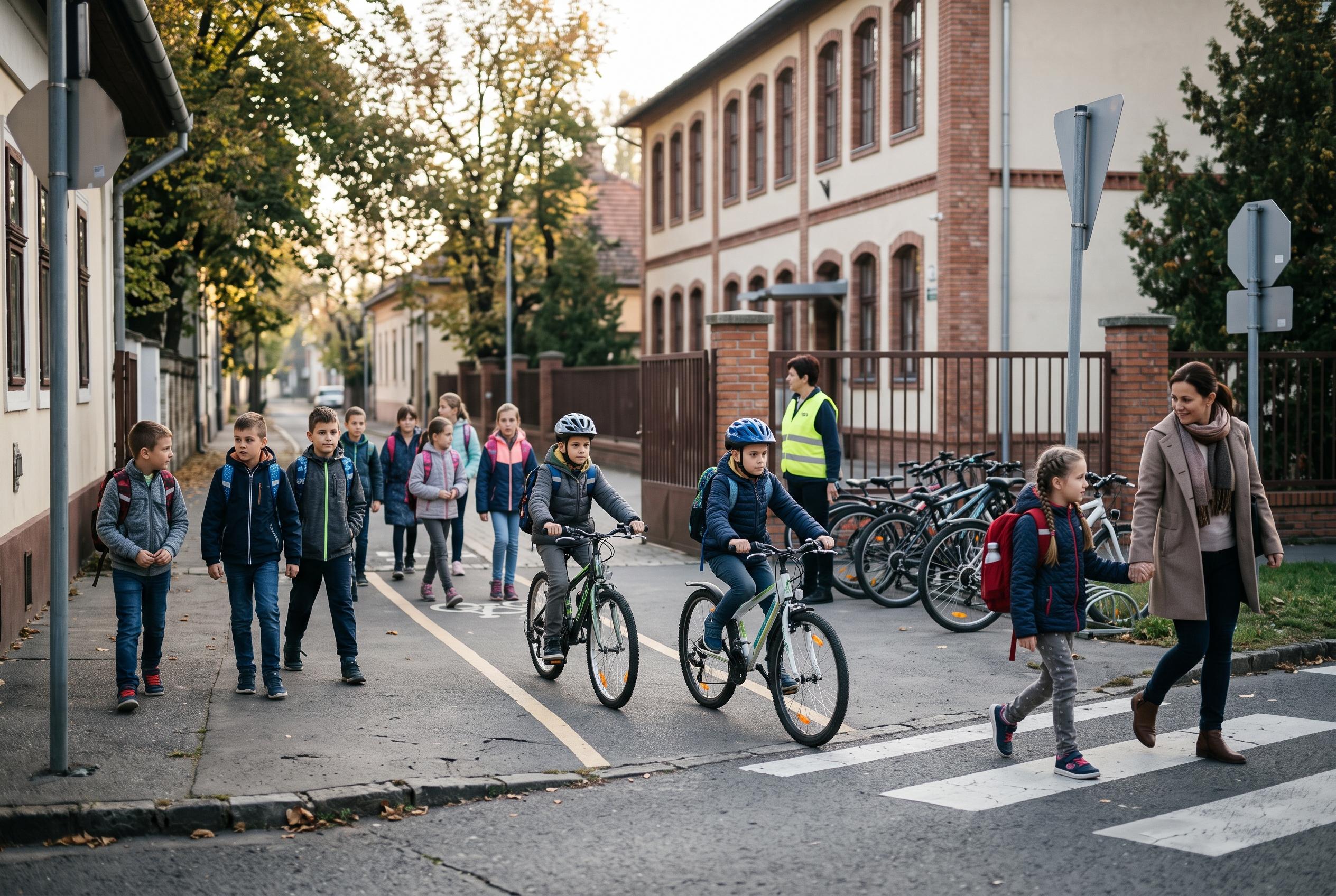

Nearly 450 Hungarian schools participated in an initiative encouraging children to walk, cycle, and move actively to school, part of a broader campaign to promote healthier habits and combat childhood obesity.
Hungarian schools are using an annual “active transport” week to push children away from car drop-offs and towards walking, cycling and other forms of movement as part of a wider campaign to build healthier daily habits. According to a report on Dunakanyar Régió, the initiative is one strand of the Aktív Iskola programme, which places health awareness themes into lessons, breaks and after-school activities.
The World Health Organisation says children should get at least 60 minutes of physical activity a day, and organisers argue that every minute spent moving counts towards that goal. This year, nearly 450 schools across Hungary took part in the active transport week, with pupils encouraged to arrive on foot, by bicycle, on scooters or by other active means rather than by car.
Schools marked the week in a range of ways. Activities included road-safety lessons with police, practical exercises on bicycle, scooter, rollerblade and skateboard courses, and sessions on safe bicycle equipment with the help of local repair services. Parents, local councils and volunteers also helped run walking buses and bike buses, in which adults gather pupils from set pick-up points and escort them to school.
Other schools created “school streets” by partially or fully closing the road outside the building during morning arrival times, reducing traffic around the campus and turning the space into a setting for road-safety games. Children also took part in bicycle beauty contests, shoe and sock competitions that highlighted walking as a mode of transport, illuminated night-time group rides, and creative competitions for the most original way of getting to school.
The programme’s longer-term aim is to make safe, active travel part of children’s everyday lives. End-of-year pupil surveys from the previous school year suggested that 70% of children in Aktív Iskola schools who live in the same town as their school already choose active transport at least three times a week.
The broader programme was set up against a worrying public-health backdrop. The Hungarian School Sports Federation, known as MDSZ, says national NETFIT fitness tests show that around one in four schoolchildren is overweight or obese, while only about half reach the health zone in an endurance shuttle-run test. It says these figures matter because poor fitness and excess weight can raise the risk of cardiovascular disease and diabetes later in life.
MDSZ says the Aktív Iskola programme was designed to drive a culture change in schools by making movement easier to build into the school day. In the 2026/2027 school year, the programme is running in 607 schools and involving more than 180,000 children. According to the programme’s own figures, half of pupils in participating schools were already reaching the recommended daily 60 minutes of exercise in the first year, compared with about 20% nationally and globally.
The scheme also uses incentives. Schools collect points for running movement-promoting activities and can spend them at the Aktív Iskola web shop on sports equipment, electronics, trips, talks, training and other rewards. They are also awarded status levels, beginning with club membership and progressing through bronze, silver and gold. By the end of last school year, 335 schools had reached club status, 89 had earned bronze, 58 silver and 69 gold.
The programme is funded by the Interior Ministry, with strategic partners including Richter Gedeon, the K&H mozdulj! foundation and the MOL New Europe Foundation. MDSZ says the network has also become a platform for schools to share ideas and practical examples, helping participating communities support one another as they try to make movement a normal part of school life.
Disclaimer: This content is for informational purposes only and is not intended to be a substitute for professional medical judgment, advice, diagnosis, or treatment.



